
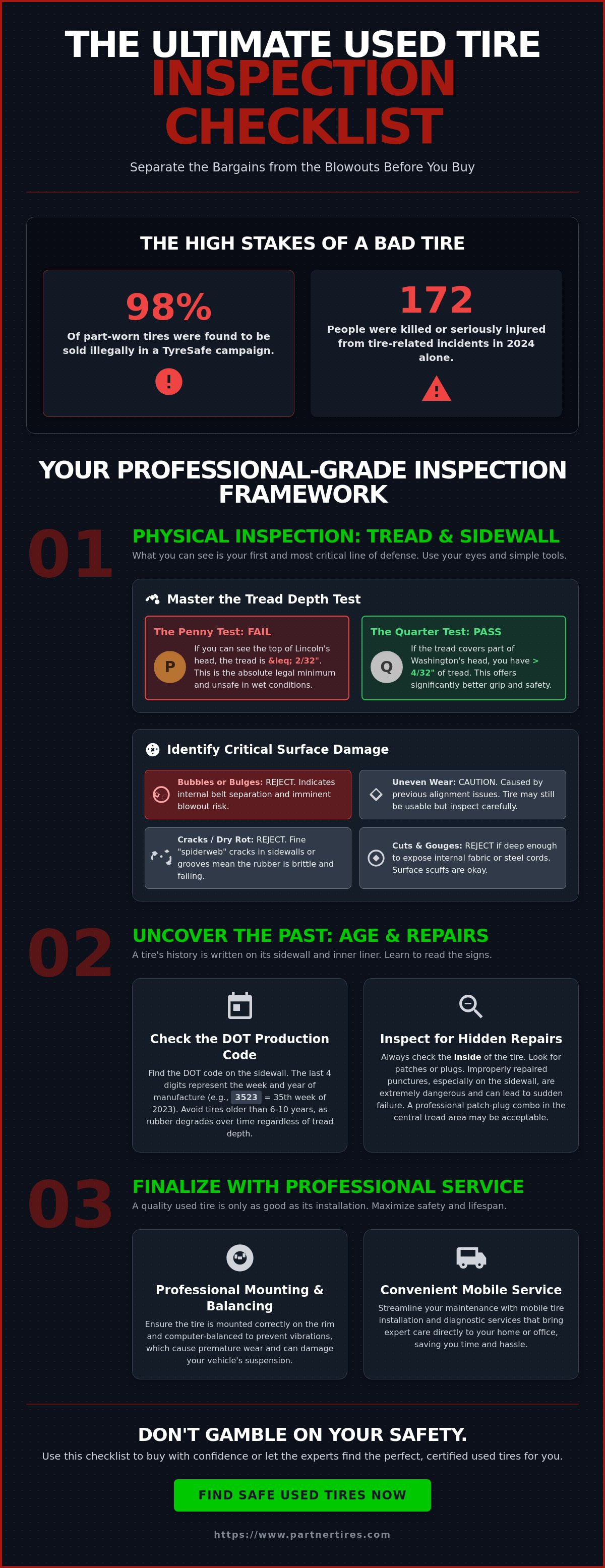
Did you know that a TyreSafe campaign found 98% of part-worn tires were being sold illegally? In 2024 alone, tire-related incidents resulted in 172 people being killed or seriously injured. These figures are a stark reminder that a cheap deal can quickly turn into a dangerous liability. We understand the hesitation you feel. You want to save money, but you don't want to risk a blowout on I-65 or waste cash on a tire with hidden internal patches.
It's frustrating to stare at technical markings like DOT codes and wonder if you're looking at a ticking time bomb. You deserve a clear path to safety. Our used tire inspection checklist provides a professional-grade framework to help you separate the bargains from the duds. We'll show you exactly what to look for so you can buy with total confidence and protect your bottom line.
In this 2026 guide, we'll walk through the essential safety markers, including legal tread depth and structural integrity. You'll learn how to navigate stricter enforcement standards and find a reliable local installer for your next set. Let's ensure your vehicle stays roadworthy and your operation stays on track.
Key Takeaways
- Identify specific visual red flags on sidewalls and tread patterns that signal a tire is unfit for Birmingham highways.
- Implement our used tire inspection checklist to verify DOT production codes and ensure you aren't buying aged-out rubber.
- Learn to spot hidden repairs and internal damage that can lead to sudden blowouts even when tread depth looks sufficient.
- Evaluate the benefits of professional mounting and computerized wheel balancing to maximize the lifespan of your used tire purchase.
- Streamline your maintenance with mobile tire installation and diagnostic services that bring expert care directly to your home or office.
Why Every Birmingham Driver Needs a Used Tire Inspection Checklist
Birmingham drivers face a unique set of challenges on the road. High temperatures and heavy traffic on I-65 and I-459 demand reliable equipment. Choosing used tires is a strategic way to manage vehicle overhead without compromising safety. A "bargain" is only profitable if the tire survives the Alabama summer. You need a rigorous used tire inspection checklist to ensure your investment doesn't end in a roadside emergency. A bad tire choice doesn't just cost you the price of the rubber; it costs you downtime, towing fees, and potential vehicle damage.
To better understand this concept, watch this helpful video:
Used tires often serve as an ideal solution for secondary vehicles or short-term leases where the cost of new rubber isn't justifiable. A high-quality used tire isn't just "not bald." It's a unit that has maintained its structural integrity, shows even wear, and falls within safe age parameters. Following Tire Maintenance Best Practices helps you identify these assets before they ever touch your rims. We focus on finding the middle ground where savings meet professional safety standards.
The Reality of Used Tires in Alabama
Birmingham's climate is brutal on rubber. Intense summer heat causes tires to expand and contract, accelerating dry rot and sidewall degradation. Our local construction boom means debris is a constant threat on highways. At high speeds, a minor flaw becomes a major failure. A quick glance isn't enough to detect the heat-related fatigue that plagues many discarded tires in the Southeast. You must verify the internal health of the tire to ensure it can handle the thermal stress of Alabama asphalt.
What This Checklist Covers
This framework goes beyond surface-level aesthetics. It targets the three pillars of tire safety: physical health, internal history, and legal compliance. We focus on tread depth and sidewall bulges. We look for hidden patches that suggest previous trauma. Finally, we verify DOT codes to ensure the rubber hasn't reached its expiration date. This used tire inspection checklist is your first line of defense against sub-standard stock. It provides the clarity you need to make a fast, informed decision at the point of sale.
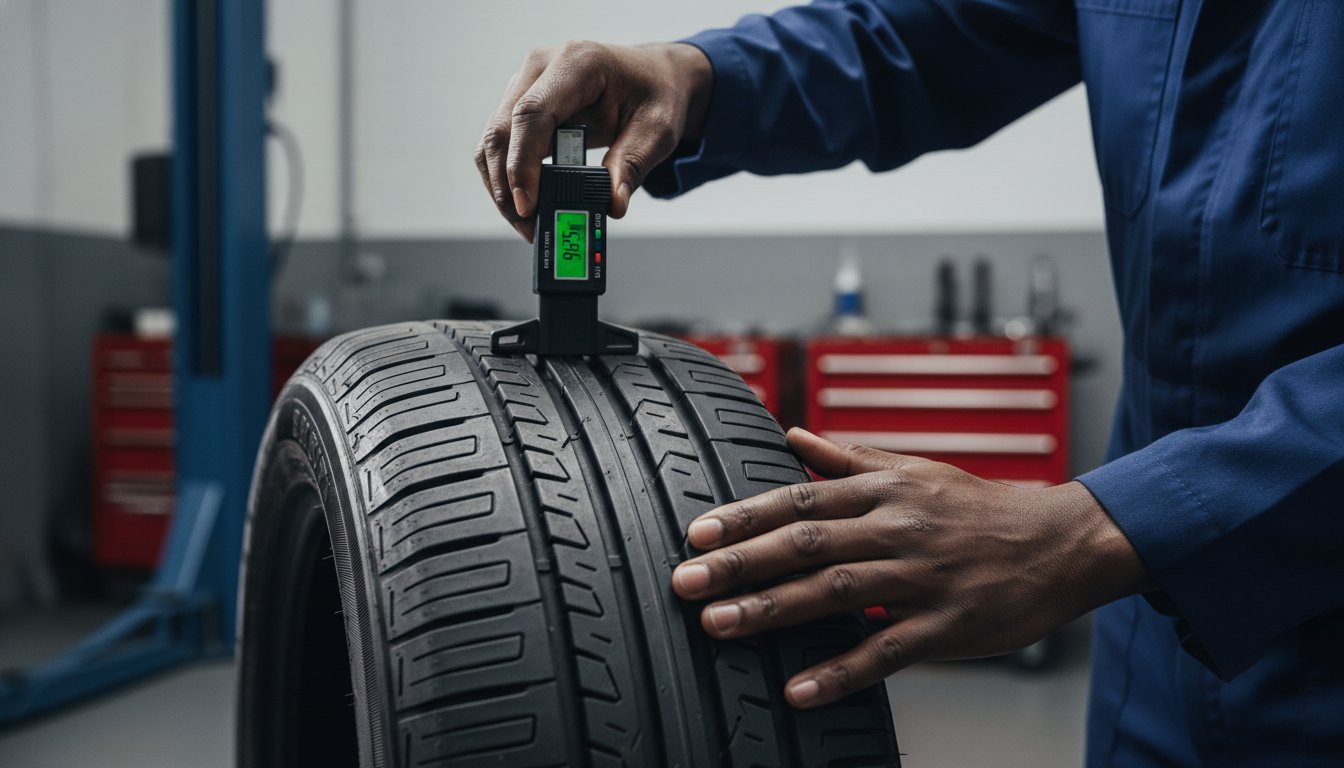
The physical inspection is your most critical line of defense. You don't need expensive machinery to spot a dangerous tire. A high-powered flashlight, a penny, and a quarter are sufficient for a professional-grade field assessment. This stage of the used tire inspection checklist requires a methodical approach to ensure no structural flaws are missed before you commit to a purchase.Mastering the Tread Depth Test
Tread depth determines your ability to stop, especially during Birmingham's sudden afternoon downpours. The penny test is the traditional baseline. If you insert a penny into the tread and see the top of Lincoln's head, the tire is at or below 2/32 of an inch. This is the legal minimum, but it's rarely the safety minimum for heavy rain. We recommend the quarter test for better protection. If the tread doesn't reach the top of Washington's head, you have less than 4/32 of an inch. According to NHTSA Tire Safety Guidelines, reduced tread significantly increases stopping distances on wet pavement. You should also locate the wear bars; these are small bridges between the tread ribs. If the tread is flush with these bars, the tire is legally worn out.
Identifying Sidewall and Surface Damage
Alabama's intense UV exposure and heat accelerate dry rot. Look for fine, "spiderweb" cracks along the sidewall or in the tread grooves. This indicates the rubber compounds are breaking down and losing elasticity. If you see any bubbles or bulges, reject the tire immediately. These signs indicate internal belt separation. It's a structural failure that often leads to a catastrophic blowout at highway speeds. Use your flashlight to check for deep cuts or gouges. A surface scratch is cosmetic, but any cut that reveals the internal fabric or steel cords is a safety failure.
Uneven wear patterns also tell a story about the tire's history. If one side of the tread is significantly more worn than the other, the previous vehicle likely had alignment issues. While the tire might still have legal tread, it may never balance correctly on your car. If you're unsure about the integrity of a used set, consider having a professional perform computerized wheel balancing. This can detect internal weight imbalances that the naked eye will always miss. Consistent vetting keeps your fleet moving and your drivers safe.
Watch for these immediate rejection markers during your inspection:
- Exposed steel cords or internal fabric
- Visible bubbles or bulges on the sidewall surface
- Tread depth at or below 2/32 of an inch
- Severe dry rot or deep sidewall gouges that penetrate the rubber
Integrating these steps into your used tire inspection checklist ensures you only buy tires capable of handling Alabama's demanding road conditions. Safety is a non-negotiable standard for every vehicle on the road.
Beyond the Surface: Checking Age, Repairs, and Recalls
Visual tread depth is only half the battle. A tire can look pristine while harboring internal structural weaknesses that make it a liability on the road. This phase of your used tire inspection checklist focuses on technical specifications that the average buyer overlooks. You must verify the age and repair history to ensure you aren't investing in a failing asset. The U.S. Tire Manufacturers Association highlights several Risks of Used Tires, many of which are invisible until the rubber is under the stress of Birmingham highway speeds.
Decoding the DOT Age Stamp
Rubber compounds degrade over time through a process called oxidation. Locate the DOT symbol on the sidewall. The last four digits of the sequence represent the production date. For instance, "1422" indicates the tire was manufactured in the 14th week of 2022. As we move through 2026, any tire older than six years warrants extreme caution. Even "New Old Stock" that has never touched the pavement can be dangerous. Improper storage in humid Alabama warehouses can lead to internal cord corrosion. We recommend rejecting tires that have exceeded the six-year mark to protect your vehicle's safety and your financial health.
Vetting Previous Repairs and Recalls
A professional repair is a permanent fix, but a DIY plug is a temporary patch that can fail without warning. If the tire is unmounted, inspect the inner liner for "scabbing" or the stem of a patch-plug. A safe repair must be located within the central tread area. Sidewall repairs are always a dealbreaker. The sidewall experiences the most flex; a patch there will eventually separate. Additionally, check the tire's brand and model against the NHTSA recall database. Manufacturer defects can lead to tread separation regardless of how well the previous owner maintained the tire.
Before finalizing your purchase, verify these technical markers:
- Load Index: Ensure the tire can support your vehicle's weight.
- Speed Rating: Confirm the tire is rated for the speeds you travel on Alabama's interstates.
- Repair Location: Reject any tire with plugs or patches outside the designated repair zone.
- Recall Status: Cross-reference the DOT code with active safety bulletins.
Matching these ratings is a critical component of a professional used tire inspection checklist. Choosing the wrong load rating leads to excessive heat buildup and premature failure. We act as your hardworking ally by providing the logic needed to spot these hidden duds. Your success on the road depends on equipment that meets industry standards, not just a low price tag. By vetting these hidden factors, you position yourself as a savvy buyer who prioritizes reliability over a quick, dangerous bargain.
DIY vs. Professional Inspection: Knowing When to Call the Experts
A used tire inspection checklist is a powerful tool for initial vetting. It saves you from purchasing obvious duds and protects your immediate capital. However, physical observation has its limits. Some structural failures remain invisible until the tire is spinning at highway speeds. You can spot a nail, but you can't always see a shifted internal belt. Professional diagnostics bridge the gap between a visual "maybe" and a certified "yes."
The Limits of the DIY Checklist
Internal belt shifts are a prime example of hidden danger. You can't see these with the naked eye. Computerized wheel balancing is the only way to detect these deep-seated defects. A tire might look perfect on a rack but fail the balance test instantly. This is where your used tire inspection checklist ends and professional diagnostics begin. We also check for rim damage. Mounting a used tire on a bent wheel creates a slow leak that no patch can fix. A four-wheel alignment check is the final step. It ensures your tires track straight, preserving the tread you just purchased and protecting your vehicle's suspension.
Mobile Convenience in Birmingham
Birmingham's rapid industry turnover requires efficient solutions. You shouldn't have to choose between safety and your schedule. Our at home tire installation eliminates the traditional tire shop bottleneck. We arrive at your driveway or workplace with professional-grade mounting and balancing machinery. Partner Tires serves as the backbone of your vehicle's maintenance. We verify every used tire during the mounting process. If we spot a defect you missed during your initial check, we'll tell you before it's on your car. Our regional expertise covers the entire Birmingham footprint, including Hoover, Trussville, and Vestavia Hills. We don't just mount rubber; we provide a final safety screen for your investment.
Don't leave your safety to chance on I-65. Partner Tires is ready to act as your hardworking ally in the field. Schedule your mobile tire mounting today and ensure your used tires are installed with professional precision. We focus on your financial health by ensuring every tire we mount is fit for the road. Your success depends on reliable equipment, and we're here to provide the logistical support to keep you moving.
Get Certified Safety with Partner Tires’ Mobile Installation
Safety is a non-negotiable requirement for your vehicle. Partner Tires provides the logistical strength to ensure your used tire purchase is a successful investment. We act as the backbone of your maintenance strategy, offering more than just a transaction. Our commitment to reliability means we don't just mount rubber; we verify its integrity. By choosing a professional partner, you protect your fleet, your family, and your financial health from the risks of sub-standard equipment.
A used tire inspection checklist is your first line of defense, but our professional oversight is the final seal of approval. We bridge the gap between a private sale and road-ready confidence. Our team understands the demands of Birmingham traffic. We provide the speed and precision needed to keep your operation moving without the traditional tire shop bottleneck.
The Partner Tires Advantage
Every used tire in our inventory undergoes a rigorous multi-point inspection. We apply professional-grade standards to every sidewall, bead, and tread groove. Our mobile units are equipped with state-of-the-art mounting technology, bringing industrial-strength solutions to your driveway. We are a locally owned expert serving the entire Birmingham metro area. From the city center to the outskirts, we ensure your vehicle receives the same high-level care as a commercial fleet. Our computerized wheel balancing identifies internal weight shifts that a visual check simply cannot detect.
Ready to Roll Safely?
Finding a reliable source for rubber shouldn't be a gamble. You can browse our current used tires Birmingham AL inventory to find high-quality options that fit your budget. Once you've made your selection, we handle the heavy lifting. Our mobile automotive repairs and installation services are designed to respect your busy schedule. We come to you, whether you're at home in Hoover or at work in Trussville.
Don't wait for a blowout to address your tire needs. Schedule your at-work or at-home installation today. We treat your vehicle with the steadfast professionalism it deserves, ensuring every bolt is torqued and every tire is balanced. Partner Tires is your hardworking ally on the road. We focus on your safety so you can focus on your success. Let us be the engine that drives your vehicle's reliability forward.
Secure Your Roadside Safety and Financial Health
A successful used tire purchase requires more than just a quick glance at the tread. You now have the technical logic to identify dry rot, verify production dates, and spot improper repairs. These skills protect your capital and keep your vehicle operational on Alabama's demanding interstates. Implementing a rigorous used tire inspection checklist ensures you never settle for a dangerous dud. It positions you as a savvy driver who prioritizes reliability over a temporary bargain.
Partner Tires is your dedicated ally in maintaining these standards. We eliminate the logistical hurdles of tire maintenance by bringing the shop directly to your location. Our mobile units serve Birmingham, Hoover, and Vestavia with industrial-grade precision. Every service includes computerized wheel balancing to maximize the lifespan of your rubber. We focus on the technical details so you can focus on reaching your destination safely.
Don't leave your vehicle's integrity to chance. Schedule Your Mobile Tire Installation in Birmingham Today and experience the stability of a professional partnership. We work behind the scenes to keep your engine of growth moving forward. Drive with confidence knowing your tires are fit for the miles ahead.
Frequently Asked Questions
Is it legal to buy and sell used tires in Alabama?
Yes, buying and selling used tires is legal in Alabama. There are no specific state laws prohibiting the sale of part-worn tires. However, the rubber must meet the legal minimum tread depth of 2/32 of an inch to be roadworthy. Using a used tire inspection checklist helps you verify this standard before any transaction. We recommend higher safety margins for local highway driving to ensure your vehicle remains stable.
How many years is a used tire good for?
Most industry professionals recommend a six-year limit for used tires. Rubber degrades over time due to heat and oxidation; this happens even if the tread looks deep. The internal structure can become compromised and brittle. Always check the four-digit DOT code on the sidewall to verify the production date. We prioritize your financial health by rejecting tires that have aged out of their safe operational window.
Can I mix used tires with different tread depths on the same axle?
You shouldn't mix tires with significantly different tread depths on the same axle. Doing so creates an imbalance in traction and water displacement. This can lead to your vehicle pulling to one side or losing control during heavy braking. For optimal performance, ensure both tires on an axle have similar wear patterns. Professional computerized wheel balancing helps mitigate minor differences and ensures a smoother ride across Birmingham's varied terrain.
What is the 'Penny Test' and is it still reliable in 2026?
The Penny Test remains a valid way to check for the 2/32-inch legal minimum tread. If you see the top of Lincoln's head, the tire is legally worn out. However, 2026 safety standards suggest the Quarter Test is more reliable for Birmingham's wet climate. A quarter measures 4/32 of an inch. This provides a safer margin for stopping on slick asphalt and reduces the risk of hydroplaning.
How do I know if a used tire has been recalled?
You can verify a tire's recall status through the NHTSA online database. You'll need the full DOT identification number found on the sidewall. Manufacturers issue recalls for structural defects like tread separation or bead failures. Checking this database is a vital step in your used tire inspection checklist. We verify this information to ensure every tire we mount meets current safety bulletins and protects your fleet.
Does Partner Tires offer a warranty on used tires?
Yes, Partner Tires offers tire replacement warranties on our products. We stand behind the reliability of our stock through a steadfast commitment to quality. These warranties provide a sense of stability for your purchase and protect your investment. We aim to be the engine that drives your personal travel forward. Ask our mobile technicians for specific coverage details during your next at-home or at-work installation.
Can you install used tires I bought from someone else?
We certainly can install tires you purchased from a private party or another vendor. Our mobile units provide professional tire mounting and computerized wheel balancing at your home or office. We act as your hardworking ally by ensuring those tires are installed correctly and safely. Our experts will perform a final safety screen during the mounting process to protect your investment and ensure roadworthiness.
What happens if I drive on a tire with a sidewall bulge?
A sidewall bulge indicates a catastrophic internal failure of the tire's structure. Do not drive on a tire with this condition. The internal cords have snapped; this allows air to push against the outer rubber layer. This often leads to a sudden blowout at highway speeds on I-65. If you spot a bulge, call for roadside assistance or a mobile tire replacement immediately to prevent a serious accident.


