
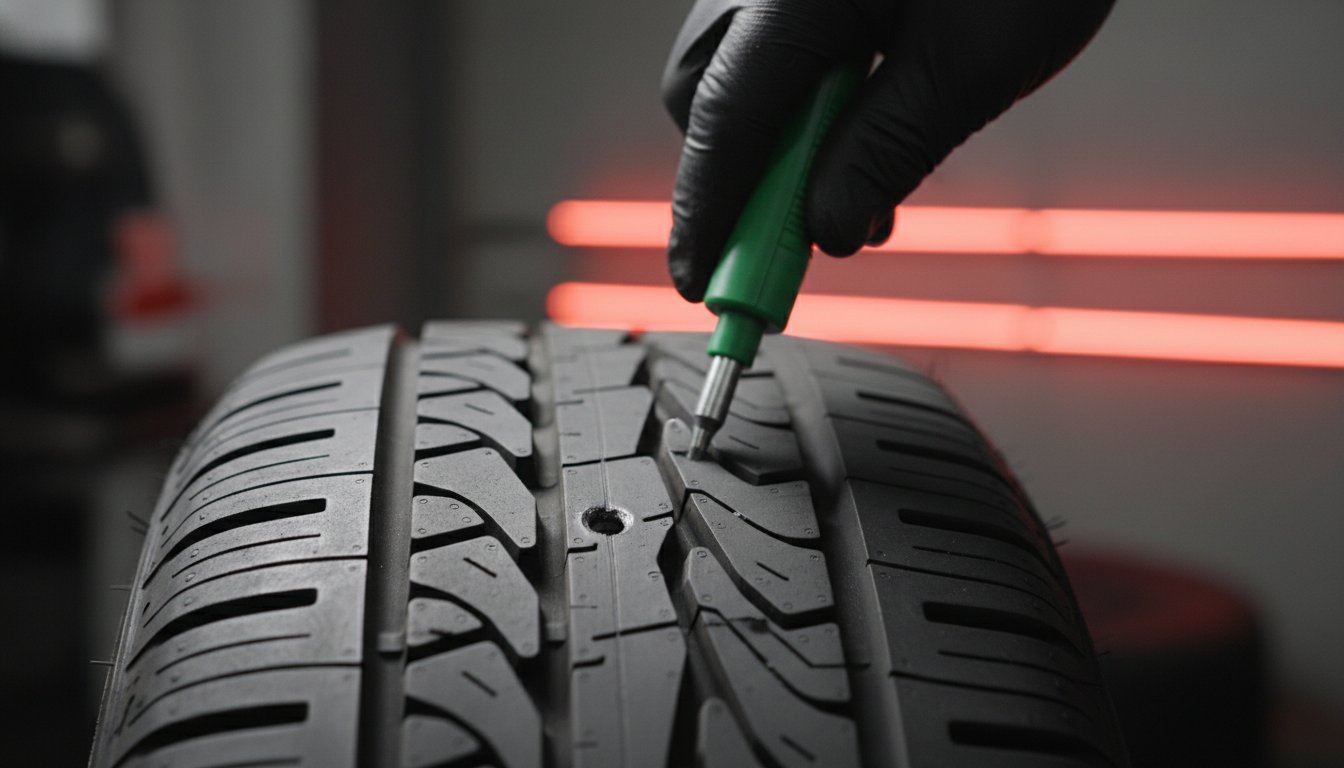
Will a single nail in your run flat tire force you to buy a brand new one, or is a safe patch still an option? You likely chose run flats for the security they provide, but a puncture often brings a wave of conflicting advice and high replacement costs. Searching for "run flat tire repair near me" can feel like a race against time. You're limited by a 50-mile driving range. It's frustrating to deal with the uncertainty of whether your tire is truly salvageable.
We understand that you need reliability and clear answers. This guide delivers the technical criteria for safe run flat repair and explains how Partner Tires provides professional mobile service in Birmingham today. You'll learn about manufacturer standards, why internal inspections are vital, and how to get back on the road without overspending. We provide the direct, logical solutions required to protect your vehicle and your financial health.
Key Takeaways
- Learn the specific puncture size and location standards that determine if your run flat is eligible for a safe patch-plug repair.
- Discover why searching for "run flat tire repair near me" is critical for preserving your tire's internal integrity before the 50-mile limit expires.
- Understand why a professional internal sidewall inspection is the only way to detect hidden structural damage that simple visual checks miss.
- Master the immediate response steps required to prevent permanent tire failure when your pressure monitoring system alerts you to a leak.
- Explore how mobile dispatch services across Birmingham, including Bessemer and Homewood, bring expert tire mounting and repair directly to your location.
Understanding Run Flat Tire Repair: The "Unrepairable" Myth
The idea that every punctured run flat belongs in a scrap heap is a costly misconception. Many drivers searching for run flat tire repair near me are told they must buy a new tire immediately. While safety is the priority, the truth is more nuanced. A Run-flat tire is engineered with reinforced sidewalls. These components support your car's weight even when air pressure hits zero. However, this strength can hide internal damage that makes a repair impossible.
Manufacturers like BMW, Mercedes, and Lexus often equip vehicles with these tires to eliminate the need for a spare. Some shops refuse repairs because they lack the specialized equipment or training to inspect the internal structure. They choose the path of least resistance. We choose the path of technical accuracy. If a tire was driven too far or too fast while flat, the internal rubber "shreds" against the rim. It might look fine on your driveway, but it's a hazard if the core is compromised.
To better understand the technical differences in these tires, watch this helpful video:
How Run Flat Tires Work Under Pressure
When a standard tire loses air, it collapses. The rim then crushes the sidewall. A run flat prevents this through thick, heat-resistant rubber inserts. Brands like Bridgestone RFT, Michelin ZP, and Pirelli Run Flat use different proprietary compounds, but the physics remain the same. Heat is the primary enemy. If you exceed the 50-mile limit or drive too fast, the internal structure degrades. This creates a "crease" in the inner liner. Once that crease appears, the tire's structural integrity is gone and it cannot be saved.
The Legal and Safety Standards for Tire Patching
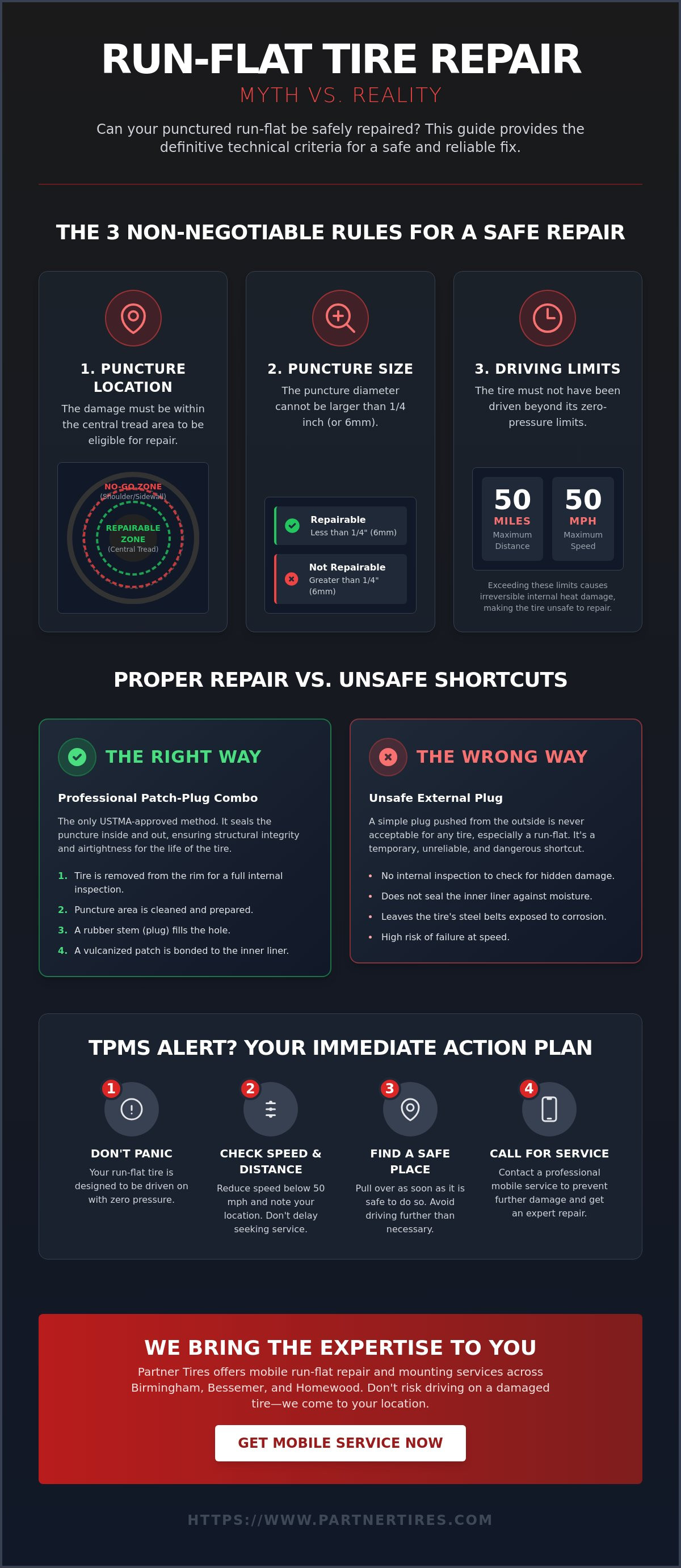
The U.S. Tire Manufacturers Association (USTMA) sets strict benchmarks for permanent repairs. A simple plug pushed in from the outside is never acceptable. It doesn't seal the inner liner and leaves the structural hole exposed to moisture. We only utilize a patch-plug combo for a run flat tire repair near me. This requires removing the tire from the rim. The technician cleans the puncture, installs a rubber stem to fill the hole, and applies a vulcanized patch to the interior. This dual-action method ensures the tire remains airtight and structurally sound for the remainder of its tread life.
The 3 Critical Criteria for a Safe Run Flat Repair
Finding a reliable source for run flat tire repair near me requires more than just a quick map search. It requires a provider that respects the engineering limits of your vehicle. Repairability isn't a subjective choice; it's a technical determination based on three non-negotiable factors. If your tire fails even one of these tests, it's no longer a candidate for a patch. Safety is the foundation of our service, and we don't take shortcuts with your operational security.
First, the puncture must be located within the central tread area. The shoulder and sidewall are "no-go" zones because they endure the highest levels of flex and stress. Second, the damage cannot exceed 1/4 inch (6mm) in diameter. Finally, the tire must not have been driven beyond its rated "zero-pressure" limits. These U.S. Tire Manufacturers Association puncture repair procedures ensure that every fix maintains the tire's structural safety. We follow these standards to protect your vehicle and your bottom line.
Evaluating Distance and Speed History
The "50/50 Rule" is the industry benchmark for run flat safety. Most manufacturers state you can drive 50 miles at a maximum speed of 50 mph after a total loss of air. Exceeding these limits, such as driving 60 miles or hitting highway speeds, generates excessive heat. This heat destroys the reinforced rubber compounds. Our technicians prioritize your safety by verifying how far you've traveled since the pressure light appeared. If you've pushed the tire past its operational window, a repair is no longer a viable option. We provide clear, logical answers based on these facts.
Internal vs. External Inspection
You cannot diagnose a run flat tire from the sidewalk. Because the sidewalls are so stiff, they often look perfectly inflated even when the internal structure is shredded. A proper run flat tire repair near me must involve a full "break-down" inspection. Our mobile experts remove the tire from the rim to check for two critical red flags:
- Marbling: This is a collection of fine rubber dust inside the tire cavity. It indicates the sidewall has started to disintegrate.
- Cord Separation: High heat causes the internal plies to pull away from the rubber. This leads to catastrophic failure if patched.
If the interior shows a visible "crease" or signs of scorching, the casing is dead. For an honest, professional evaluation of your tire's condition, you can trust the experts at Partner Tires to give you a definitive answer on-site.
Run Flat Repair vs. Standard Tire Patching
Standard tire repair is a routine procedure. Run flat repair is a technical operation. The structural differences are significant and dictate every step of our process. Standard tires use thin plies that collapse instantly without air pressure. Run flats utilize dense, reinforced rubber compounds that allow the tire to maintain its shape under the vehicle's full weight. Because of this rigidity, the repair process is more labor-intensive. It requires specialized mounting equipment that can handle the extreme stiffness of the sidewall without causing damage. When you search for run flat tire repair near me, you need a provider that understands these engineering nuances. We follow the U.S. Tire Manufacturers Association (USTMA) policies to the letter. This ensures your repair isn't just a temporary fix, but a professional certification of safety.
The Role of TPMS in Run Flat Safety
TPMS sensors are your first line of defense. They identify the initial pressure drop before you feel it in the steering wheel. When you require a run flat tire repair near me, you must ensure the technician handles your TPMS sensor service correctly. These sensors live inside the wheel and are vulnerable during a zero-pressure run. The heat and friction generated can melt or crush the sensor housing. Our protocol includes a full diagnostic scan of the sensor to verify its accuracy. We check for physical damage and signal strength before the tire is reseated. Resetting the system is a non-negotiable final step. This ensures your vehicle's safety network is fully operational for your next trip.
Mounting and Balancing Challenges
Precision is the priority when handling stiff sidewalls. These tires create a "bead" that is incredibly difficult to seat on the rim. If a technician uses improper force or outdated tools, they can tear the rubber. This ruins the tire instantly and creates a safety hazard. Once the patch is applied, computerized wheel balancing is essential. Run flats are heavier than standard tires due to their reinforced structure. Even a small weight imbalance causes vibrations that damage your suspension and increase fuel consumption. We use advanced balancing technology to ensure your ride remains smooth and your vehicle stays efficient. This logistical precision protects your vehicle and your financial health.
Labor costs for these services reflect the added complexity and the specialized equipment required. You aren't just paying for a patch; you're paying for a technical assessment. A successful repair preserves your capital and keeps your operation moving. Replacement is a last resort. We provide the expert service needed to make that repair a safe reality.
What to Do When Your Run Flat Pressure Light Comes On
Your dashboard alert is a call for immediate, tactical action. When that light illuminates, the structural life of your tire begins a rapid countdown. You have a finite window to save the casing and avoid a total replacement. The first step is to reduce your speed to under 50 MPH. Higher speeds generate excessive friction that compromises the reinforced sidewall. Next, find a secure location away from traffic to inspect the tire. Look for visible foreign objects like nails or screws. Monitoring your TPMS display is vital during this time. A slow pressure drop often indicates a simple puncture, while a rapid loss suggests more severe damage. Don't risk driving to a brick-and-mortar shop. Searching for run flat tire repair near me and choosing a mobile specialist prevents you from exceeding the critical 50-mile safety limit.
Identifying "Run Flat Fatigue" Signs
Internal damage leaves clues even if the tire still looks inflated. Inspect the outer sidewall for "bruising" or dark discoloration. This indicates the rubber has already begun to overheat. Trust your senses. A distinct scent of scorched rubber is a definitive sign of internal friction. This occurs when the tire runs with zero air pressure for too long. You should also pay attention to handling. If the steering feels heavy or unresponsive, the tire is likely fully deflated and relying entirely on its internal reinforcement. Driving under these conditions for more than a few miles often makes the tire unrepairable. We prioritize your safety by identifying these fatigue markers before we even pull the wheel. If the structure is compromised, we'll tell you the truth.
Why Mobile Service is Safer for Run Flats
Driving to a service center is a gamble with your wallet. Every mile you travel on a deflated run flat brings you closer to a mandatory replacement. Mobile dispatch eliminates this risk. We provide on-site diagnostics in Birmingham, Hoover, and Vestavia to determine if a patch is viable. If the internal structure is already shredded, we offer the convenience of at home tire installation. This logistical efficiency ensures you don't waste time or money on a tire that's already reached its limit. We act as the backbone of your vehicle's maintenance. We arrive with the specialized tools needed to resolve the issue on your driveway or at your office. This directness ensures your value proposition is never lost in unnecessary delays.
Protect your investment and your safety. If your pressure light is on, contact Partner Tires for immediate assistance. Our mobile team will assess the damage and provide a definitive, logical solution without the risk of over-driving your tire. Searching for run flat tire repair near me shouldn't lead to more stress; it should lead to a mobile expert at your door.
Mobile Run Flat Solutions in Birmingham: Partner Tires
Searching for run flat tire repair near me in Birmingham shouldn't end with an expensive tow bill. You need a partner who understands the logistics of your day. We provide mobile dispatch across Bessemer, Trussville, Homewood, and Pelham. Our team brings specialized equipment directly to your location. This ensures you don't exceed the 50-mile safety limit while searching for a shop. We focus on efficiency. We prioritize your vehicle's uptime and your financial health. Our technicians arrive ready to work, turning a potential roadside crisis into a managed service event.
Our specialized tire repair Birmingham protocol is built specifically for reinforced sidewalls. We don't guess. We use a transparent "Repair vs. Replace" philosophy. If the tire meets the safety criteria discussed earlier, we fix it. If the structure is compromised, we provide a logical path forward. We even perform on-site computerized balancing. This ensures your car handles perfectly after the service. We are the backbone of your vehicle's maintenance, providing the speed and precision required for high-performance tires.
Our On-Site Run Flat Inspection Process
A visual check from the outside is never enough for a run flat. Our certified technicians perform a full dismount. We review the internal casing for any sign of heat-related structural failure. This includes looking for the internal "creasing" or rubber marbling that signals a dead tire. If the tire is unsafe to patch, we provide a new tire estimate on the spot. This directness saves you from making multiple trips to a shop. We handle the logistics so you can focus on your business. Every inspection is a collaborative effort to ensure your safety and your financial success.
Fast Roadside Assistance Across the Birmingham Metro
We serve Mountain Brook, Leeds, and Hoover with rapid response times. Local drivers trust us with high-performance vehicles because we respect the engineering. We understand that a flat tire isn't just an inconvenience; it's a disruption to your operation. Our direct-to-driveway service saves your afternoon and protects your expensive wheels from tow truck damage. We act as the engine that drives your mobility. Partner Tires is the dependable foundation for local drivers who value time and precision. We arrive with the right tools at the right time. Our mission is to keep your vehicle safe and your budget intact. When you search for run flat tire repair near me, you're looking for reliability. We deliver it.
Secure Your Vehicle with Professional Run Flat Service
A punctured run flat doesn't always mean a mandatory replacement. Success depends on acting quickly and respecting the technical limits of the reinforced sidewall. We've established that safe repair requires a central tread puncture and a full internal inspection to rule out structural fatigue. Choosing a mobile expert ensures you don't compromise the tire's casing by over-driving it to a traditional shop. Searching for run flat tire repair near me should lead to a partner who values your time and your safety.
Partner Tires provides mobile dispatch to Hoover, Vestavia, and Bessemer to address your needs on-site. Our technicians deliver expert TPMS and sidewall diagnostics to provide a definitive answer on your tire's integrity. If a patch isn't a safe option, we carry new and high-quality used tire options to get you back on the road immediately. We act as the backbone of your vehicle's maintenance, ensuring every decision is based on logistical precision. Get Mobile Run Flat Repair in Birmingham Now and let our team handle the technical work while you focus on your schedule. We're ready to keep your operation moving forward.
Frequently Asked Questions
Can all run flat tires be repaired?
No, not every run flat is a candidate for a patch. The puncture must be located within the central tread area and remain 1/4 inch or smaller. Any damage to the shoulder or sidewall requires a full replacement to maintain structural integrity. We perform a technical assessment on every tire to ensure a repair is a safe, logical choice for your vehicle.
How far can I drive on a flat run flat tire before it becomes unrepairable?
The industry standard is the 50/50 rule. You can typically drive 50 miles at a maximum speed of 50 mph. Driving further or faster generates extreme heat that destroys the internal rubber compounds. Searching for run flat tire repair near me to get mobile service prevents you from exceeding these limits and ruining a salvageable tire.
Why do some tire shops refuse to patch run flat tires?
Many service centers lack the specialized mounting equipment needed for stiff, reinforced sidewalls. They also want to avoid the liability of a tire that might have hidden internal damage. We choose a different path. Our technicians use professional-grade tools to perform the mandatory internal inspections that other shops skip. This allows us to offer safe repairs whenever possible.
Does a run flat repair cost more than a standard tire repair?
Yes, run flat service generally carries a higher labor cost. These tires are significantly stiffer than standard tires and require more time and specialized machinery to dismount. This process is non-negotiable. It's the only way to inspect the interior for heat damage. Investing in a professional run flat tire repair near me is still more cost-effective than a total replacement.
How do I know if my run flat tire is damaged internally?
You cannot diagnose internal failure from the sidewalk. A technician must remove the tire to check for "marbling" or a visible crease in the inner liner. These signs indicate the rubber has begun to disintegrate from heat. If these markers are present, the tire is structurally dead and cannot be safely patched. We provide these diagnostics on-site to save you time.
Can I replace just one run flat tire, or do I need a pair?
You can replace a single tire if the remaining tire on the same axle has similar tread depth. If the difference is more than 2/32" to 4/32", it can cause issues with your vehicle's electronic stability control or all-wheel-drive system. We measure your existing tread to provide a definitive recommendation. This protects your vehicle's mechanical health and your financial investment.
Is a patched run flat tire still safe for highway speeds?
A professional patch-plug combo restores the tire's ability to hold air for normal driving. Some manufacturers warn that any repair may void the original speed rating. You should always consult your specific brand's policy for high-performance use. For daily commuting in Birmingham, a correctly repaired tire remains a reliable foundation for your vehicle.
What happens if a run flat tire is repaired incorrectly?
An improper repair, such as a simple external plug, is a major safety risk. It doesn't seal the inner liner and allows moisture to reach the internal steel belts. This leads to corrosion and eventual tread separation. A failed repair can also prevent the tire from supporting your car during the next air loss event. We only use industry-standard patch-plug combinations to ensure permanent results.


