
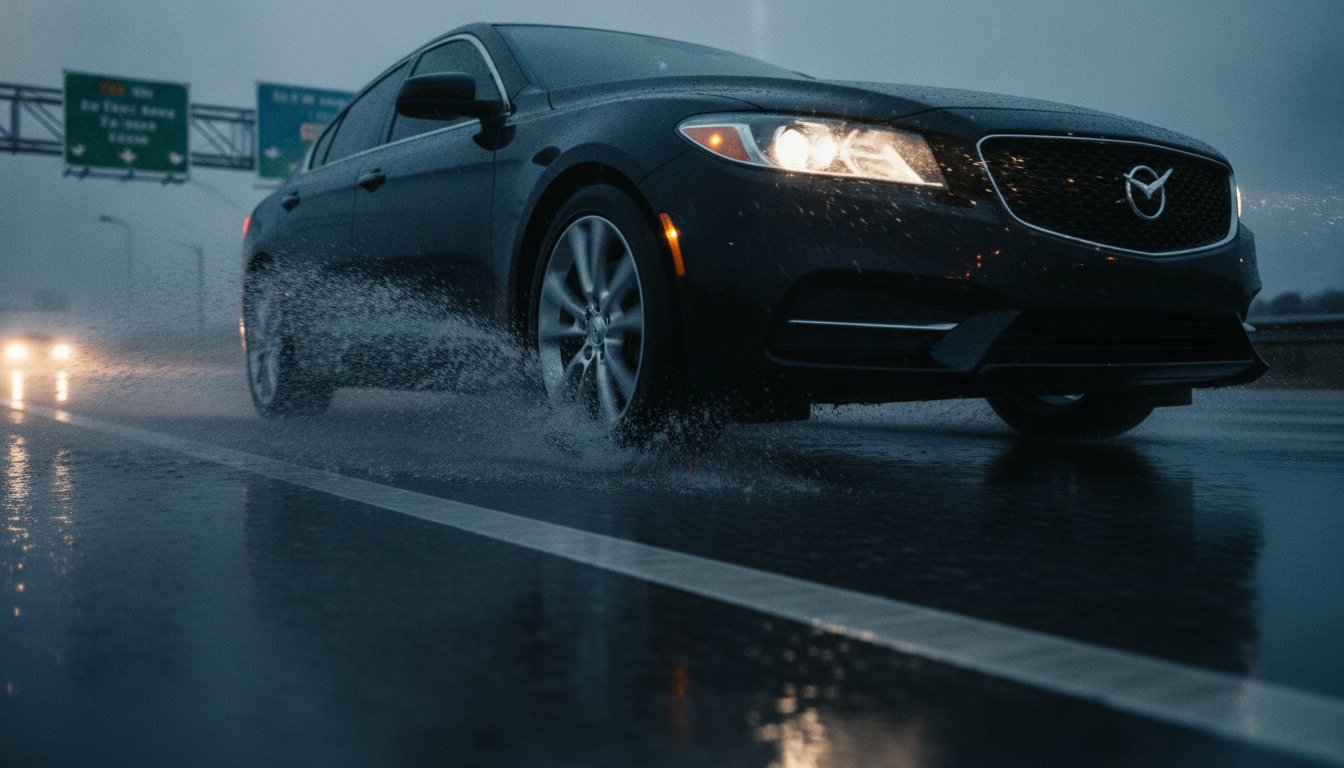
In 2024, 13.8% of all traffic crashes in Alabama occurred on wet roads, and 7.4% of all traffic fatalities happened during rainy conditions. You've likely felt that gut-wrenching moment when your steering goes light during a flash flood on I-65 or I-85. Finding the best tires for rain in Alabama is about more than just deep grooves. It's about choosing a rubber compound that stands up to intense Southern heat without losing its grip when the clouds break.
We know you don't have time to sit in a tire shop waiting room or decode confusing technical jargon like siping and silica. You need reliable traction and a straightforward logistical solution that fits your busy schedule. This guide identifies the top-rated tires for 2026, including the Michelin Defender 2 and Continental ContiProContact, which are engineered to handle high-volume water evacuation. We'll also explain how to spot illegal tread depths and show you how professional mobile installation can bring the service directly to your home or office.
Key Takeaways
- Understand how Alabama's high annual rainfall creates hydroplaning risks and why your tread depth is your first line of defense.
- Select the best tires for rain in Alabama by comparing tread designs and rubber compounds built for both downpours and heat.
- Maximize your safety by managing tire pressure and scheduling regular four-wheel alignments to prevent uneven wear.
- Learn how siping technology acts as a squeegee to clear water from your path during sudden Southern storms.
- Streamline your maintenance with mobile tire mounting and installation delivered directly to your home or office.
Alabama’s Wet Roads: Why Your Tires Are Your First Line of Defense
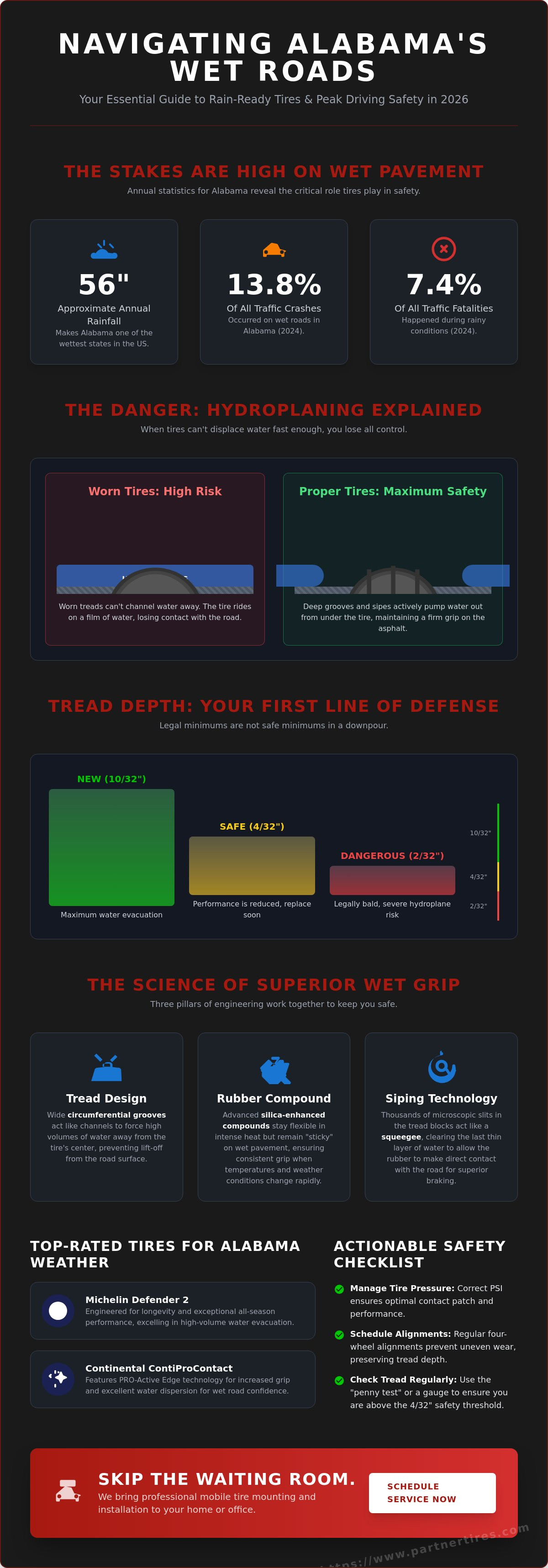
Alabama receives approximately 56 inches of annual rainfall, making it one of the wettest states in the country. This volume creates a persistent threat on major arteries like I-65 and I-459. When water accumulates faster than your tires can displace it, you face the danger of hydroplaning. This phenomenon occurs when a layer of water builds up between the rubber and the asphalt, causing a complete loss of steering and braking control. To understand how this works, you can explore The Science of Wet Grip and vehicle dynamics.
To better understand how tire specifications impact performance on wet surfaces, watch this helpful video:
Finding the best tires for rain in Alabama involves more than just reading a sidewall label. A tire labeled "all-season" is often a compromise designed for light snow in northern states. In the South, you need a tire that prioritizes hydroevacuation. These specialized designs feature wide circumferential grooves that act as channels, forcing water away from the center of the tire. Without these channels, your car becomes a sled on the interstate. Standard tires often fail to keep pace with the intensity of a July afternoon storm.
The Danger of Flash Floods and Standing Water
Alabama's extreme summer temperatures create a hidden hazard. Long dry spells allow oil and grease to accumulate on the road surface. When the first raindrops hit that hot asphalt, they lift those oils, creating a slick film that is more dangerous than water alone. Birmingham drivers face additional risks due to hilly terrain. Steep grades on local routes cause rapid runoff, leading to deep standing water at the bottom of inclines. Your tires must evacuate hundreds of gallons of water per minute to maintain a safe contact patch. They must be resilient enough to handle 100-degree asphalt while remaining pliable enough to grip the road through a deluge.
Tread Depth and the "Penny Test" Reality
Legal standards and safety standards are not always the same. In Alabama, 2/32" of tread is the legal minimum, but this depth is functionally bald in a heavy downpour. Safety experts recommend a 4/32" threshold for reliable wet-weather performance. As tread depth decreases, the distance required to bring your vehicle to a complete stop on wet pavement increases exponentially. Maintaining sufficient depth is a non-negotiable requirement for Southern road safety. You can learn more about how to check tire tread to ensure your vehicle is ready for the next storm.
The Science of Wet Grip: What Makes a Tire Great for Rain?
Alabama rain presents a logistical challenge for your vehicle and your safety. Finding the best tires for rain in Alabama requires looking past marketing claims and focusing on the underlying engineering. Wet performance relies on three specific pillars that must work in unison to keep you on the road. When these systems fail, your vehicle loses its physical connection to the pavement, leading to the dangers of hydroplaning. To maintain control, your tires must manage the following elements:
- Tread Design: The physical geometry and channels that evacuate water.
- Rubber Compound: The chemical makeup that ensures the tire stays flexible and "sticky."
- Contact Patch: The actual surface area of rubber that maintains pressure against the road.
Circumferential grooves are the heavy lifters of your tire’s drainage system. These deep, continuous channels run around the tire's circumference, acting as high-speed exit routes for standing water. Without these channels, a tire would act like a flat board on a lake, sliding uncontrollably. Siping provides the secondary defense. These microscopic slits in the tread blocks act like squeegees, breaking the surface tension of the water. This allows the rubber to penetrate the liquid film and make direct contact with the pavement. This mechanical grip is essential for maintaining control during sudden stops on wet Birmingham streets.
Directional vs. Asymmetric Tread Patterns
Directional patterns feature a distinct "V" shape designed for maximum water displacement. They are specialized tools for high-volume rain, pumping water away from the center with high efficiency. Asymmetric designs are more versatile for daily use. They feature different tread patterns on the inner and outer halves of the tire. The inner side manages water evacuation, while the outer side handles dry-weather cornering and stability. For Birmingham drivers who face both intense heat and sudden afternoon storms, asymmetric tires often provide the most reliable year-round performance.
The Role of Silica and Specialized Polymers
Modern tire chemistry has shifted toward silica-enriched compounds. Historically, rubber compounds became stiff and brittle when exposed to water or lower temperatures. Silica keeps the tread pliable and "sticky" even in a deluge. This flexibility ensures the tire conforms to the microscopic texture of the road surface. Specialized polymers and resins reinforce this effect, creating a chemical bond with the asphalt that resists sliding. While these advanced materials increase the cost of production, they significantly reduce braking distances. Cheap tires often omit these additives to lower the price point, which results in a harder, less responsive tire. Selecting a tire with the right chemical balance is a critical investment in your safety. You can explore premium tire options that prioritize these safety-focused compounds to ensure your vehicle is ready for the next Southern downpour.
Top Tire Categories for Alabama Rain and Heat
Selecting the best tires for rain in Alabama involves balancing wet-weather traction with the state's punishing heat. Our Southern climate reaches triple digits in the summer, which can degrade rubber compounds faster than in cooler regions. You need a tire that remains stable at high temperatures while maintaining the ability to slice through standing water. While "Summer" tires offer exceptional wet grip, they often become brittle during Alabama's unpredictable winter freezes. For most local drivers, the choice comes down to three main categories that offer the best return on investment and safety.
Truck and SUV owners must also choose between All-Terrain and Highway tires. While All-Terrain tires look aggressive, Highway tires often provide better wet-weather braking. The increased siping and larger contact patch of a Highway tire allow it to maintain better friction on flooded asphalt. We recommend evaluating your actual driving habits before prioritizing aesthetics over wet-road performance.
Grand Touring All-Season: The Comfort Choice
Grand Touring tires are the standard for families in Hoover or Vestavia Hills who prioritize a quiet, stable ride. These tires are engineered for long life and consistent performance across a wide range of conditions. Leading manufacturers like Michelin and Continental design these with high silica content to ensure they don't lose grip when the clouds break. They offer a reliable balance, providing enough siping for heavy rain without the road noise associated with more aggressive tread patterns. If your daily commute involves suburban streets and school zones, this category provides the most predictable handling.
UHP All-Season: For Performance and Precision
Ultra-High Performance (UHP) All-Season tires are the preferred choice for those who frequently navigate the I-20 or I-65 corridors. These tires feature stiffer sidewalls and specialized tread designs that reduce the "floating" sensation often felt during a downpour. They provide a more direct connection between your steering wheel and the road. This precision is vital when you need to make sudden lane changes to avoid deep puddles or debris. While they may have a slightly shorter tread life than touring tires, the increased confidence in wet corners makes them a top contender for high-speed commuters.
High-Quality Used Tires for Rain
A new budget tire is often less safe than a premium used tire in Birmingham. Budget brands frequently cut costs by using harder rubber compounds that struggle to find grip on wet asphalt. At Partner Tires, we put every used tire through a rigorous inspection process to verify its integrity. A premium brand tire with 7/32" of tread remaining will often outperform a brand-new "economy" tire in a braking test. Choosing a high-quality used tire in Birmingham allows you to access superior wet-weather technology at a fraction of the retail cost. It's a strategic move for your safety and your budget.
Actionable Safety: Maintaining Your Tires for Wet Weather
Even the best tires for rain in Alabama fail if maintenance is neglected. High-performance rubber requires precise calibration to handle Birmingham's sudden downpours and high-speed interstate travel. Neglecting basic upkeep transforms a safety asset into a liability. You must monitor your equipment to ensure the engineering works as intended. Regular tire rotation every 5,000 miles is a fundamental requirement. Front tires endure the majority of steering and braking forces, causing them to wear faster than the rear. Consistent rotation ensures that your tread depth remains uniform, preventing a dangerous imbalance in water evacuation capabilities.
Visual inspections are equally critical. Watch for "cupping," which appears as scalloped dips or wavy patterns across the tread surface. This condition often stems from worn suspension parts or poor balancing. These dips trap water against the road rather than channeling it away. This trapped water creates a pocket of pressure that can trigger a hydroplaning event even at moderate speeds. Identifying these wear patterns early protects your financial investment and your physical safety. To keep your vehicle road-ready, you can schedule a professional tire inspection and service today.
The Impact of Tire Pressure on Water Evacuation
Tire pressure dictates the shape and efficiency of your contact patch. Under-inflation is a primary contributor to hydroplaning. When pressure is low, the sidewalls support the vehicle's weight while the center of the tread "bows" upward. This creates a hollow cavity where water collects, lifting the tire off the asphalt. Conversely, over-inflation rounds the tread, reducing the total surface area available for grip. Check your TPMS sensors frequently to stay ahead of pressure drops caused by temperature swings. Maintaining the manufacturer's recommended PSI ensures the tread channels remain open and functional during a deluge.
Alignment and Balancing: The Hidden Heroes of Wet Grip
Birmingham potholes are notorious for knocking vehicles out of factory specifications. A car that pulls to one side is a significant risk on wet roads. Misalignment causes "scrubbing," where the tire drags across the pavement at an unintended angle. This accelerates tread loss and reduces the efficiency of siping. A professional four-wheel alignment ensures that each tire is positioned to maximize its drainage channels. High-speed stability also depends on computerized wheel balancing. Even a minor weight imbalance creates vibrations that disrupt the tire's contact with the road. These disruptions are magnified when the pavement is flooded, making precision balancing a necessity for Southern drivers.
Expert Tire Solutions in Birmingham: Partner Tires Comes to You
The best tires for rain in Alabama don't do you any good if they're sitting in a warehouse while you're struggling for traction on I-459. Traditional tire shops require you to sacrifice hours of your workday in a crowded waiting room. We believe safety shouldn't be a logistical burden. Partner Tires operates as the backbone of your vehicle's maintenance, providing the grit and regional expertise needed to handle Southern weather. We bring the equipment, the inventory, and the technicians directly to your location. This ensures your vehicle is equipped for the next storm without disrupting your operational schedule.
Our team understands the specific demands of Birmingham's terrain. We don't just sell rubber; we provide a collaborative partnership focused on your safety and financial health. By eliminating the middleman of the traditional storefront, we pass efficiency and speed directly to you. Whether you manage a commercial fleet or a family SUV, our goal is to keep your wheels turning safely through every summer deluge. Your time is valuable. Our service model respects that reality by delivering precision automotive care where you need it most.
To complement professional on-site service with high-quality components, you can learn more about ELart, UAB and their extensive catalog of automotive spare parts and accessories.
Mobile Installation: Tires Delivered to Your Driveway
Our mobile units are fully equipped workshops on wheels. We handle tire mounting and computerized wheel balancing on-site, ensuring your new set is perfectly calibrated for the road. We serve a wide range of communities, including Birmingham, Hoover, Pelham, Vestavia Hills, and Bessemer. Safety shouldn't wait for a sunny day to visit a shop. With our at home tire installation service, you can have premium wet-weather tires installed while you work or relax. We remove the friction from the tire-buying process, allowing you to prepare for Alabama's rainy season on your own terms.
Roadside Assistance and Emergency Flat Repair
Rainy conditions often hide road hazards like deep potholes or debris, leading to sudden tire failure. Partner Tires provides 24/7 roadside assistance and flat tire repair to get you back on the move. We are the preferred choice for Birmingham businesses and families because we prioritize reliability over flashy marketing. If you're stuck in the rain with a compromised tire, our rapid-response team arrives with the tools to fix the problem or provide a high-quality replacement. Don't leave your safety to chance when the clouds break. Get a quote for your new rain tires today!
Secure Your Grip on Alabama’s Interstates
Alabama weather shifts rapidly. You need equipment that stays ahead of the storm. We've detailed how silica compounds and advanced tread designs create the best tires for rain in Alabama, but technology only works when it's maintained. Proper inflation and alignment are your final defenses against hydroplaning on I-65 or I-20. Don't wait until your steering goes light during a flash flood to realize your tread is too low.
Partner Tires acts as your hardworking ally by bringing the installation process to you. We provide full mobile service across Birmingham and Hoover, ensuring your schedule remains uninterrupted. Every service includes expert computerized wheel balancing for maximum stability on wet asphalt. If you encounter a problem on the road, our highly-rated local roadside assistance team is standing by to assist. We prioritize your safety and your time with every transaction.
Don’t wait for the next storm; schedule your mobile tire installation with Partner Tires now!
Take control of your road safety today and drive with the confidence that only professional-grade equipment provides.
Frequently Asked Questions
What is the best tire tread depth for driving in heavy rain?
A tread depth of 4/32 of an inch is the recommended safety threshold for wet conditions. While the legal limit in Alabama is 2/32 of an inch, your tires lose a significant portion of their water-clearing capacity at that level. Deeper tread ensures the circumferential grooves can displace the high volume of water common during Southern thunderstorms.
Do I need specific "rain tires" for Alabama, or are all-season tires enough?
High-quality all-season tires are sufficient if they feature a silica-enriched rubber compound. The best tires for rain in Alabama are those that balance wet-weather grip with the ability to withstand 100-degree road temperatures. Grand Touring and Ultra-High Performance all-season categories are engineered specifically for this balance.
How can I tell if my tires are hydroplaning?
You'll feel the steering go "light" or loose in your hands as the wheels lose contact with the road. You might also notice a sudden increase in engine RPM as the drive tires spin freely on the water's surface. If the vehicle feels like it's drifting or not responding to your steering inputs, you are likely hydroplaning.
Are wider tires better or worse for driving in the rain?
Wider tires are generally more prone to hydroplaning because they have a larger surface area that must displace water. A narrower tire exerts more pressure per square inch, allowing it to "cut" through standing water more effectively. For the average commuter, standard factory-width tires offer the best balance of safety and performance.
How often should I check my tire pressure during the rainy season?
Check your tire pressure at least once a month and during significant temperature shifts. Alabama's rapid weather changes cause air pressure to fluctuate, which affects the shape of your tire's contact patch. Correct PSI ensures the tread grooves stay open and functional for maximum water evacuation.
Can Partner Tires install my new rain tires at my office in Birmingham?
Yes, we provide professional at-work tire installation throughout the Birmingham and Hoover areas. Our mobile units arrive at your office with all the necessary equipment for mounting and computerized wheel balancing. This allows you to upgrade your vehicle's safety while you remain productive at your desk.
What should I do if my car starts to slide on a wet road?
Stay calm and ease your foot off the accelerator immediately. Do not slam on the brakes, as this can lock your wheels and worsen the slide. Steer gently in the direction you want the vehicle to travel. Once the tires regain their grip on the asphalt, you can slowly apply the brakes or resume acceleration.
Are used tires safe to use in wet weather conditions?
Used tires are a safe, cost-effective option if they have been professionally inspected for tread depth and age. At Partner Tires, we verify that every used tire in our inventory has sufficient tread to handle Alabama's heavy rainfall. A premium brand used tire often provides better wet-weather chemistry than a brand-new, low-end economy tire.


