

Your tires are the only point of contact between your vehicle and the Alabama heat, yet most drivers wait for a dangerous highway blowout to realize their rubber is failing. You're likely asking the same question as many Birmingham commuters: when to replace tires to stay safe without wasting money. It's difficult to make a decision when every shop gives you a different answer. The thought of waiting in a lobby for three hours feels like a massive inconvenience to your busy schedule.
We believe safety shouldn't be a guessing game. This 2026 guide clarifies the replacement process by focusing on the Triangle of Integrity: tread depth, rubber age, and structural condition. You'll learn how to perform a 30-second safety test in your own driveway. We also explain how our local climate impacts your vehicle's lifespan. We'll break down affordable local options, including professional mobile installation that brings the shop to your home or office. From identifying dry rot to mastering the penny test, this is your roadmap to a safer drive and a healthier bottom line for your household or business.
Key Takeaways
- Learn exactly when to replace tires by identifying the chemical signs of dry rot and structural integrity failure.
- Master the quarter test to maintain a 4/32-inch safety margin, offering superior protection against hydroplaning on wet roads.
- Discover why the Alabama climate demands a strict 6-year replacement rule, regardless of how much tread remains.
- Understand how timely tire maintenance improves your fuel economy and prevents expensive roadside emergencies.
- Streamline your schedule with mobile installation options that bring professional tire services directly to your home or workplace.
The Three Vital Signs of Tire Replacement: Tread, Age, and Integrity
Deciding when to replace tires requires more than a quick glance at the rubber. We utilize a professional framework called the Triangle of Integrity. This system evaluates three distinct pillars: tread depth, rubber age, and structural condition. If any one of these pillars fails, your vehicle's safety is compromised. You can't rely on tread alone. A tire with deep grooves can still fail if the internal structure is rotting or the rubber has become too brittle to grip the pavement.
Tread depth provides the mechanical traction needed to move and stop. Rubber age involves the chemical stability of the tire. Over time, the oils in the rubber evaporate, leading to a loss of flexibility. Structural integrity refers to the physical architecture of the tire, including the steel belts and sidewall casing. We treat these three factors as a single unit of safety. Ignoring one is a risk to your business and your family.
Visual Indicators of Tire Failure
Professional inspection starts with a search for specific wear patterns. Cupping is a common issue where the tread develops scalloped dips. This usually signals a problem with your vehicle's alignment or suspension components. Sidewall bubbles are even more critical. These bulges indicate that the internal air is pushing through a breach in the tire's inner liner. This is a terminal failure. If you see exposed metal cords or fabric wires, the tire is no longer safe to drive. In these cases, we recommend immediate roadside assistance or a mobile tire swap to avoid a high-speed blowout.
When Tread Depth Isn't Enough
Many industry sources suggest waiting until 2/32 inch of tread remains. On Birmingham's rain-slicked roads, we find that's a dangerous threshold. We recommend 4/32 inch as the professional safety standard. This extra depth provides the necessary channels to evacuate water and prevent hydroplaning on I-65. It's the difference between stopping safely and sliding into an intersection.
We also utilize computerized wheel balancing during every installation. This process detects weight imbalances that the human eye cannot see. Even a brand-new tire can have internal irregularities that cause vibration and uneven wear. By addressing these hidden factors, we ensure your tires work in harmony with your vehicle's suspension. This proactive approach protects your financial health by extending the lifespan of your investment.
Alabama Heat and the 6-Year Rule: Why Age Trumps Tread
Alabama's summer temperatures often exceed 90 degrees for weeks at a time. This extreme heat accelerates the chemical breakdown of tire rubber through a process known as dry rot. While tread depth is a mechanical measurement, age is a chemical one. You must understand when to replace tires based on their birth date, not just their physical appearance. In the Birmingham area, the intense UV radiation and high humidity create a harsh environment that shortens a tire's reliable lifespan significantly.
Dry rot occurs when the essential oils and resins in the rubber compound evaporate. This leaves the tire brittle and prone to cracking under load. We frequently see tires with plenty of tread that are structurally compromised because they've reached their chemical expiration. This is especially true for spare tires. Many drivers ignore the spare tucked under their truck or in their trunk for a decade. Using an aged spare during a roadside emergency is a major safety risk that often leads to a second, more dangerous failure.
The Impact of Southern Humidity and UV
High temperatures cause rubber to lose its essential elasticity. Elasticity is what allows a tire to grip the road during emergency braking maneuvers. When rubber hardens, your stopping distance increases and your traction on wet pavement vanishes. If you store your vehicle in a garage in Hoover or Vestavia, you might slow this process, but you won't stop it. Heat still penetrates the rubber; the lack of regular movement can actually speed up degradation. Tires need regular use to keep their internal waxes and oils distributed. If you're concerned about your vehicle's safety, our team offers mobile automotive repairs and inspections at your location to verify the health of your rubber.
Reading the DOT Date Code
Every tire manufactured since 2000 features a Department of Transportation (DOT) code on the sidewall. You need to locate the final four digits of this string to find the birth date. The first two digits represent the week of manufacture, while the last two digits represent the year. For example, a code of 1224 indicates the tire was produced in the 12th week of 2024.
- First Two Digits: The specific week of the year (01 through 52).
- Last Two Digits: The year of production (e.g., 23 for 2023).
We recommend a strict 6-year replacement rule for vehicles regularly exposed to the Alabama climate. Any tire over 10 years old is an automatic replacement regardless of tread depth or visual condition. This proactive approach ensures your vehicle remains a dependable foundation for your daily commute or business operations.
DIY Testing vs. Professional Inspection: How to Check Your Tires at Home
You don't need a mechanic's degree to evaluate your vehicle's safety. Simple household items provide immediate answers. We recommend a monthly inspection to determine when to replace tires before a minor issue becomes a highway emergency. Start with a visual sweep in bright daylight and then move to specific measurements. A high-lumen flashlight is your best tool for checking the inner sidewalls where hidden damage often occurs.
The Penny vs. The Quarter Test
The Penny Test is the most common DIY method, but it sets a very low bar for safety. Insert a penny into the tread groove with Lincoln's head facing down. If you can see the top of his head, your tread is at or below 2/32 inch. This is the legal limit. However, we advocate for the Quarter Test as a higher professional standard. Perform the same action with a quarter. If the tread doesn't reach Washington's head, you have less than 4/32 inch of depth. This extra margin is critical for maintaining control during heavy Alabama rainstorms.
| Tread Depth | Wet Stopping Distance | Safety Status |
|---|---|---|
| 10/32" (New) | Baseline | Optimal Traction |
| 4/32" (Quarter) | ~50% Increase | Recommended Replacement |
| 2/32" (Penny) | ~100% Increase | Critical Safety Risk |
Identifying Performance Red Flags
Your vehicle often communicates its needs through physical feedback. If you feel vibrations in the steering wheel at highway speeds, your tires may have lost their balance or developed a structural flat spot. A car that pulls to one side is a clear indicator that you need a four-wheel alignment. This service prevents premature wear and protects your financial investment in new rubber.
Pay close attention to your dashboard. A blinking or steady tire pressure light is more than a nuisance. It often signals that you need TPMS sensor service to ensure your monitoring system is accurate. If your DIY tests show uneven wear or if the car feels unstable, a professional diagnostic scan is the next logical step. We bring these professional tools directly to your driveway, removing the guesswork from your maintenance routine.
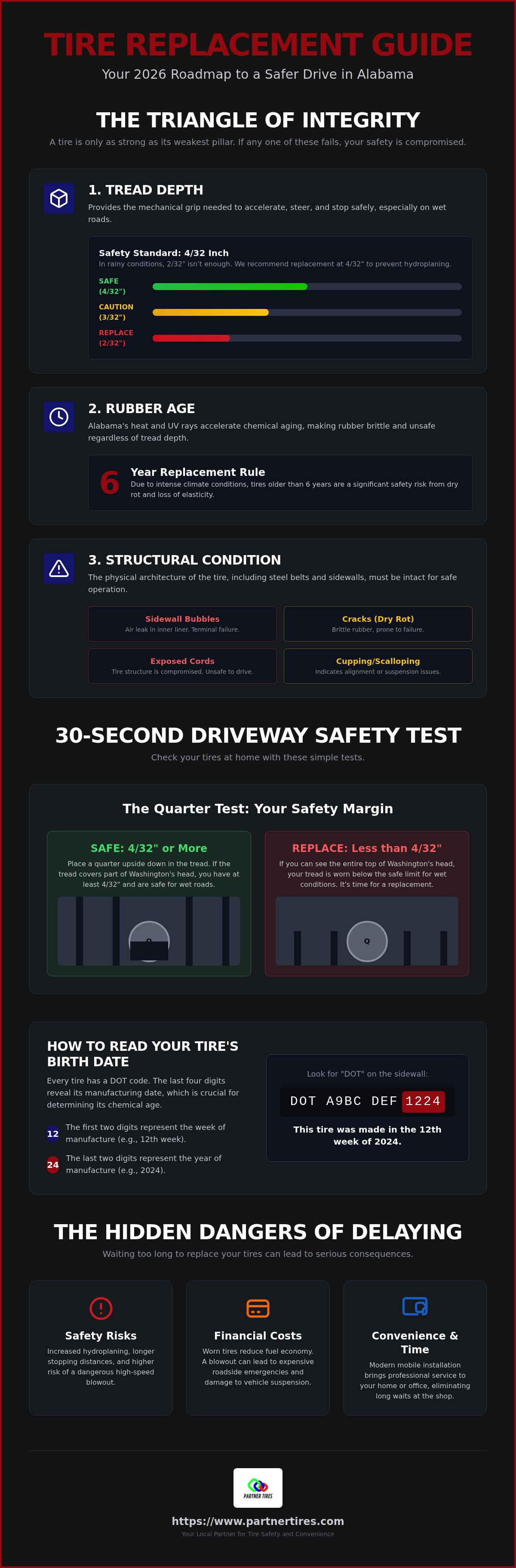
The Hidden Dangers of Delaying: Safety, Fuel Economy, and Roadside Risks
Delaying the decision on when to replace tires creates a domino effect of mechanical and financial failures. Most drivers view worn rubber as a future problem. In reality, it is a current drain on your vehicle's efficiency and your bank account. When tread depth reaches critical levels, your car loses its ability to grip the road, especially on high-speed corridors like I-65. This isn't just about safety; it's about operational costs. Worn tires are a liability that grows every mile you drive.
Damaged or balding tires increase rolling resistance. This means your engine works harder to move the vehicle, which directly reduces your fuel economy. You pay more at the pump every week just because your tires aren't in peak condition. Additionally, tires with uneven wear or structural issues put immense stress on your suspension and braking systems. You might save money today by skipping a replacement, but you'll spend significantly more later on premature brake replacements or suspension repairs. We view tire health as the foundation of your vehicle's financial performance.
Braking Distance and Wet Traction
The physics of a safe stop are simple. Tread grooves act as channels to evacuate water away from the tire's contact patch. Without these channels, a thin layer of water builds up between the rubber and the road. Your car essentially becomes a sled. During one of Alabama's signature pop-up thunderstorms, this lack of traction is a critical failure point. Research indicates that an extra 20 feet of stopping distance can be the difference between a controlled stop and a multi-car collision. You need traction readiness 24/7 to navigate our local climate safely.
The Financial Case for Timely Replacement
Proactive maintenance is a logistical win for any driver or business owner. If you wait for a blowout, you face an immediate "emergency tax." This includes towing fees and roadside assistance charges that can easily exceed $200 before you even buy a new tire. Regular tire rotation and balancing extend the life of your investment and keep your vehicle's foundation stable. By replacing tires on a schedule, you protect your alignment and avoid the extreme inconvenience of a mid-day breakdown.
Don't wait for a roadside crisis to address your vehicle's needs. We provide at-home tire installation to keep your fleet or family car moving without the traditional shop wait times. Our goal is to ensure your operational needs are met with efficiency and precision.
Hassle-Free Tire Replacement in Birmingham: New, Used, and Mobile Solutions
Deciding when to replace tires is only half the battle. The other half involves finding a reliable partner who respects your time and your budget. We provide a streamlined path to vehicle safety that bypasses the traditional tire shop wait. Our service model is built on grit and deep regional expertise. We understand the specific demands of Birmingham drivers and the heat-related stress their vehicles face. Whether you require premium new rubber or a budget-friendly alternative, we deliver a professional solution directly to your location with no-nonsense efficiency.
The Smart Choice: High-Quality Used Tires
We specialize in providing high-quality used tires for drivers who need safety without the "new tire" price tag. Every used tire in our inventory undergoes a rigorous multi-point inspection before it reaches a customer. Our technicians check for structural integrity, bead damage, and rubber flexibility to ensure the tire can handle Alabama's climate. This makes used tires in Birmingham a smart, professional solution for secondary vehicles or tight monthly budgets. You don't have to sacrifice safety for affordability. We ensure every tire we mount meets our strict internal standards for reliable performance.
We Come to You: Mobile Tire Installation
Convenience is a core pillar of our mission. You can schedule at home tire installation in Pelham or at-work installation in downtown Birmingham or Trussville. We bring the full shop experience to your driveway or office parking lot. Our mobile units are equipped with professional mounting machines and computerized wheel balancing systems. This isn't a simple "jack and lug wrench" operation. It's a precise, logistical solution for busy professionals in Homewood who can't afford to lose a Saturday in a waiting room. We prioritize your schedule so your vehicle stays on the road where it belongs.
Every installation we perform includes professional mounting, computerized balancing, and old tire disposal. We handle the logistics from start to finish so you can focus on your business or family. Our unwavering focus on service ensures that your operational needs are in capable hands. We don't just sell tires; we provide a dependable foundation for your vehicle's success. This is professional tire replacement designed for the speed and precision of the modern industry. We work behind the scenes to ensure you arrive at your destination safely and on time.
Secure Your Vehicle's Foundation Today
Maintaining your vehicle's safety requires proactive attention to the Triangle of Integrity. You now know exactly when to replace tires by evaluating tread depth, chemical age, and structural condition. Alabama's intense heat makes the 6-year rule a non-negotiable standard for Birmingham drivers. Waiting for a highway failure is a logistical risk that compromises your safety and your financial health. Timely action protects your fuel economy and prevents the high costs associated with roadside emergencies and towing fees.
We remove the traditional barriers to tire maintenance by bringing the shop to you. Our team provides professional mobile installation directly at your home or workplace. We include computerized balancing with every service to ensure your vehicle operates with maximum precision and efficiency. We serve Birmingham, Hoover, and all surrounding areas with the grit and regional expertise your vehicle deserves. Don't let a busy schedule stand in the way of a safe drive. Our goal is to keep your vehicle moving with reliability and speed.
Get Your Mobile Tire Quote from Partner Tires Today and keep your operations moving forward. We are ready to be the engine that drives your safety and success.
Frequently Asked Questions
How many years do tires usually last in Alabama?
Tires in Alabama typically last six years before the heat causes chemical degradation. While some manufacturers suggest ten years, the Southern climate accelerates dry rot. You must check your DOT date code to determine the manufacturing date. Even if the tread looks deep, the rubber may be too brittle to provide reliable traction. Safety is our priority, so we help you determine when to replace tires based on regional age factors.
Can I replace just one tire if the others are still good?
Replacing a single tire is generally discouraged because it creates an imbalance in traction and handling. We recommend replacing tires in pairs at a minimum to keep your vehicle's foundation stable. If you drive an all-wheel-drive vehicle, you must replace all four tires simultaneously to avoid damaging the drivetrain. Maintaining uniform tread depth across an axle ensures your braking and cornering remain predictable during emergency maneuvers on wet pavement.
Is it safe to buy high-quality used tires?
High-quality used tires are safe when they pass a professional multi-point inspection. We specialize in sourcing used rubber that retains significant tread life and structural integrity. This provides a budget-conscious solution for drivers who want to maintain safety without the cost of new products. Every used tire we sell undergoes rigorous testing to verify it can handle the demands of Alabama roads and the high speeds of your daily commute.
What are the first signs of tire dry rot?
The first signs of dry rot include fine, spiderweb-like cracks on the sidewall or in the tread grooves. You might also notice the rubber feels brittle or looks dull and gray instead of deep black. These indicators signal that the essential oils have evaporated, leaving the tire prone to a blowout. If you spot these visual markers, it's time to decide when to replace tires before a terminal structural failure occurs.
How much tread depth is considered dangerous?
Tread depth becomes dangerous once it drops below 4/32 inch, particularly on wet roads. While 2/32 inch is the legal limit, it offers almost no protection against hydroplaning. We recommend proactive replacement at the 4/32 inch mark to ensure your vehicle can evacuate water efficiently. This extra margin of safety is critical for navigating Birmingham's heavy rainstorms and maintaining control during sudden stops on the highway.
Does insurance cover tire replacement if they are just worn out?
Standard auto insurance policies don't cover tire replacement due to normal wear and tear. Insurance is designed for sudden, accidental losses rather than routine maintenance. You're responsible for the financial health of your vehicle's rubber. However, some tire replacement warranties or road hazard programs can offset the cost if a tire is damaged by a nail or pothole. Check your specific warranty documentation for details on covered repairs and replacements.
How often should I have my tire alignment checked in Birmingham?
You should have your alignment checked every 6,000 miles or whenever you install new tires. Birmingham's road conditions and potholes can easily knock your vehicle out of spec, leading to uneven wear and reduced fuel economy. A professional four-wheel alignment ensures your tires wear evenly and your steering remains precise. This simple maintenance step protects your investment and extends the lifespan of your rubber by preventing premature structural failure.
What should I do if my tire blows out on the highway?
If a blowout occurs, maintain a firm grip on the steering wheel and don't slam on the brakes. Gradually release the accelerator and allow the vehicle to slow down naturally while steering toward the shoulder. Once you've reached a safe location away from traffic, call for professional roadside assistance. Attempting to change a tire on a busy highway like I-65 is extremely dangerous. Let our mobile team handle the logistics.


