
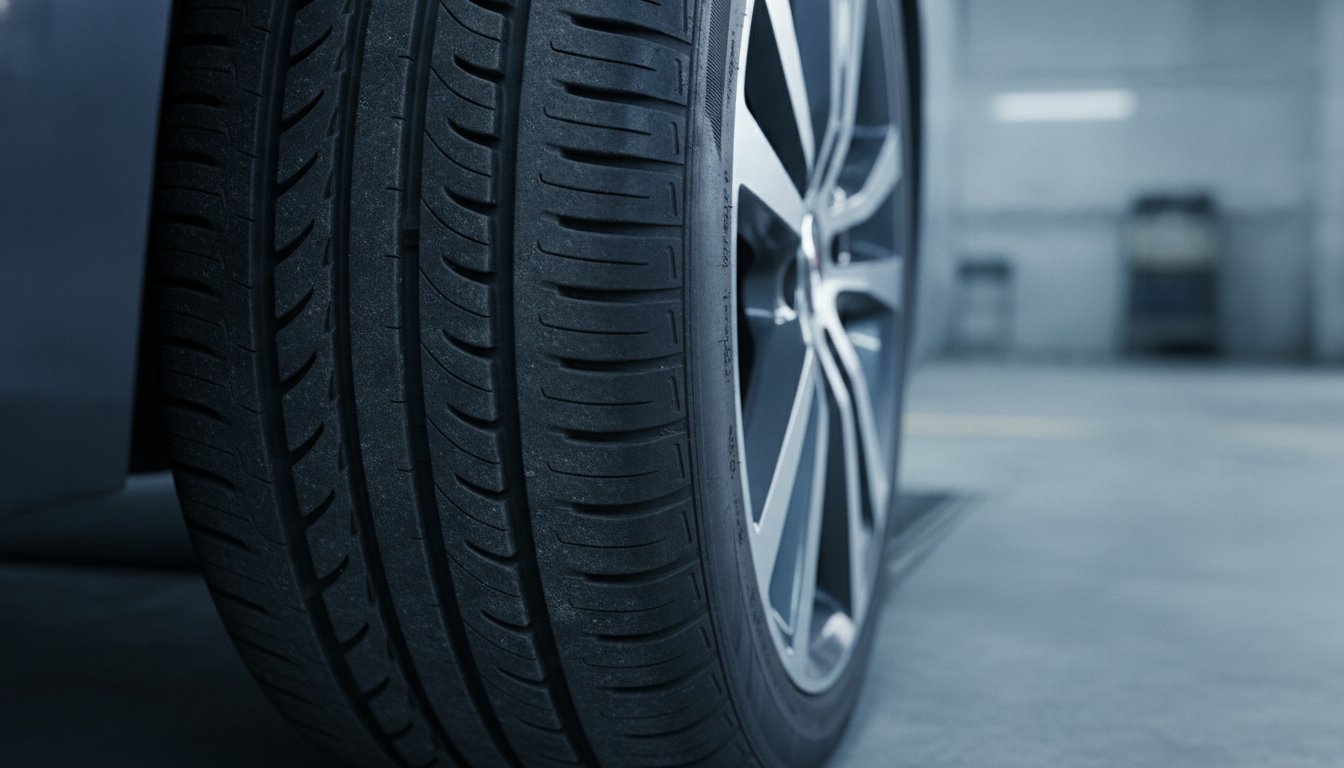
Worn tires contribute to almost 11,000 motor vehicle crashes every year. When you're merging onto I-65 during the morning rush, the last thing you need is a steering wheel vibration or the fear of a sudden blowout. You've noticed your tread looks thin on just one side, and you're likely asking what causes uneven tire wear before it ruins a brand-new set of rubber. It's frustrating to see a major investment wear down faster than expected. We know you need your vehicle to be reliable every time you turn the key.
You shouldn't have to guess why your tires are failing prematurely. This diagnostic guide identifies the specific mechanical issues, like alignment shifts or suspension wear, that are eating away at your tread. We'll help you translate those irregular patterns into clear, actionable fixes. You'll learn how to extend the life of your tires and find the most efficient way to handle repairs right here in Birmingham. Let's get your vehicle back to peak performance without the hassle of a traditional shop waiting room.
Key Takeaways
- Identify the visual cues of tread loss to prevent compromised braking and poor traction on Birmingham roads.
- Pinpoint exactly what causes uneven tire wear, from simple air pressure imbalances to complex mechanical alignment issues.
- Use our diagnostic chart to translate irregular wear patterns into specific suspension and wheel balancing fixes.
- Save money by addressing mechanical culprits early before they lead to expensive, premature tire replacements.
- Explore the convenience of mobile tire installation and professional repairs that fit your busy schedule.
Decoding Uneven Tire Wear: Why Your Tread Matters
Uneven tire wear isn't just a cosmetic issue. It's a signal. When specific sections of your tread vanish faster than others, your vehicle's mechanical integrity is at risk. Proper tire maintenance ensures your car handles exactly as the manufacturer intended. Ignoring these irregular patterns can lead to dangerous situations, especially during Birmingham’s intense summer months. High temperatures soften rubber, which accelerates the degradation of already compromised tires. Catching these signs early often means you only need a professional tire repair birmingham service instead of purchasing an entire new set. Identifying what causes uneven tire wear is the first step toward protecting your investment and your safety.
To better understand this concept, watch this helpful video:
The Safety Risks of Irregular Tread
When tread depth is inconsistent, your vehicle loses its ability to channel water effectively. This leads to hydroplaning during heavy Alabama afternoon thunderstorms. Steering precision also suffers. You might feel a pull to one side or a persistent vibration at highway speeds on I-65. These symptoms indicate that your tires aren't making uniform contact with the pavement. In the context of Birmingham’s stop-and-go urban traffic, tread life is the measurable endurance of your tire’s rubber compound against the friction of daily commuting. Once that tread becomes irregular, your braking distance increases significantly, putting you and other drivers at risk.
How to Perform a 30-Second Visual Inspection
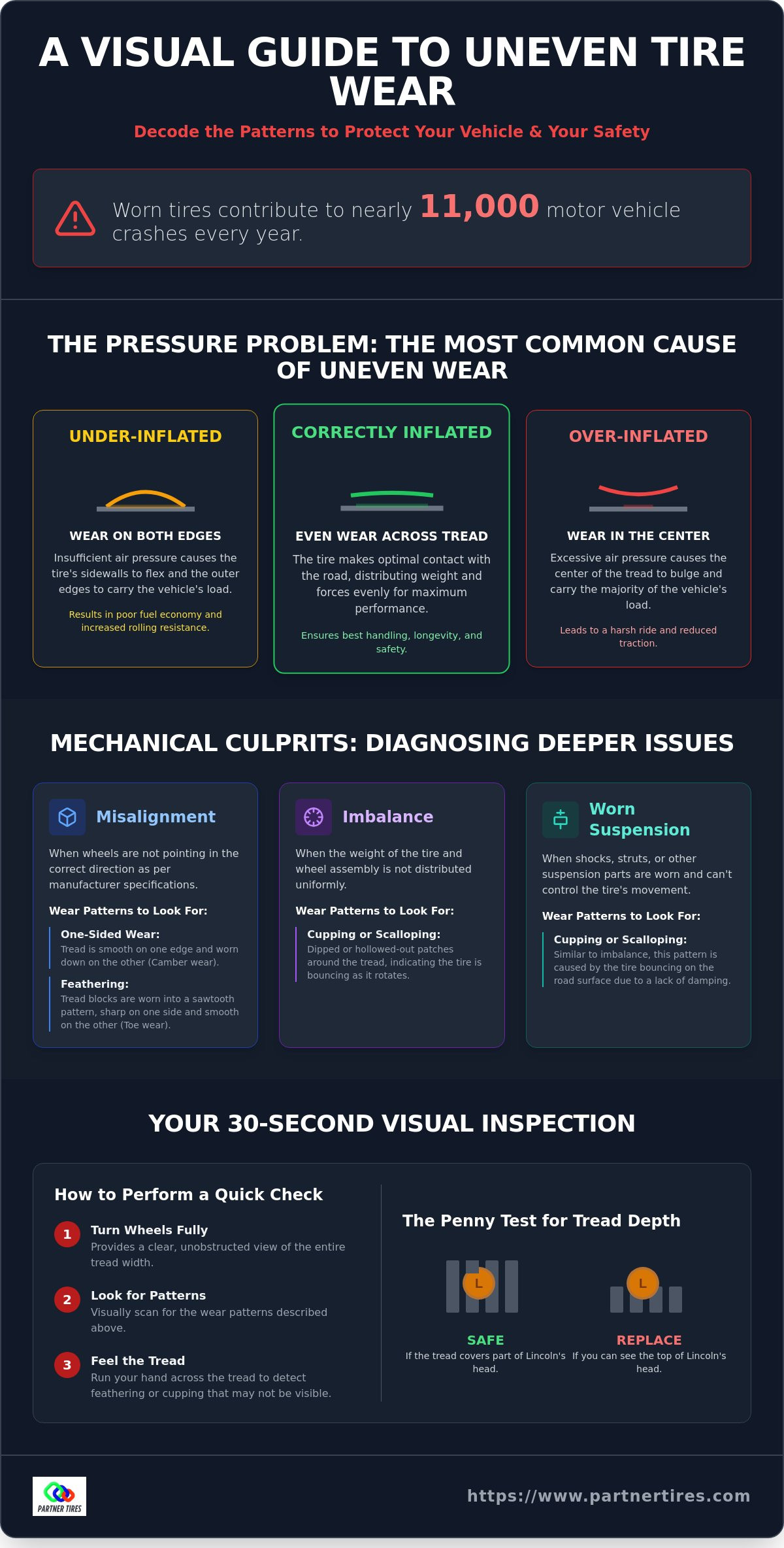
Start by turning your wheels all the way to one side. This gives you a clear view of the inner and outer shoulders of the front tires. You can use the "Penny Test" by placing Lincoln’s head into the tread; if you see the top of his head, your tires are dangerously low. However, a dedicated tread depth gauge provides more accuracy for identifying subtle variations across the tire's width. Look for "feathering," where the tread blocks feel smooth in one direction but sharp in the other. Also, check for "cupping," which appears as dipped or hollowed-out spots on the rubber. Understanding what causes uneven tire wear starts with these small visual details. If you spot these patterns early, you can address the mechanical root cause before the tire is completely destroyed.
Pressure and Performance: How Inflation Affects Wear
Tire pressure represents the most frequent and easily corrected variable in vehicle maintenance. While mechanical failures often require complex repairs, managing your air levels is a straightforward task that prevents premature tread loss. Understanding what causes uneven tire wear often begins with a simple pressure gauge. In Birmingham, our environment plays a massive role in this equation. Rapid temperature shifts in areas like Hoover and Vestavia can cause your tire's pounds per square inch (PSI) to drop significantly overnight, leaving you with under-inflated rubber by the time you hit the morning commute. We recommend checking your levels at least once a month to ensure your vehicle remains a reliable asset.
Maintaining the correct air volume ensures that the tire's footprint remains flat against the asphalt. When this balance is lost, the physical shape of the tire changes, forcing specific areas to bear loads they weren't designed to carry. You can find more NHTSA tire safety information regarding the critical role of inflation in preventing road accidents. A 2012 NHTSA study found that vehicles without direct TPMS were significantly more likely to have severely under-inflated tires. Consistent monitoring is the backbone of tire longevity and operational efficiency.
Under-Inflation: The Silent Tread Killer
Low pressure is a primary culprit for rapid tire degradation. When a tire lacks sufficient air, it flexes excessively under the weight of the vehicle. This causes the sidewalls to collapse slightly, forcing the outer edges to scrub against the road surface. This "edge wear" pattern on both sides of the tire is a clear indicator of under-inflation. Beyond destroying your tread, low pressure increases rolling resistance. This forces your engine to work harder, which kills your fuel economy. During the rainy season, ensure your TPMS sensors are functioning correctly to catch these drops before they lead to a flat. If you notice persistent pressure loss, a mobile diagnostic scan can identify if the issue is a slow leak or a faulty sensor.
Over-Inflation: Why More Pressure Isn’t Better
Adding too much air is just as damaging as having too little. Over-inflated tires bulge in the center, which concentrates the vehicle's weight on a narrow strip of tread. This results in a "center wear" pattern where the middle of the tire becomes bald while the edges look brand new. This reduced contact patch makes your ride feel harsh and bouncy. It also increases the risk of a blowout when hitting road debris or potholes on Highway 280. Always verify your manufacturer’s recommended PSI on the driver-side door jamb sticker. Don't rely on the maximum pressure listed on the tire sidewall, as that number represents the tire's limit, not your vehicle's optimal operating range.
Mechanical Culprits: Alignment, Balancing, and Suspension
Mechanical precision is non-negotiable for safe operation. Bridgestone identifies several common causes of early or irregular tire wear, including heel/toe patterns and camber issues. When your vehicle's geometry is off, your tires fight against each other rather than rolling smoothly. This friction generates heat and scrubs away tread at an alarming rate. It’s a silent drain on your financial health that eventually leads to a costly roadside emergency.
Misalignment: Toe and Camber Issues
Misalignment is the primary cause of rapid front-tire tread loss for Alabama drivers. "Toe-in" or "Toe-out" occurs when your tires aren't pointing perfectly straight ahead. This creates a "feathering" effect where the tread blocks wear down at an angle. Camber issues, where the tire tilts inward or outward, lead to heavy wear on just one shoulder. Hitting a Birmingham pothole or a curb is the fastest way to knock these settings out of spec. If you notice your steering wheel isn't centered or the car pulls to one side, you need to find wheel alignment shops near me to perform a professional correction before your tires are ruined.
Out-of-Balance Tires and Cupping
Vibrations felt through the steering wheel at speeds above 55 MPH usually indicate that your tires are out of balance. Computerized balancing ensures that weight is distributed evenly around the entire circumference of the tire. Without this, the tire develops "cupping"—scalloped, rhythmic dips in the tread. This pattern is also a hallmark of worn shocks or struts. When your suspension is weak, the tire literally bounces down the road instead of maintaining constant contact. At Partner Tires, we handle computerized balancing during our mobile installations to ensure your new tires start their life with a perfect foundation. Addressing these mechanical culprits early protects your investment and ensures your vehicle remains a dependable tool for your daily operations.
Tire Wear Pattern Chart: Diagnosing Your Vehicle’s Health
Identifying what causes uneven tire wear is easier when you understand the visual evidence left on the rubber. Think of your tread as a diagnostic log. Each pattern tells a specific story about your vehicle's mechanical health or your maintenance habits. Using a structured framework allows you to spot issues before they escalate into a complete tire failure on the highway. We prioritize efficiency, so we've mapped the most common patterns below to help you make an informed decision about your vehicle's upkeep.
- Inner or Outer Edge Wear: This usually points to a camber or alignment problem. One side of the tire is carrying more weight than the other, often due to a bent suspension component or a recent impact with a curb.
- Feathering: If the tread ribs feel smooth when you rub your hand one way and sharp the other, you have a "Toe" issue. This means the tires are scrubbing sideways rather than rolling straight.
- Flat Spots: These are localized bald areas. They often result from emergency braking or a seized brake caliper that prevents the wheel from turning freely.
- Sawtooth Wear: This pattern indicates that tire rotations have been neglected. One edge of the tread block wears faster than the other in a step-like fashion, which also increases road noise.
How to Read Your Tread Like a Pro
Safely run your hand across the tread surface to feel for inconsistencies. If you notice "Heel-Toe" wear, where one side of a tread block is higher than the other, your tires are likely experiencing high-torque stress or suspension lag. Front-wheel-drive vehicles wear their tires differently because the front pair handles both steering and the majority of the engine's power delivery. This dual role accelerates wear compared to the rear tires, making regular rotation essential for balancing the lifespan of the set.
When to Repair vs. When to Replace
In Alabama, the minimum legal tire tread depth is 2/32 of an inch. If your tread hits this limit, replacement is mandatory to maintain wet-weather traction. Some wear patterns allow for a simple rotation or alignment fix if caught early. However, any bulge, bubble, or cut in the sidewall makes the tire unrepairable and dangerous. If you need a cost-effective solution to keep your vehicle on the road, consider high-quality used tires birmingham al to stay within your budget while maintaining safety standards. If your tires show these warning signs, schedule a professional diagnostic scan to determine the exact cause and fix the underlying issue immediately.
Professional Tire Care in Birmingham: Partner Tires’ Mobile Solution
Understanding what causes uneven tire wear is only half the battle. Once you've identified the mechanical or inflation issues, you need a solution that doesn't disrupt your operational schedule. Don't let neglected tread patterns leave you stranded on the shoulder of Highway 280 during rush hour. Partner Tires provides a direct logistical answer by bringing professional equipment and expertise to your location. We eliminate the gap between diagnosis and repair, ensuring your vehicle stays on the road where it belongs. Our goal is to be the engine that drives your success by maintaining your vehicle's most critical contact point with the pavement.
Our mobile units function as fully equipped tire centers on wheels. We perform at home tire installation, computerized wheel balancing, and precision tire mounting without requiring you to leave your driveway. We also handle TPMS sensor service and flat tire repair on-site. We serve the entire Birmingham metro area, including Hoover, Trussville, and surrounding communities. This localized approach ensures that expert help is always within reach when your tires show signs of premature failure. We treat every service call as a partnership, focusing on the reliability and safety of your vehicle.
Why Birmingham Drivers Choose Mobile Service
Traditional tire shops often involve long wait times and the logistical headache of dropping off your car. You shouldn't have to sacrifice a productive afternoon just to fix what causes uneven tire wear on your daily driver. Our mobile service allows you to focus on your work or relax at home while our technicians handle the heavy lifting. We understand the specific demands that Alabama roads and high summer temperatures place on your rubber compound. We provide the same high-level precision you'd expect from a stationary shop but with the speed and convenience your busy schedule demands.
Schedule Your On-Site Tire Consultation
Securing your vehicle's reliability starts with a straightforward quote. Whether you need a premium new set or high-quality used tires, we deliver the inventory directly to your door. Maintaining a consistent schedule for tire rotation and balancing is the most effective way to prevent future wear and protect your financial health. We provide immediate mobile assistance and mechanic services across Jefferson and Shelby counties. Contact Partner Tires today to restore your vehicle's performance and extend the life of your tread with professional, on-site care. We are the backbone of your automotive maintenance, working behind the scenes to keep you moving forward.
Protect Your Vehicle and Your Bottom Line
Your tires are a critical investment in your vehicle's safety and operational efficiency. Identifying what causes uneven tire wear early prevents minor alignment shifts or pressure drops from turning into a total tire failure. Regular visual inspections and a commitment to proper inflation ensure your tread lasts as long as the manufacturer intended. We've shown you how to decode these wear patterns; now it's time to take action before these mechanical issues lead to costly replacements. Maintaining your vehicle's health is the most effective way to protect your financial success on the road.
Partner Tires is your locally owned and operated ally in Birmingham. We provide mobile installation at your home or office, bringing the expertise of a traditional shop directly to your location. Every service includes expert computerized wheel balancing to ensure your vehicle has a perfect foundation from day one. Don't let irregular wear compromise your safety on Alabama roads. Get Professional Mobile Tire Service in Birmingham Today and experience the reliability of a partner who values your time. We're ready to keep you moving safely and efficiently.
Frequently Asked Questions
Can an alignment fix tires that are already worn unevenly?
No, a wheel alignment cannot restore rubber that has already been scrubbed away. An alignment corrects your vehicle's steering geometry to prevent future damage, but the existing wear pattern will usually remain. If the wear is severe, the tire may still need replacement to ensure your safety and vehicle stability.
When a vehicle reaches a point where the cost of new tires and mechanical repairs exceeds its market value, it might be time to move on. If you find yourself in this situation, learn more about Cash For Junk Cars Michigan to understand how specialized services purchase used or damaged vehicles directly from owners.
How often should I rotate my tires to prevent uneven wear?
You should rotate your tires every 5,000 to 7,500 miles according to most manufacturer recommendations. This practice is a primary defense against what causes uneven tire wear because it balances the unique stresses placed on front and rear axles. Regular rotation ensures your tires wear at a consistent rate, maximizing your financial investment in the set.
Is it safe to drive on tires with inner edge wear?
No, driving on tires with significant inner edge wear is dangerous. This pattern often indicates that the tire's structural integrity is compromised, potentially exposing internal cords. In Alabama, any portion of the tread reaching the 2/32-inch legal limit requires immediate replacement to prevent a high-speed blowout on the highway.
Why are my front tires wearing faster than my rear tires?
Front tires wear faster because they handle the heavy lifting of steering, braking, and power delivery. In front-wheel-drive vehicles, these tires also support the bulk of the engine's weight. This concentration of force accelerates tread loss compared to the rear tires, which simply follow the vehicle's path during normal operation.
Can bad shocks cause tires to wear unevenly?
Yes, worn shocks or struts are the leading cause of "cupping" or "scalloping" on the tread surface. When your suspension fails to keep the tire firmly pressed against the road, the wheel bounces rhythmically. This creates a series of dips and high spots that cause persistent vibrations and loud road noise at higher speeds.
How much does it cost to fix uneven tire wear in Birmingham?
The total cost depends on the specific mechanical issue identified during a diagnostic scan. In Birmingham, a professional front-end wheel alignment typically ranges from $74 to $183. If the issue is related to wheel balance, you can expect computerized balancing to cost between $15 and $50 per tire.
Do I need to replace all four tires if only two show uneven wear?
You don't necessarily need to replace all four, but you should always replace tires in pairs on the same axle. Mixing a new tire with a significantly worn one can create dangerous imbalances in traction and braking. Replacing the affected pair and correcting the alignment is a reliable way to restore your vehicle's handling.
What is the most common cause of tire feathering?
Improper "toe" settings are the most frequent cause of tire feathering. This occurs when your tires are pointed slightly inward or outward rather than perfectly straight. As you drive, the tread ribs scrub sideways against the asphalt, creating a distinct pattern where one side of the tread block feels sharp and the other feels smooth.


