
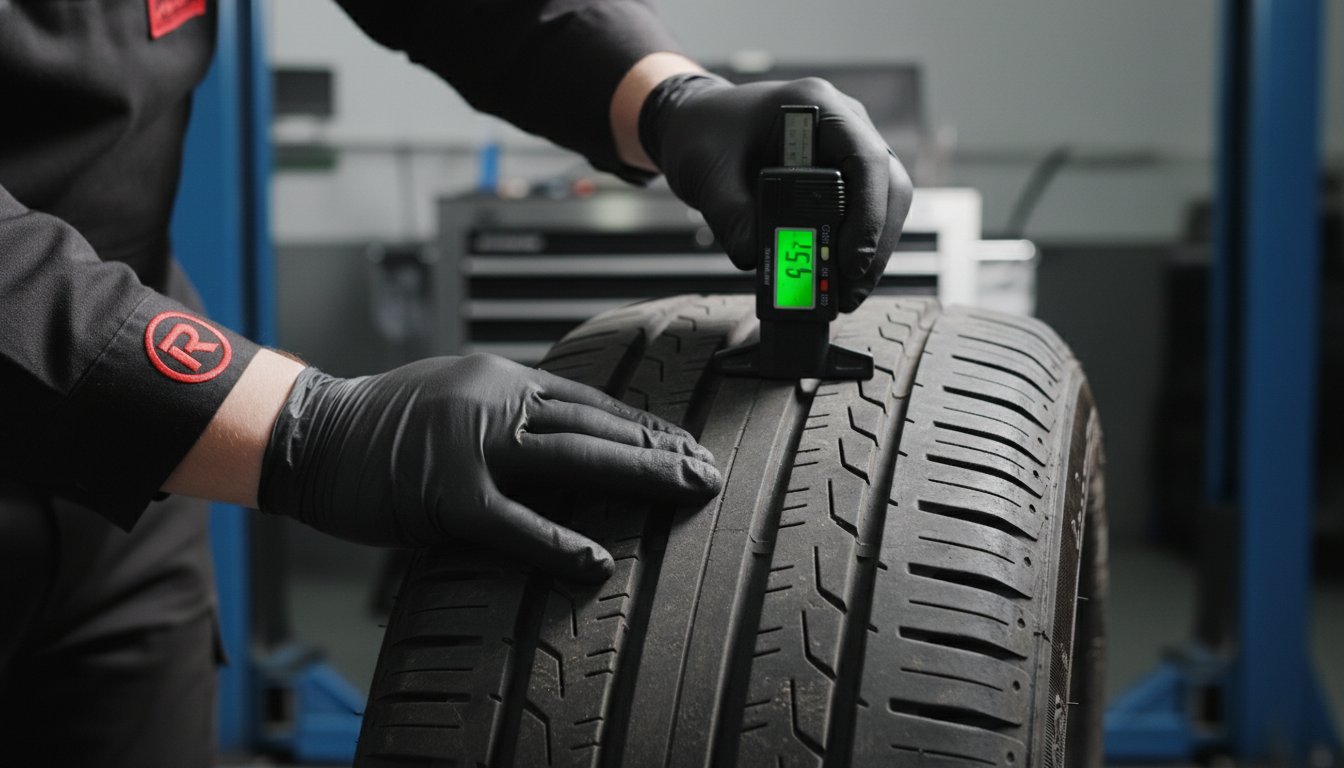
Last July, a local driver named Marcus discovered that a cheap set of treads couldn't handle the 100-degree heat on I-65. His steering wheel started to vibrate, and that $40 bargain tire he bought just seven days prior failed right before the Lakeshore Drive exit. You shouldn't have to choose between your budget and your life. Every Birmingham driver knows that reliability is non-negotiable when you're hauling family or freight. Prioritizing used tires safety isn't just about looking at the tread; it's about understanding the logistics of how a tire ages in our specific Alabama climate.
We're here to empower your next purchase with professional-grade inspection techniques. You'll learn exactly how to identify safe, high-quality used tires and avoid dangerous road risks like dry rot or internal belt separation. We've compiled a clear, action-oriented checklist for 2026 that covers everything from DOT date codes to hidden sidewall repairs. This guide provides the peace of mind you need to drive with confidence and helps you find a dependable local source that's truly driven by service.
Key Takeaways
- Master our 7-point inspection checklist to prioritize used tires safety and ensure every tire is road-ready for the Alabama heat.
- Identify hidden internal damage and belt separation that often go unnoticed during standard visual inspections.
- Learn to decode DOT timestamps to verify the actual age of a tire, a critical factor for safety in humid climates.
- Streamline your sourcing process by asking the right questions to local dealers about inspection standards and return policies.
- Leverage professional multi-point inspections to eliminate the risks associated with used inventory and drive your business's reliability.
The Reality of Used Tires Safety in Birmingham, AL
Safety in the 2026 market requires more than a quick visual check. A truly safe used tire maintains its structural integrity while meeting specific aging thresholds. In Birmingham, drivers frequently choose used options for daily commutes on I-65 or to keep local work trucks operational. The economic benefit is clear, but the used tires safety landscape is complex. New tires must adhere to strict Department of Transportation (DOT) standards. Used tire sales, conversely, often operate without federal oversight. This creates a "wild west" environment where quality varies between sellers.
Partner Tires bridges this trust gap. We provide professional-grade inventory that undergoes rigorous local inspections. We don't just move rubber; we drive reliability through a logistics-driven supply chain. Our team understands that a tire is the only point of contact between a vehicle and the Alabama pavement. We prioritize transparency to ensure every dealer in our network receives inventory they can stand behind. This commitment to quality transforms a risky purchase into a reliable business solution.
Budget vs. Risk: Finding the Sweet Spot
Buying used makes sense for lease returns or temporary vehicle fixes. It's a smart financial move when handled correctly. However, many drivers fall into the "False Economy" trap. Purchasing an unsafe tire for a low price results in immediate replacement costs and safety risks. A tire that fails within 60 days is a liability, not a deal. Our sourcing strategy focuses on premium used units. We target inventory with at least 7/32" of tread depth to ensure longevity. Adhering to tire maintenance best practices is essential for evaluating these units before they hit the road. We empower our partners by delivering products that meet these high standards every time.
The Birmingham Road Factor
Alabama’s climate demands specific tire performance. Summer temperatures in Birmingham frequently exceed 92 degrees Fahrenheit. This intense heat impacts used tires safety by increasing internal pressure and accelerating rubber dry rot. City driving adds further strain. Potholes on local streets require tires with reinforced sidewalls to prevent impact breaks. We use our local expertise to curate inventory suited for these conditions. Our selection process includes:
- Pressure testing to detect internal liner leaks.
- Sidewall inspections for heat-related cracking or bulging.
- Tread wear analysis to ensure even contact patches and grip.
We combine Wholesale Power with a Local Touch to serve the Birmingham community. Our speed and precision ensure that local service centers have the right tires at the right time. We are the backbone of your inventory, providing the grit and service your business deserves. Partner with us to drive your profitability forward while keeping Birmingham drivers safe on every mile of Alabama road.
Invisible Killers: What You Can't See from the Sidewall
A tire might look pristine on a rack, but its exterior often hides fatal structural flaws. Internal belt separation is a primary concern for Birmingham drivers. This occurs when the steel belts inside the carcass detach from the rubber. It usually stems from a single curb impact at speeds as low as 10 mph. You won't see a bulge immediately, but the structural integrity is gone. This hidden damage makes used tires safety a complex issue that requires more than a quick glance at the tread.
In the humid Alabama climate, age frequently matters more than tread depth. High heat and 70 percent average humidity levels accelerate the oxidation of rubber compounds. Following NHTSA tire safety guidelines, professional inspectors prioritize the manufacture date over visual wear. A tire with 90 percent tread that has sat in a Birmingham driveway since 2019 is more dangerous than a two year old tire with 50 percent tread. Heat cycles literally bake the life out of the rubber, making it brittle and prone to catastrophic failure at highway speeds.
You must also watch for re-grooved tires. This illegal practice involves cutting deeper into the existing rubber to make a bald tire look fresh. You can spot this by looking for exposed wire cords or grooves that look hand-cut and jagged. Additionally, improper storage ruins inventory. Tires kept in non-climate-controlled warehouses in the South endure temperature swings from 30 to 100 degrees Fahrenheit. This environment leaches essential oils from the rubber, leading to premature failure regardless of the tire's mileage.
Rubber Deterioration and Dry Rot
Dry rot manifests as microscopic cracks in the sidewall and between tread blocks. These cracks are early warning signs of a blowout. Any tire manufactured in 2020 or earlier is now considered high-risk in 2026, as the chemical bonds have likely reached their limit. Use the fingernail test: press your nail into the tread. If the rubber is supple and leaves a temporary mark, it's likely safe. If it feels like hard plastic and doesn't give, the tire is "dead" and offers zero wet-weather traction.
The History Mystery
Never buy a tire that has been run flat. Driving even 500 yards on a flat tire destroys the internal liner, creating a "heat ring" of shredded rubber inside the carcass. This damage is invisible from the outside but leads to immediate failure when reinflated. Check for "plugged" sidewalls; while a patch in the center tread is acceptable, any repair on the shoulder or sidewall is a total rejection. At Partner Tires, we believe your growth is driven by service and safety, so we recommend only sourcing inventory with verified histories to protect your bottom line.
The 7-Point Used Tire Safety Checklist
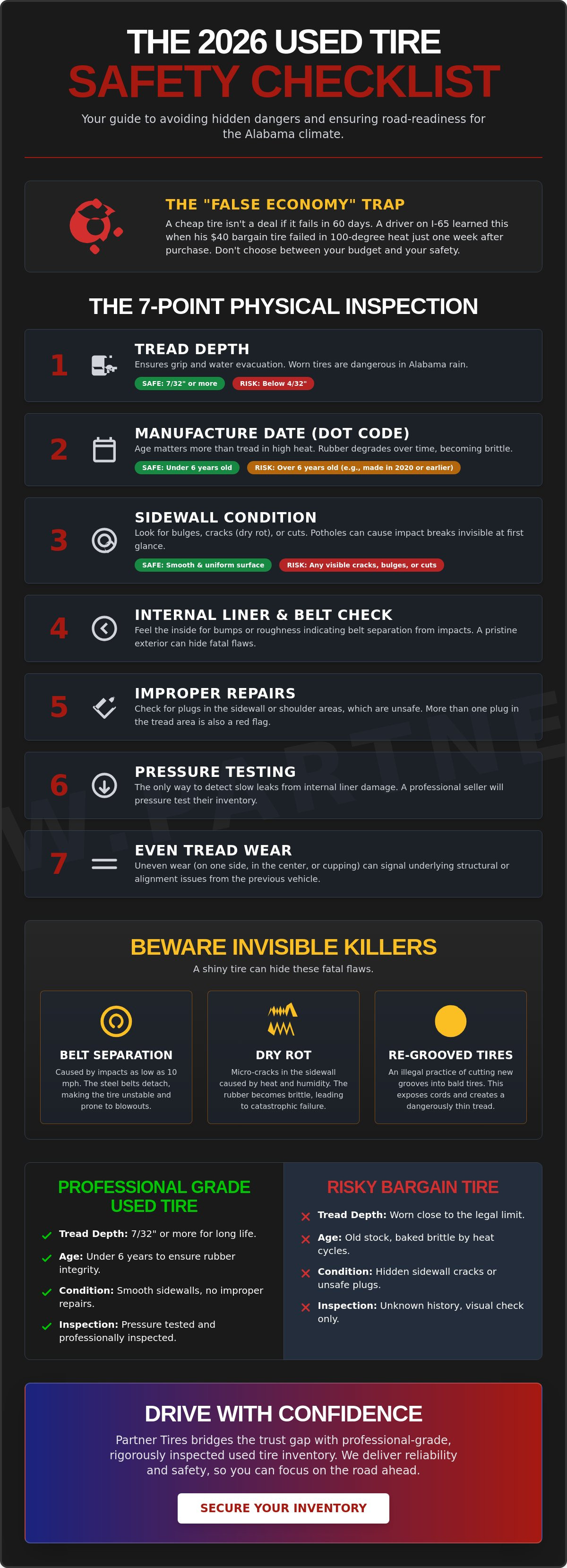
Birmingham drivers face intense heat and sudden downpours on I-65. These conditions demand more than a cursory glance at your rubber. You can't rely on the "penny test" for used tires safety in 2026. A penny only measures 2/32 of an inch, which provides zero margin for error on wet Alabama roads. Professional safety requires a systematic approach to identify hidden defects before they become highway emergencies. Understanding the risks of used tires starts with these seven critical inspection points.
Uniform wear is your first indicator of a tire's history. If one side of the tread is lower than the other, the previous vehicle had alignment issues. This unevenness causes pull and instability. We look for "scalloping" or "feathering" on the edges. These sharp ridges suggest the tire has been dragged across the pavement rather than rolling smoothly. It's a sign of internal stress that compromises the tire's structural life. Partner Tires is driven by service, and that means ensuring every tire we discuss meets the highest standards of reliability.
Visual Inspection Mastery
Shine a high-lumen flashlight through the interior casing to spot the dark shadows of hidden patches or plugs that indicate a previous puncture. To detect "cupping," run your palm firmly along the tire shoulder to feel for a series of peaks and valleys that indicate suspension wear. Check the sidewall for bubbles or bulges. These "eggs" signal that the internal cords have snapped from hitting a Birmingham pothole. You must also check for bead chunking, which occurs when the inner rubber ring is torn. A chunked bead prevents a vacuum-tight seal, leading to rapid air loss during high-speed cornering.
Technical Verification
Every tire has a 4-digit DOT code that reveals its age. The first two digits show the week of manufacture, while the last two show the year. A code of 1525 means the tire was built in April 2025. We recommend a "3/32 rule" for local drivers. While 2/32 is the legal minimum, that extra 1/32 provides the necessary water displacement for heavy rain. The final step is computerized balancing. This process uses wholesale power, local touch to identify internal weight imbalances that no visual check can find. If a tire won't balance, it's scrap, not inventory.
How to Buy Used Tires Safely in the Birmingham Metro
Birmingham drivers need more than a low price. They need reliability. Buying used tires requires a strategic approach to ensure used tires safety. Start by researching established local dealers with a proven track record. Avoid "curbside" deals or Facebook Marketplace listings. These sellers often lack the equipment to test for internal structural failures. A professional shop provides a paper trail and a clear return policy. Ask where they source their inventory. Reputable shops often pull stock from fleet lease returns or trade-ins with high remaining tread life. Demand transparency about the tire's history and age.
Vetting Your Local Tire Shop
A true "certified" inspection isn't just a quick glance. It must include a pressure test to check for pinhole leaks and a sidewall integrity scan. Look for Birmingham shops that utilize computerized wheel balancing. This technology identifies weight imbalances within 0.25 ounces. Proper balancing prevents premature suspension wear and ensures a smooth ride on I-65. For a deeper look at selection criteria, see our High Quality Used Tires in Birmingham, AL: The Complete 2026 Buyer's Guide. You want a shop that treats used inventory with the same rigor as new stock.
The Installation Safety Filter
Professional mounting is your final safety check. Technicians use industrial tire changers that prevent bead damage. DIY mounting in a driveway often leads to catastrophic failure. A 2024 industry report found that 12% of DIY installs result in immediate air loss due to improper seating. Ensure the shop services your TPMS (Tire Pressure Monitoring System) sensors during the install. This ensures your used tires safety remains high by alerting you to pressure drops in real time. Finally, invest in a four-wheel alignment. It preserves your tread and protects your investment. Get it right the first time. Your safety depends on it.
- Ask about sourcing: Know if the tires came from a local trade-in or a regional wholesaler.
- Verify the inspection: Confirm the shop checked for bubbles, patches, and dry rot.
- Demand a receipt: Never buy tires without a documented transaction and a clear return window.
- Prioritize alignment: A $100 alignment can double the life of your used tires.
We deliver the inventory you need to keep Birmingham moving. Success in the tire business relies on speed, trust, and quality. Don't settle for "good enough" when your reputation is on the line. Our logistics network ensures you have the right products exactly when you need them. We drive your growth by providing the backbone for your service center.
Secure your inventory with a team driven by service today.
Partner Tires: Professional Safety Meets Mobile Convenience
Finding reliable rubber shouldn't feel like a gamble. We've built our reputation on removing the uncertainty from the equation. Our team implements a rigorous 12-point inspection process that sets the standard for used tires safety in Birmingham. We examine every sidewall for microscopic cracks and measure tread depth at three distinct points. If a tire doesn't meet our 2026 safety benchmarks, we scrap it. It's that simple. We don't compromise on the quality of our inventory.
We source every tire with the "Local Touch." Alabama roads present unique challenges, from the abrasive pavement on I-65 to the extreme 90-degree heat typical of a July afternoon. We select inventory specifically designed to withstand these southern conditions. This localized expertise means your vehicle handles better during sudden thunderstorms or long commutes through Shelby County. Our "Driven by Service" motto is our promise to you. We won't sell a tire we wouldn't put on our own family vehicles. We prioritize your security over a quick transaction every time.
Mobile Service for Birmingham Families
Your time is valuable. We eliminate the need to sit in a cramped waiting room for hours. Our mobile installation units bring professional mounting and balancing equipment directly to your driveway in Hoover, Vestavia, or Mountain Brook. We've optimized our logistics to ensure we arrive on time, respecting your busy schedule. This service provides a critical safety benefit. Our technicians perform an on-site visual inspection of your vehicle's suspension and alignment. This ensures your tires won't wear prematurely due to underlying mechanical issues. For a deeper look at our process, check out our Professional At Home Tire Installation in Birmingham, AL: The Complete Guide.
Your Partner in Road Safety
Honesty drives our business model. We believe in total transparency regarding used tires safety and performance. If a tire has reached its age limit or shows signs of previous improper repairs, we'll tell you immediately. We combine "Wholesale Power, Local Touch" to provide Birmingham drivers with high-quality options that fit their budgets. We function as the backbone for local drivers, offering the grit and reliability you expect from a dedicated partner. We're here to empower your daily commute with equipment you can trust. Get a quote for safe, high-quality used tires in Birmingham today!
Drive with Confidence Across Birmingham
Prioritizing used tires safety means looking beyond the surface. Our 2026 inspection standards focus on identifying internal structural compromises and aging rubber that often go unnoticed. You need a reliable set of wheels to navigate the Birmingham metro; settling for unverified inventory puts your vehicle at risk. Every tire in our stock undergoes a rigorous, expert 7-point safety inspection to ensure it meets high performance benchmarks before it ever reaches your vehicle.
Partner Tires combines wholesale power with a local touch. We're a locally owned business that understands the specific demands of Alabama roads. We don't just provide tires; we deliver reliability directly to your location through our mobile installation service. Our team remains driven by service, ensuring your daily commute is backed by professional logistics and quiet confidence. Stop guessing about your tread and start trusting a partner that values your safety as much as you do.
Browse Our Inspected Used Tire Inventory in Birmingham
We're ready to help you stay safe on every mile of the journey ahead.
Frequently Asked Questions
Is it actually safe to buy used tires for highway driving?
Yes, used tires are safe for highway use if they pass a rigorous 5 point inspection for structural integrity. Used tires safety depends on the absence of sidewall bubbles or exposed cords. We recommend tires with at least 5/32 inch tread for high speed Birmingham commutes. This depth ensures proper heat dissipation and grip on the asphalt during summer months.
How old is too old for a used tire in Alabama?
Tires older than 6 years are past their reliable service life in Alabama's intense heat. You can verify the age by checking the DOT code on the sidewall. The last four digits represent the week and year of manufacture. Tires produced before 2020 often show signs of dry rot, which increases blowout risks on I-65 and local highways.
What is the minimum safe tread depth for used tires?
The absolute minimum legal tread depth is 2/32 of an inch, but safety experts recommend at least 4/32 of an inch for wet conditions. We use calibrated depth gauges to verify every unit in our inventory. If a tire hits the 2/32 mark, it loses 50 percent of its traction on rainy Birmingham roads compared to a deeper tread.
Can I tell if a used tire was in an accident?
You can identify previous trauma by looking for internal belt separation or scalloping on the tread surface. Check the inner liner for bead damage or rubber dust, which indicates the tire ran while flat. These 3 specific signs reveal if a tire suffered impact damage. Professional inspection ensures these compromised units never reach the sales floor or the customer's vehicle.
Do used tires come with any kind of warranty or guarantee?
Most used tires are sold as-is, but reputable Birmingham dealers often provide a 30 day exchange policy for manufacturer defects. Partner Tires focuses on wholesale reliability, ensuring every tire delivered to a shop meets strict quality benchmarks. Local dealers typically offer their own guarantees to build trust. This approach ensures your business stays protected while providing value to the end user.
How much money do I really save buying used vs. new tires?
Drivers typically save 50 to 70 percent off the retail price of a new tire by choosing a high grade used option. This allows a vehicle owner to install a premium brand like Michelin or Bridgestone for the price of a budget entry level tire. It's a logistical win for your budget. You get better rubber for a fraction of the standard cost.
What happens if a used tire fails shortly after installation?
If a tire fails within 24 hours due to a missed puncture or bead leak, the installer should replace it immediately. Professional shops in Alabama follow the Rubber Manufacturers Association guidelines for safe repairs and replacements. Always keep your receipt to prove the installation date. This documentation is vital for resolving any issues with the service center quickly and efficiently.
Does Partner Tires inspect used tires before selling them?
We perform a multi stage pressure test and visual inspection on every unit before it enters our distribution network. Our team checks for 8 specific defects including uneven wear, sidewall damage, and aging. This commitment to used tires safety empowers our dealer partners to sell with absolute confidence. We are driven by service, ensuring our wholesale power supports your local success.


