
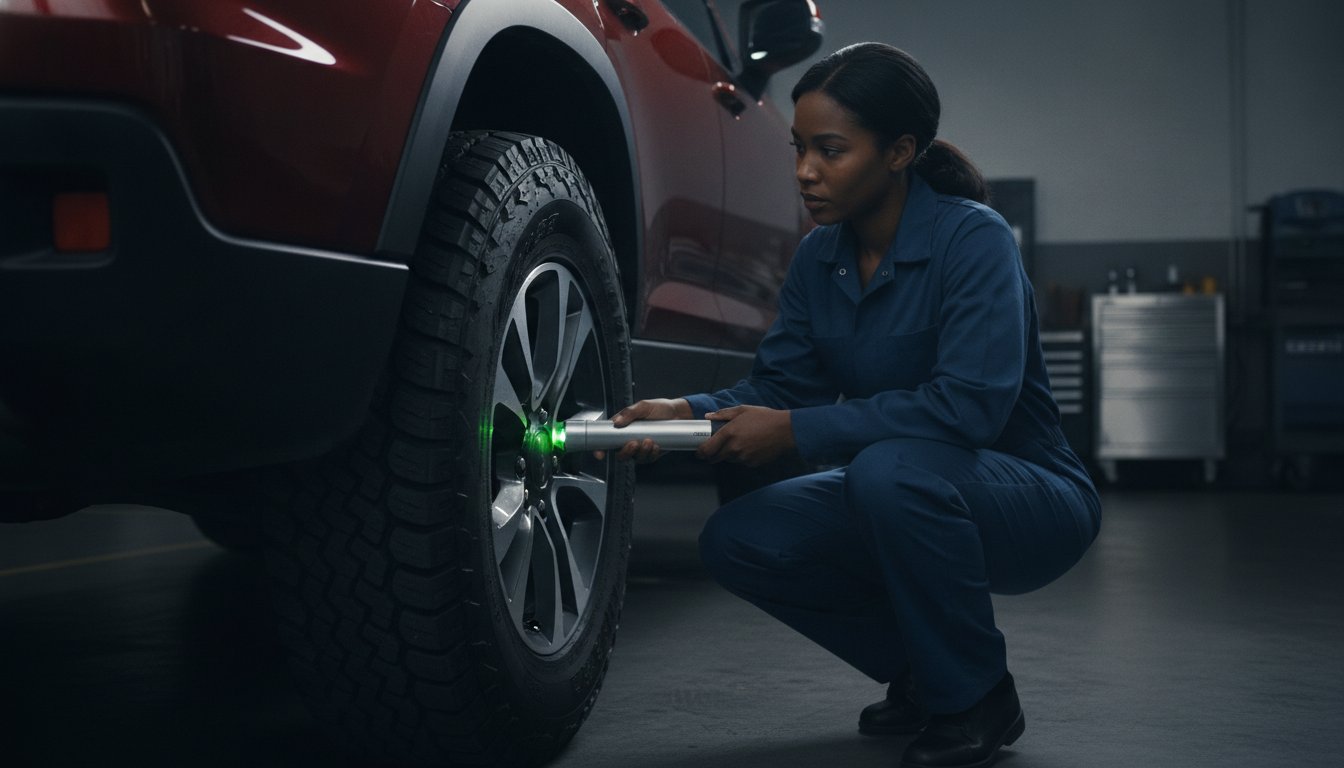
Nearly 11,000 motor vehicle crashes in the U.S. every year are linked directly to worn tires. When you're behind the wheel of a heavy SUV, those stakes feel even higher. You know that a fresh set of rubber can cost upwards of $1,200 in 2026. With used SUV prices climbing by over $1,500 since January, your maintenance budget is likely under pressure. You want to save money, but you cannot afford to compromise on reliability. You're likely asking, are used tires safe for SUVs, or are you inviting a dangerous blowout on the highway?
We agree that safety should never be a gamble based on a price tag. Discover the critical safety standards used tires must meet to handle the unique weight and performance demands of an SUV. This guide provides a professional inspection checklist to help you identify hidden structural flaws and understand load ratings. We'll also cover the latest Alabama tread depth regulations and show you how to find a trustworthy Birmingham source that prioritizes your operational success. It's time to get the facts so you can keep your vehicle on the road with confidence.
Key Takeaways
- Identify the specific weight requirements and load index ratings that determine are used tires safe for SUVs before you invest in your next set.
- Master the four non-negotiable inspection points to detect hidden structural damage and ensure long-term road reliability.
- Compare the value of professional sourcing against new tire costs to maximize your maintenance budget without cutting corners on safety.
- Learn how to spot UV damage and internal belt separations caused by Birmingham’s unique heat and road infrastructure.
- Leverage professional mobile services and multi-point inspections to ensure every tire meets strict SUV performance standards.
The SUV Factor: Why Weight and Load Ratings Matter for Used Tires
SUVs are built for utility and capacity, but that extra mass places immense pressure on your vehicle’s foundation. Unlike standard sedans, a full-size SUV exerts significantly higher stress on tire sidewalls during cornering and braking. This weight factor is the primary reason why answering are used tires safe for SUVs requires more than a quick look at the tread. You must verify that the tire was engineered to support the specific gross vehicle weight of your model.
Safety starts with the structural integrity of the rubber. A tire that looks good but lacks the correct load capacity can fail under the heat and pressure of a loaded vehicle. Proper Tire maintenance includes verifying these ratings before any installation. If you install a passenger car tire on a heavy SUV, you risk a catastrophic blowout because the internal belts cannot handle the vertical load.
To better understand the specific requirements for your vehicle, watch this helpful video:
Understanding SUV Load Index and Speed Ratings
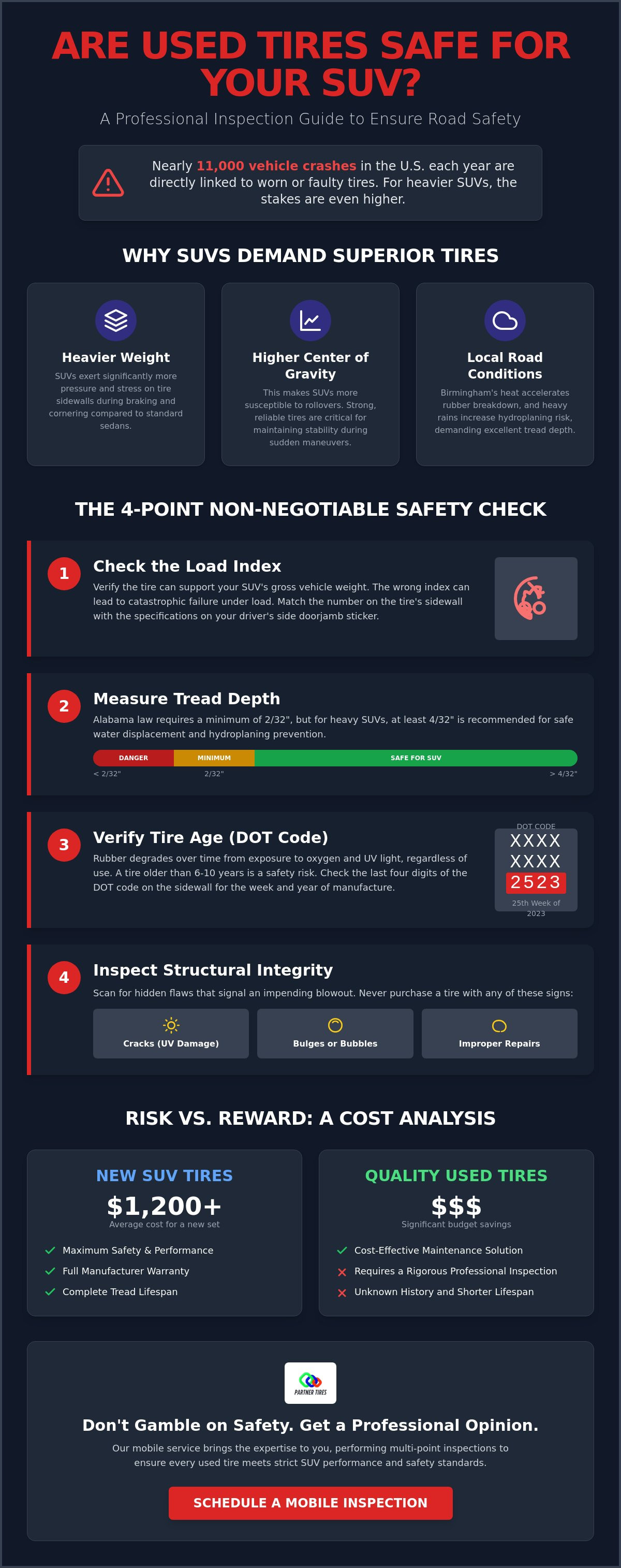
Every tire features a Load Index. This numerical code is located on the sidewall near the size markings. It indicates the maximum weight the tire can support when properly inflated. You should always match this rating to your SUV manufacturer specifications found on the driver side doorjamb. Exceeding these load limits leads to rapid heat buildup. In the high-speed environment of 2026 highway travel, excessive heat is the leading cause of tire delamination and failure.
Professional sourcing ensures that your used inventory meets these exact requirements. We prioritize matching the load index to your vehicle needs to protect your operational safety and financial health. For those who use their SUVs to transport mobile storage units or trailers from Atlanta Container & Trailer, using the correct rating is essential to prevent liabilities that compromise vehicle stability during every mile of operation.
The Center of Gravity and Cornering Stability
SUVs possess a higher center of gravity than standard cars. This makes them more susceptible to rollovers during sudden maneuvers or emergency swerving. Worn tread or weakened sidewalls on a pre-owned tire can exacerbate this risk significantly. Grip is essential for maintaining control, especially when dealing with hydroplaning on Alabama roads during heavy afternoon rain. Sidewall strength is more important for SUVs than standard cars because it prevents the tire from flexing excessively under the rim during sharp turns.
- Alabama Heat: High temperatures accelerate the breakdown of rubber compounds in used tires that already have significant age.
- Tread Depth: Alabama law requires at least 2/32 of an inch, but heavy SUVs often need more for wet-weather stability.
- Sidewall Integrity: SUVs require reinforced sidewalls to manage the lateral forces of a taller, heavier vehicle.
By focusing on these mechanical realities, you ensure that your vehicle remains a reliable asset rather than a safety risk. Our commitment is to provide the data you need to make an informed, professional decision for your SUV.
4 Non-Negotiable Safety Checks for Pre-Owned SUV Tires
Professional safety isn’t a visual guess. It requires a systematic inspection process to identify risks that aren't visible at a distance. You should never buy a used tire without checking four critical areas first. Many drivers wonder, are used tires safe for SUVs, but the answer depends entirely on the rigor of the evaluation. While a tire might look clean, its structural integrity is determined by its history and composition. We prioritize a no-nonsense approach to these checks to ensure your vehicle remains a reliable asset on the road.
The DOT code is the four-digit manufacture date indicator found on the tire sidewall. This code provides the essential timeline of the tire's life. A tire that looks new but is old represents a hidden danger to any driver. Rubber is a biological product that degrades over time. Even if a tire has never touched the pavement, its internal chemistry changes as it ages. Following NHTSA tire safety guidelines ensures you don't overlook these vital age-related risks.
The DOT Date Code: Is the Rubber Too Old?
Look at the last four digits of the DOT string. The first two digits indicate the week of manufacture, while the last two represent the year. For example, "1224" means the tire was produced in the 12th week of 2024. You should follow the 6-year rule for SUV tires. Heavy vehicles put immense stress on rubber compounds. Once a tire passes six years of age, the risk of tread separation increases significantly. In Alabama, this process accelerates. The intense sun and high humidity cause rubber oxidation and dry rot. If you see tiny cracks in the sidewall or between tread blocks, the tire is compromised and must be rejected.
Tread Depth and Uniform Wear Patterns
While Alabama law allows for a minimum tread depth of 2/32 of an inch, this is insufficient for a heavy SUV. We recommend a minimum of 6/32 of an inch for pre-owned SUV tires. This extra depth is necessary to displace water and prevent hydroplaning in a vehicle with high mass. You must also inspect for uniform wear patterns. If one side of the tread is more worn than the other, the tire likely came from a vehicle with alignment or suspension issues. Look for feathering, where the tread blocks feel smooth in one direction but sharp in the other, or cupping, which indicates bad shocks. These patterns create vibrations and reduce stability. If you want to avoid these hidden flaws, sourcing your inventory through Partner Tires provides the professional oversight your fleet requires.
Comparing Used vs. New Tires for Your SUV: A Risk-Reward Analysis
Choosing between new and pre-owned rubber is a logistical decision that impacts both your safety and your bottom line. New tires offer manufacturer warranties and the assurance of zero wear, but they come with a significant price tag. In 2026, outfitting a large vehicle with fresh stock often costs over $1,000. For many fleet managers and families, the immediate financial relief provided by used inventory is essential. Cost savings of 50% or more are frequently achieved through professional sourcing. The real challenge is determining when the savings outweigh the potential risks.
When evaluating your options, the central question remains: are used tires safe for SUVs compared to brand-new alternatives? The answer depends on the specific category of used tire you select. While some used tires have seen years of service, others are nearly indistinguishable from new inventory. Understanding these distinctions allows you to maintain your vehicle’s operational health without overextending your maintenance budget.
The Reality of Take-Off Tires
Take-off tires are the gold standard of the pre-owned market. These are tires removed from brand-new SUVs at the dealership, often because the buyer requested a custom wheel and tire package. Because these tires are swapped immediately, they frequently have nearly 100% of their original tread remaining. They haven't been subjected to potholes, curb strikes, or extreme heat cycles. Take-offs provide the structural integrity of new-tire safety at a significantly lower price point. They are a hardworking solution for anyone who wants peak performance without the retail markup.
Mileage and Usage Patterns
Your driving habits should dictate your choice. High-mileage commuters who travel over 15,000 miles annually may benefit from the longer lifespan of new tires. However, for vehicles used for local errands or secondary fleet tasks, high quality used tires are a highly efficient choice. You must account for your specific driving environment in Birmingham. The combination of hilly terrain and heavy towing puts extra strain on any tire. If your SUV is frequently used for hauling, you must prioritize frequent pressure checks and rigorous tread monitoring. Used tires are a dependable foundation for your vehicle as long as you match the tire's remaining life to your expected mileage needs. Efficiency isn't just about the purchase price; it's about the cost-per-mile of safe operation.
The Birmingham Driver’s Checklist: Evaluating Tires in Alabama
Alabama’s climate demands more from your vehicle’s rubber than milder regions. The intense Southern heat accelerates the chemical breakdown of tire compounds, leading to premature brittleness. When you ask, are used tires safe for SUVs in this environment, the answer depends on how well the tire has been shielded from UV damage. You must inspect the sidewalls for a dull, chalky appearance or fine spider-web cracking. These are clear indicators of oxidation that can lead to structural failure under the high-pressure demands of a heavy SUV. Safety isn't just about tread; it's about the chemical health of the rubber.
Birmingham’s road infrastructure adds another layer of risk. Our local potholes are notorious for causing internal belt separations that are invisible from the outside. You must run your hand along the inner liner of any unmounted tire. If you feel any bulges, waves, or uneven textures, the internal structure is compromised. These flaws will only worsen once the tire is subjected to the weight of an SUV. Always insist on a professional pressure test before the tire is mounted. This is the only way to ensure the bead and sidewalls can maintain a consistent seal under load.
Identifying Professional vs. Amateur Repairs
SUV tires operate under high tension. A simple string plug is an amateur fix that is never sufficient for a heavy vehicle. It doesn't seal the inner liner, allowing moisture to reach the steel belts and cause rust. You should only accept tires with a professional plug-patch combination. This repair seals the puncture and reinforces the internal structure from the inside out. Sidewall repairs are an automatic rejection. The sidewall is the most flexible part of the tire; any patch here will eventually fail due to constant movement. You should also watch for regrooved tires. This dangerous practice involves cutting deeper into a worn tire to mimic new tread. It leaves the tire dangerously thin and prone to immediate blowouts.
Local Road Conditions and Tire Choice
Birmingham experiences frequent heavy rain followed by intense heat. You need a tread pattern that can effectively channel water to avoid hydroplaning. Once you select your tires, a four-wheel alignment is essential. Correct alignment ensures your used tires wear evenly and provide maximum grip on I-65. Check the bead area for any nicks or tears from previous mounting. A damaged bead leads to slow leaks that are difficult to diagnose once you're on the highway. If you need reliable inventory that has already passed these rigorous local checks, browse our certified used tires today to secure your vehicle’s performance.
Safety Guaranteed: Partner Tires’ Inspection and Mobile Service
Safety isn't a byproduct of luck. It's the result of a rigorous logistical process. At Partner Tires, we recognize that the question of whether are used tires safe for SUVs depends entirely on the standards of the supplier. We act as the backbone of your maintenance strategy. We eliminate the guesswork by applying a strict multi-point professional inspection to every unit in our inventory. Our team prioritizes your operational success by rejecting any tire that fails to meet high-capacity SUV load specifications. You get the financial relief of pre-owned rubber without the structural uncertainty.
When you consider if are used tires safe for SUVs, our professional oversight provides the definitive answer. We provide the technical foundation your vehicle requires. Shop reliability meets home ease through our dedicated service model. We don't just sell rubber; we provide a partnership based on trust and efficiency. This commitment ensures your SUV remains a dependable asset for your family or for a professional service business like Ray Lawns that depends on reliable equipment.
Our Professional Inspection Process
Our technicians verify internal structural integrity before any tire is cleared for sale. This goes beyond a visual check. We look for the subtle signs of belt fatigue and inner liner damage. We look beyond the surface. Every tire undergoes a pressure test to ensure performance. A critical component of our service is computerized wheel balancing. This process is non-negotiable for SUVs. It ensures that the heavy mass of your vehicle is distributed evenly. This prevents the vibrations and premature wear that often plague amateur installations. We only stock high-grade, safe pre-owned rubber.
Mobile Installation: We Bring Safety to You
Safety and convenience are no longer mutually exclusive. Our mobile installation service brings a professional shop directly to your location. We believe at home tire installation is the safest way to buy. It allows you to inspect the tires on your own property while our experts handle the mounting and balancing. We serve the entire metro area, including Birmingham, Hoover, and Vestavia. You receive on-site professional mounting that respects your busy schedule. We bring safety to you. We work behind the scenes to keep your vehicle on the road. Don't settle for the risks of an unvetted marketplace. Contact Partner Tires for safe, inspected SUV tires today.
Secure Your SUV’s Performance with Professional Sourcing
Maintaining a heavy SUV requires a focus on structural integrity and load capacity. We've established that the answer to are used tires safe for SUVs is a definitive yes, provided the rubber passes a rigorous, professional evaluation. You now understand how to identify age-related risks and why load ratings are the foundation of vehicle stability. By prioritizing high-quality take-offs and verified inventory, you protect your vehicle’s operational health and your bottom line. Professional sourcing ensures you don't have to choose between financial efficiency and road safety.
Partner Tires serves the Birmingham metro area with the grit and expertise your vehicle deserves. We eliminate the uncertainty of the secondary market through our professional 4-point safety inspection. Our team brings the shop to you with mobile installation at your home or work, ensuring your tires are mounted and balanced with precision. It's time to stop gambling on unvetted inventory and start investing in reliability. We are ready to be the engine that drives your success on the road.
Browse Our Inspected Used SUV Tires in Birmingham and secure your vehicle’s foundation today.
Frequently Asked Questions
How can I tell if a used SUV tire is too old?
Check the DOT code on the sidewall. The last four digits show the week and year of manufacture. We recommend replacing tires once they reach 6 years of age, even if the tread looks deep. Rubber degrades chemically over time. This process is faster in the Alabama sun. Always prioritize structural safety over visual appearance to ensure your vehicle foundation is secure.
Is it safe to have only two used tires on an AWD SUV?
No, it is generally unsafe and can damage your vehicle’s drivetrain. AWD systems require all four tires to have nearly identical diameters to function correctly. Significant differences in tread depth cause the system to work harder, leading to mechanical strain. If you are wondering are used tires safe for SUVs with AWD, they are only safe if the tread depth matches your existing set within 2/32 of an inch.
What is the minimum tread depth for a safe SUV tire?
The legal minimum in Alabama is 2/32 of an inch, but SUVs require more for safety. We recommend at least 6/32 of an inch for pre-owned SUV tires. This extra depth is critical for displacing water and preventing hydroplaning in heavy vehicles. A tire with only 3/32 of an inch tread lacks the grip needed for emergency maneuvers on wet Birmingham roads. We prioritize your safety by maintaining higher standards.
Can used tires handle the weight of a full-size SUV for towing?
Yes, provided the tire has the correct load index for your vehicle's towing capacity. You must verify the numerical load code on the sidewall against your manufacturer's specifications. Towing increases heat buildup and sidewall stress. We reject any used tire that shows signs of belt fatigue or internal heat damage. Professional inspection is the only way to ensure a used tire can handle heavy towing loads without failure.
How do I know if a used tire has been professionally repaired?
Inspect the inside of the tire for a permanent plug-patch combination. A professional repair uses a rubber stem to fill the hole and a reinforced patch to seal the inner liner. Avoid tires with simple string plugs or repairs located on the shoulder or sidewall. These amateur fixes are prone to failure under the high-pressure demands of an SUV. We only sell tires that meet these strict professional repair standards.
What are the risks of buying used tires from a private seller vs. a shop?
Private sellers often lack the equipment to detect internal structural damage or belt separations. You risk buying a tire with hidden flaws, dry rot, or improper repairs. A professional shop like Partner Tires uses computerized balancing and pressure testing to verify safety. We provide a level of accountability and expertise that a private transaction cannot match. Your safety is worth the investment in professional oversight and reliability.
Does Partner Tires offer a warranty on used SUV tires?
Yes, we offer tire replacement warranties on our used inventory. This provides an additional layer of protection for your investment. We stand behind our multi-point inspection process and the quality of our pre-owned rubber. If a tire fails to meet our performance standards, our warranty ensures your operational needs are met without additional financial strain. We prioritize your long-term success and financial health on every mile of road.
How long do used tires typically last on a heavy SUV?
Lifespan depends on the remaining tread at purchase and your driving habits. A high-quality used tire with 8/32 of an inch tread can last 20,000 to 30,000 miles with proper maintenance. Heavy SUVs put more stress on tread blocks, so regular rotation and computerized wheel balancing are essential. When asking are used tires safe for SUVs, remember that longevity is tied directly to consistent pressure checks and professional alignment.


