
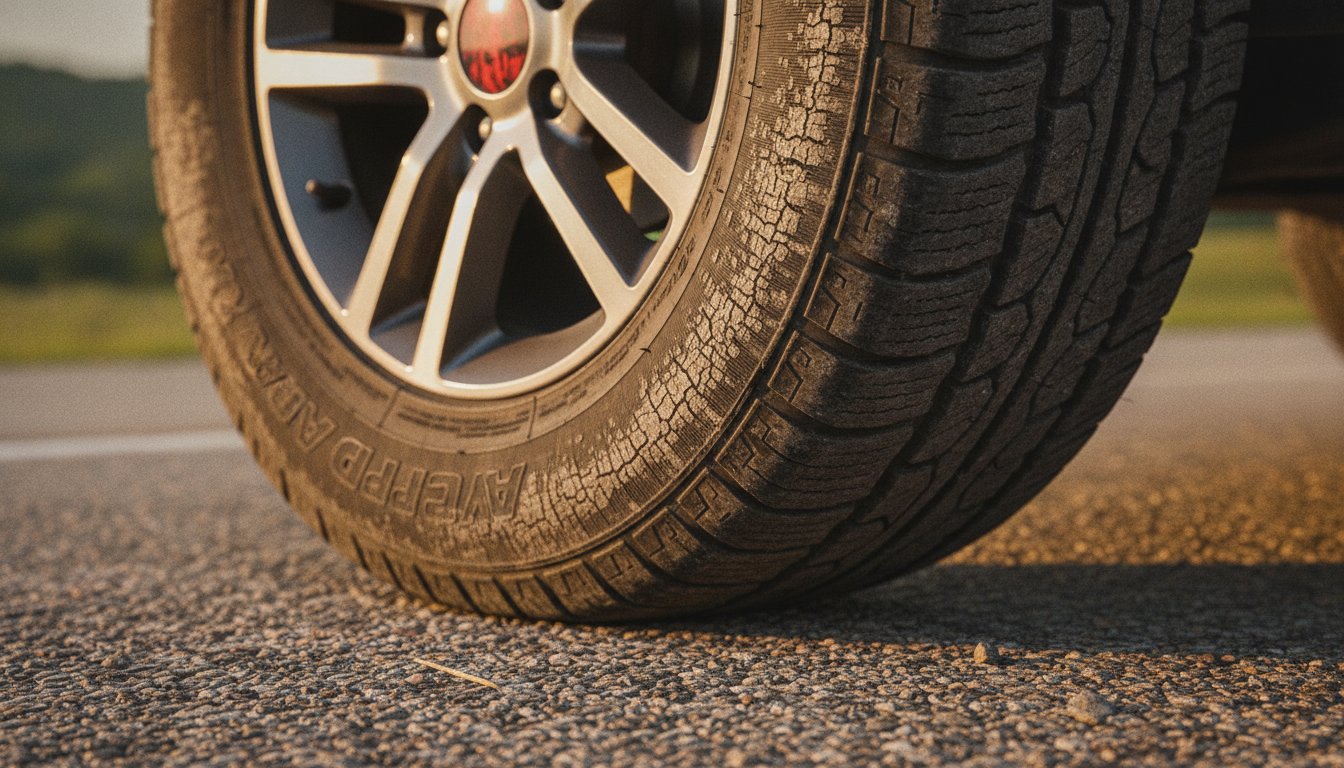
What if those hairline fractures on your tire sidewalls are actually a structural time bomb waiting for your next trip down I-65? The Alabama sun is brutal on rubber. It accelerates degradation and turns reliable tires into safety hazards faster than most drivers realize. The National Highway Traffic Safety Administration reports that faulty tires contribute to 11,000 accidents annually. Dry rot is often the silent culprit behind these sudden failures.
We understand the anxiety of hitting highway speeds when you aren't sure about your equipment. You shouldn't have to guess about your safety or feel pressured into buying tires you don't need. This guide simplifies the process. You'll learn how to check for tire dry rot in minutes using a clear, visual inspection method. We define the exact point where cosmetic cracking becomes a critical risk. You will get a definitive answer on your tire safety and a straightforward plan for replacement if your rubber has reached its limit.
Key Takeaways
- Identify the chemical breakdown of rubber bonds and how Alabama’s high UV levels accelerate this dangerous degradation.
- Master how to check for tire dry rot with a step-by-step visual inspection of the inner and outer sidewalls to spot hidden structural cracks.
- Recognize that deep tread can hide a failing tire casing; structural integrity matters more than remaining mileage for highway safety.
- Protect your investment by parking in the shade and driving regularly to distribute the tire's natural anti-oxidant oils.
- Determine when a tire has reached a critical failure point and requires immediate professional replacement to avoid a blowout.
What is Tire Dry Rot and Why Does it Happen?
Tire dry rot is a chemical breakdown that compromises the structural integrity of your vehicle's foundation. It occurs when the essential oils that keep rubber flexible begin to evaporate or degrade. When these bonds break, the rubber loses its ability to expand and contract under the weight of your vehicle. This process transforms a pliable, grippy tire into a brittle and dangerous liability.
Manufacturers attempt to fight this process by adding anti-oxidants and anti-ozonants to the rubber compound. These chemicals are designed to migrate to the tire's surface during use to form a protective barrier against Ozone cracking. However, environmental factors can overwhelm these defenses. Learning how to check for tire dry rot starts with understanding that your tires are constantly fighting a chemical war against the elements. UV rays, extreme temperatures, and long periods of inactivity are the primary culprits in this struggle.
To better understand this concept, watch this helpful video:
The Alabama Factor: Heat and Humidity
Birmingham summers are unforgiving. The intense heat accelerates the evaporation of internal rubber oils, leaving tires vulnerable to cracking. High humidity also presents a hidden danger. Moisture can seep into existing micro-cracks and reach the internal steel belts, causing corrosion and tread separation. Drivers in Hoover or Vestavia often face faster degradation if they park on asphalt driveways. The asphalt absorbs solar energy and radiates it directly into the tire casing, essentially baking the rubber from the ground up.
Common Causes of Premature Aging
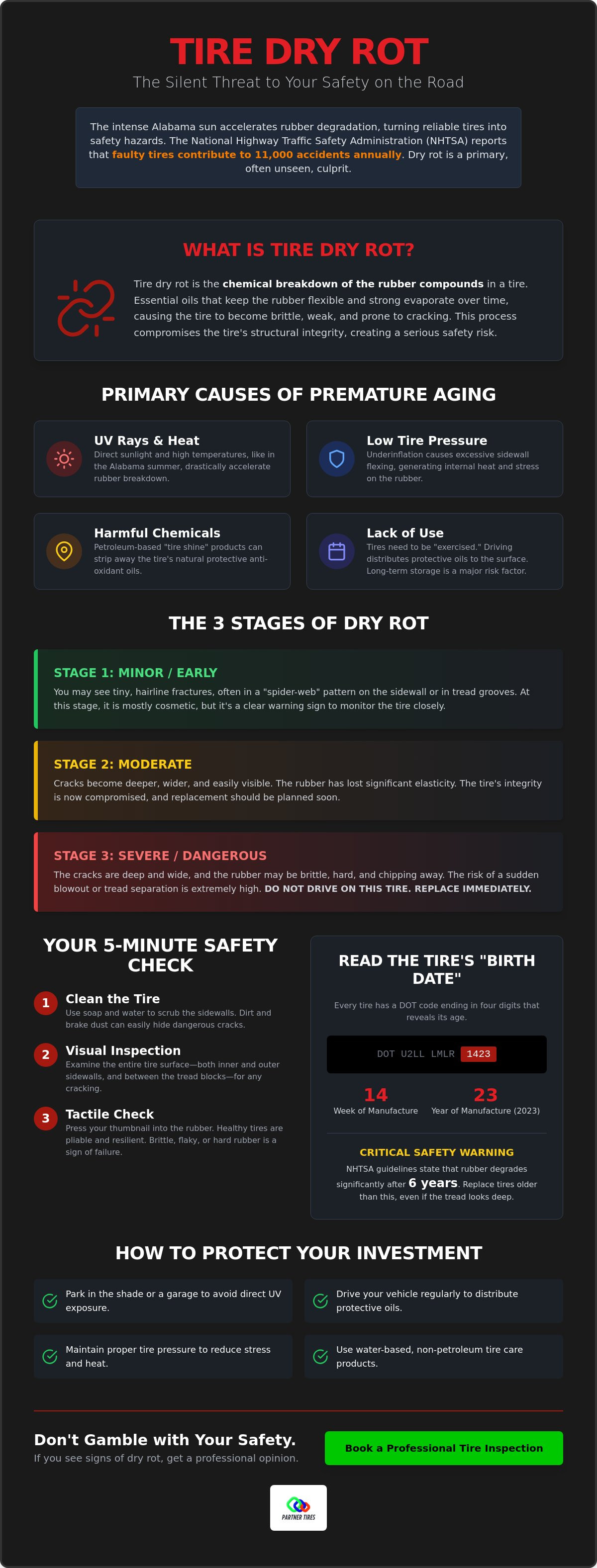
Several logistical factors determine how fast your tires will rot. Direct sunlight is the most obvious enemy, as UV rays destroy the chemical bonds in the rubber. However, the products you use also matter. Many petroleum-based "tire shines" actually strip away the protective anti-ozonants that the manufacturer included. Maintaining proper pressure is equally vital. Low tire pressure causes excessive sidewall flexing, which generates internal heat and accelerates the drying process. Finally, lack of use is a major factor. Tires need to be "exercised" to push protective oils to the surface. A vehicle that sits for months in a Birmingham garage is often more at risk than a daily commuter. Knowing how to check for tire dry rot becomes essential for any vehicle that isn't driven every week.
A Step-by-Step Guide to Checking for Dry Rot
A thorough inspection requires a clean surface. Birmingham road grime and brake dust often fill the micro-cracks of a degrading tire, making them invisible to the naked eye. Use water and a mild detergent to scrub the sidewalls and tread area. Once the rubber is dry, you can begin a systematic evaluation. Knowing how to check for tire dry rot requires a methodical 360-degree scan of both the outer and inner sidewalls. Many drivers only check the side facing the street. However, the inner sidewall often rots faster due to its proximity to brake heat and lack of airflow.
Examine the tread grooves closely. Look for "spider-web" cracking patterns that trace the valleys between the tread blocks. These small fissures indicate that the rubber is losing its elasticity. Perform a tactile check by pressing your thumbnail into the rubber. Healthy rubber should feel resilient and spring back immediately. If the surface feels brittle, flaky, or resembles the texture of a dry pencil eraser, the tire's chemical integrity has failed. This visual and physical inspection is the most effective way for how to check for tire dry rot before embarking on a high-speed commute.
How to Read the DOT Date Code
The calendar is often more accurate than your eyes. Locate the "DOT" stamp on your tire sidewall. It ends in a four-digit code. The first two digits represent the week of manufacture, while the last two signify the year. For example, a code of "1426" means the tire was produced in the 14th week of 2026. According to NHTSA tire safety guidelines, rubber compounds begin to degrade significantly after six years. Even if the tread looks deep, any tire past its sixth birthday is high-risk in the Alabama heat. If your tires are approaching this age, it is time to consider new tires to maintain operational safety.
Visual Red Flags to Watch For
Watch for distinct color shifts. Healthy rubber is deep black; dry-rotted rubber often takes on a faded, grayish-brown hue. This decolorization is a sign that the protective oils have leached out. Serious structural failure is evident when cracks become deep enough to expose the internal cord or wire layers. If you see any glint of metal or fabric within a crack, the tire is no longer safe to hold pressure. Additionally, look for uneven bulging or "bubbles" in the sidewall. These often accompany rot and indicate that the internal plies have separated from the brittle outer shell.
Is it Safe to Drive on Dry Rotted Tires?
Safety is a non-negotiable asset for any Birmingham driver. A common misconception is that deep tread always equals a safe tire. This logic is flawed. While tread depth determines how well you grip the road, the tire casing determines if the tire stays together at highway speeds. Dry rot is a structural failure that compromises the very foundation of your vehicle's contact with the pavement. Once the chemical bonds in the rubber harden, the tire can no longer absorb the stresses of the road. You cannot fix dry rot with sprays or topical treatments. When the rubber loses its elasticity, the tire is done. Following proper tire care and maintenance protocols is essential for prevention, but these measures cannot resurrect rubber that has already turned brittle.
When to Replace Immediately
You need to know how to check for tire dry rot to distinguish between minor weathering and a critical safety risk. Replace your tires immediately if you observe any crack deep enough to reveal the internal fabric or metal wiring. Widespread cracking that covers the entire tread face or shoulder is another sign of terminal failure. Additionally, pay attention to air pressure. If your tires consistently lose pressure despite no visible punctures, the rubber may have become porous due to advanced rot. These tires are no longer capable of supporting your vehicle's weight or maintaining a safe seal. Continuing to drive on them is a gamble that risks your vehicle and your financial health.
The Risk of Catastrophic Failure
The danger of rotted rubber peaks when you hit the interstate. Friction between the tire and the asphalt generates significant heat, causing the air inside the tire to expand. Healthy rubber flexes to accommodate this pressure, but rotted rubber snaps. This often leads to tread separation, where the outer tread layer peels away from the casing entirely. The result is a sudden, violent blowout. This risk increases during Birmingham's intense summer storms. Rotted rubber loses its ability to conform to the road surface, which drastically reduces traction on wet pavement. Knowing how to check for tire dry rot helps you avoid these "unexpected" roadside emergencies. Proactive replacement is always more cost-effective and efficient than dealing with an emergency tow or a high-speed collision caused by a failing tire casing.
Preventing Dry Rot in the Alabama Climate
Birmingham summers are a relentless test for rubber compounds. While knowing how to check for tire dry rot is a vital safety skill, preventing it entirely is the more efficient strategy for your vehicle's longevity. UV radiation acts as a silent solvent, breaking down the chemical bonds that keep your tires flexible. Parking in a garage or under a shaded structure is your first line of defense. If you must park in an exposed area, consider using tire covers for vehicles that remain stationary for more than a few days. This simple step blocks the solar energy that accelerates rubber evaporation.
Movement is another essential preventative measure. Tires are engineered to be "exercised." When a tire rotates, the internal oils and anti-ozonants migrate toward the surface to form a protective barrier. A vehicle that sits idle in a Hoover driveway for weeks is actually at higher risk than a daily commuter. Drive your vehicle at least once a week to ensure these protective chemicals remain distributed. Additionally, maintain proper inflation levels. Under-inflated tires experience excessive sidewall flexing, which generates internal heat and speeds up the drying process. Finally, avoid parking in standing water or mud. Prolonged moisture exposure can penetrate the rubber's pores and compromise the internal steel belts.
Proper Tire Maintenance and Cleaning
The products you use on your tires can either protect or destroy them. Avoid petroleum-based "tire shines" that promise a high-gloss finish. These chemicals often strip away the tire's natural anti-oxidants, leaving the rubber vulnerable. Stick to water-based cleaners and mild soaps. If you travel north and encounter road salt during the winter, rinse your tires thoroughly upon returning to Birmingham. Salt is highly corrosive and accelerates the aging process. You should also schedule a tire rotation every 5,000 to 7,500 miles. This ensures that each tire is exposed to different stress levels and environmental conditions, promoting even wear across the set.
Tips for Storing Seasonal or Extra Tires
Logistical care is critical when storing spare or seasonal tires. Keep them in a cool, dry, climate-controlled environment rather than a hot Alabama shed. Place each tire in an airtight plastic bag to prevent the evaporation of essential oils. Keep your storage area away from electric motors, such as those found in furnaces or workshop compressors. These motors generate ozone, which is a primary catalyst for rubber degradation. If your inspection has already revealed significant damage and you know how to check for tire dry rot, don't delay the inevitable. Securing new tires before a failure occurs is the most responsible way to protect your financial health and road safety.
Professional Tire Solutions in Birmingham, AL
Identifying the problem is the first step toward safety. Once you've mastered how to check for tire dry rot and confirmed your tires are failing, the next move is critical. Partner Tires serves as the no-nonsense ally for Birmingham drivers who value efficiency and reliability. We recognize that discovering a structural defect in your rubber creates an immediate logistical hurdle. Driving a vehicle with brittle, cracked sidewalls to a traditional garage is a gamble. The heat generated during even a short trip can cause a compromised casing to fail before you reach the shop.
Our operation solves this problem by removing the dangerous drive from the equation entirely. We provide a seamless transition from a failed inspection to a safe vehicle. Our team handles the heavy lifting, ensuring your operational needs are met without disruption to your day. Whether you require a premium set of new tires or are looking for reliable used tires in Birmingham, we apply a rigorous screening process to every unit in our inventory. We prioritize your safety and your financial health, positioning our company as the dependable foundation for your automotive maintenance.
Mobile Service: We Come to You
Our mobile service model respects your busy schedule and your safety. We deliver professional at home tire installation to clients in Bessemer, Pelham, and throughout the greater Birmingham area. You don't have to waste hours in a waiting room or risk a catastrophic blowout on the interstate. Our mobile units arrive fully equipped to handle computerized balancing and mounting on-site with industrial precision. This direct approach ensures your vehicle returns to service as quickly as possible, matching the speed and precision of the modern industry.
Quality You Can Trust
We stock a wide selection of new tires specifically designed to withstand the unique stresses of the Alabama climate. Our certified technicians are local experts who know exactly how to check for tire dry rot and other subtle signs of wear that general mechanics might miss. We view every service call as a partnership rather than a mere transaction. Our goal is to keep your vehicle moving safely while maximizing the life of your investment through expert mounting and balancing. Reach out to Partner Tires today for a professional safety assessment or a direct quote on our mobile installation services.
Protect Your Road Safety with Proactive Inspection
You now have the practical tools to identify structural rubber failure before it leads to a roadside emergency. Mastering how to check for tire dry rot is a vital skill for every Alabama driver. Brittle rubber and sidewall fissures are clear signals that your tires have reached the end of their safe operational life. Ignoring these warnings risks catastrophic failure at highway speeds.
Partner Tires is your hardworking, no-nonsense ally in this process. We are locally owned and operated in Birmingham, providing the grit and regional expertise needed to keep our community moving safely. Our certified mobile tire technicians bring the shop directly to your driveway or workplace, eliminating the danger of driving on compromised rubber. With 24/7 roadside assistance and precision on-site balancing, we provide the stability your vehicle requires. Get a Free Quote for Mobile Tire Installation in Birmingham to secure your vehicle today. Your safety is our primary mission, and we are ready to serve as the engine of your success on the road.
Frequently Asked Questions
Can dry rot tires be fixed with a spray or sealant?
No, dry rot cannot be repaired with topical sprays or sealants. These products are purely cosmetic and do not restore the chemical bonds or structural integrity of the rubber. Once the internal oils have evaporated and the rubber has hardened, the damage is permanent. Replacing the tire is the only safe solution for a brittle casing.
How long does it take for tires to start dry rotting?
Tires typically show signs of dry rot after five to six years of use or exposure. However, the intense Alabama sun can accelerate this process. If a vehicle sits idle for long periods in a Birmingham driveway, the rubber may begin to degrade in as little as four years due to a lack of oil distribution.
Will dry rotted tires pass a vehicle inspection in Alabama?
Alabama doesn't require annual safety inspections for all passenger vehicles, but law enforcement can cite you for unsafe equipment. Under state regulations, a tire is considered unsafe if it has tread or sidewall cracks longer than one inch that are deep enough to expose the internal body cords. Driving on such tires risks fines and safety hazards.
Is tire dry rot covered under most manufacturer warranties?
Most manufacturer warranties don't cover dry rot because it's classified as environmental wear rather than a factory defect. Coverage for "weather checking" usually expires within the first year or two of the tire's life. Always review your specific warranty documentation, as age-related degradation is almost always the owner's responsibility.
Can I drive on dry rotted tires if the tread is still good?
No, you shouldn't drive on dry rotted tires even if the tread is deep. Tread depth only measures your ability to grip the road, while the tire casing provides the structural strength to hold air pressure. A brittle, rotted casing can fail catastrophically at highway speeds, leading to a blowout regardless of how much tread remains.
What does tire dry rot look like in its early stages?
Early dry rot appears as a dull, grayish-brown decolorization of the rubber surface. You might also notice tiny, hairline fractures in the sidewall or within the tread grooves. Knowing how to check for tire dry rot involves identifying these subtle texture changes before they develop into deep, dangerous cracks that expose the tire's internal structure.
How much does it cost to replace a full set of dry rotted tires in Birmingham?
The total investment for a new set of tires depends on your vehicle type and the specific performance grade you choose. Since market rates for rubber and logistics fluctuate, the most efficient way to get an accurate price is to request a professional quote. Our mobile service provides a clear breakdown of costs while you learn how to check for tire dry rot at home.


