
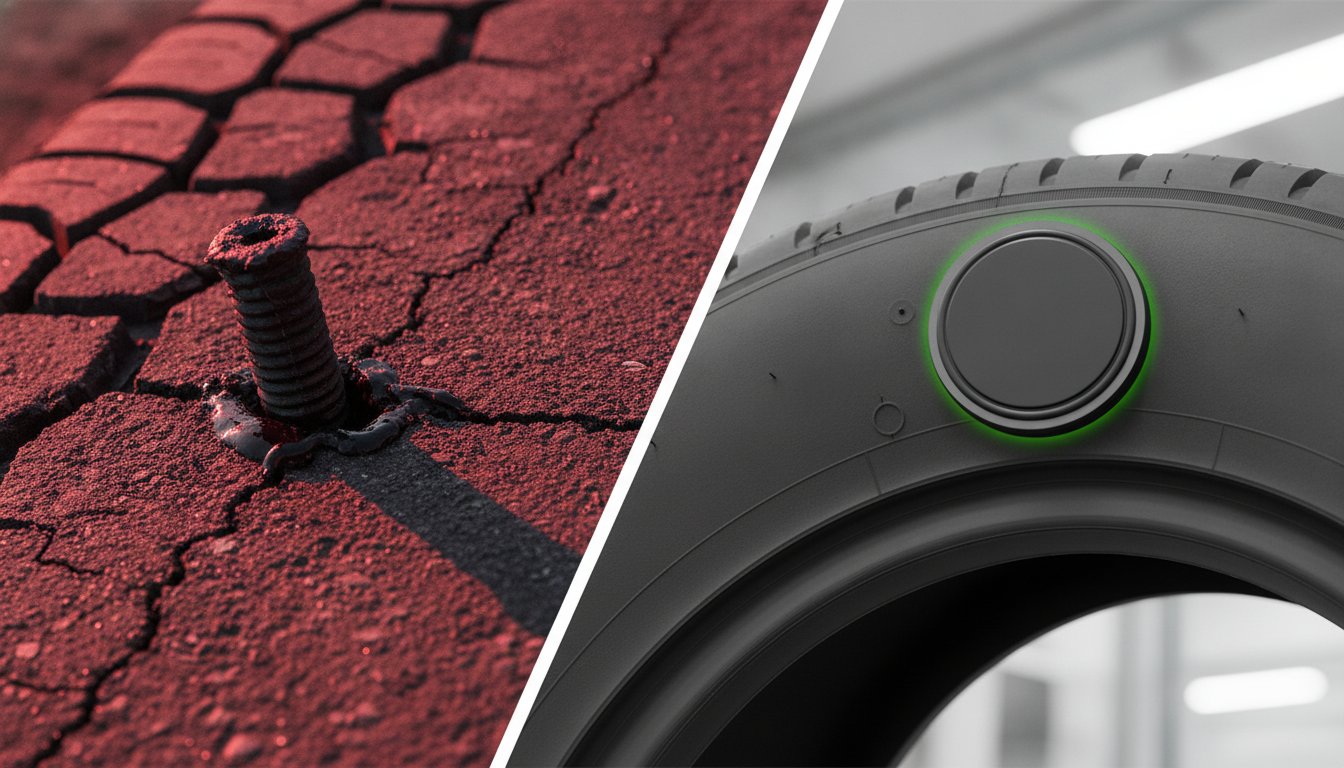
You're cruising down I-65 in the middle of a 95-degree Alabama afternoon when the tire pressure light flashes. It's tempting to grab a cheap DIY kit and shove a rubber string into the tread just to get back on the road. You want to avoid the inconvenience of a shop visit, but that quick fix might be a gamble with your safety. When deciding between a tire patch vs plug which is better, the answer depends on whether you want a temporary bandage or a permanent solution.
We understand the frustration of conflicting advice from friends and the genuine fear of a high-speed blowout. You need a repair that stands up to intense road heat and keeps your tire warranty intact. This guide explains the critical differences between these two methods so you can make an informed decision for your vehicle. We examine 2026 industry safety standards, the risks of simple plugs, and why a professional internal repair is the only way to ensure your tire won't fail when you need it most. Discover how to protect your investment and maintain your peace of mind on the highway.
Key Takeaways
- Learn the fundamental differences between exterior rubber plugs and interior adhesive patches to ensure your vehicle remains road-legal and safe.
- Evaluate tire patch vs plug which is better for long-term reliability, focusing on why a combined patch-plug is the only USTMA-recognized permanent fix.
- Identify five critical red flags, including sidewall damage and minimum tread depth, that make a tire non-repairable and require immediate replacement.
- Understand the hidden risks of moisture entering a plug-only repair, which can rot internal steel belts and cause catastrophic failure in high-heat conditions.
- Discover the efficiency of mobile tire repair services that bring professional-grade equipment and expertise directly to your home or office.
What Is the Difference Between a Tire Patch and a Plug?
Choosing between a tire patch vs plug which is better depends on your immediate goal. You might be looking for a five-minute fix or a lasting solution that survives a long haul. A tire plug is a sticky, resin-coated strip of rubber. You insert it from the outside of the tire into the puncture hole. It acts as a physical wedge to stop air from escaping. In contrast, a tire patch is a rubber adhesive applied to the inner liner. This requires a technician to remove the tire from the rim to reach the interior surface.
The fundamental difference lies in the repair method. Plugs are external; patches are internal. Many drivers keep a Puncture repair kit in their trunk for emergencies. These kits are widely available at Birmingham auto parts stores and provide a quick way to get off the shoulder of the road. However, these DIY tools are designed for temporary relief, not for the life of the tire.
To better understand this concept, watch this helpful video:
How a Tire Plug Works
The "outside-in" approach defines the plug method. A technician or driver first uses a reaming tool to clean the puncture. This process actually expands the hole slightly to create a uniform path. The plug is then threaded through a needle and forced into the opening. Plugs are popular because they are fast and low-cost. You don't even have to remove the wheel from the vehicle. The major flaw is that a plug does not seal the inner liner. Air can still migrate into the tire's internal layers, which often leads to tread separation over time.
How a Tire Patch Works
Professional shops prioritize the "inside-out" approach. This method starts with a full inspection of the tire's interior structure. A patch is not just a sticker; it involves a chemical vulcanization process. The technician buffs the inner liner and applies a special cement that creates a molecular bond between the patch and the tire rubber. This ensures the tire remains airtight from the inside. When determining a tire patch vs plug which is better for long-term air retention, the patch is the clear winner. It seals the puncture at its source and prevents moisture from reaching the internal steel belts.
While a plug fills the hole, a patch restores the integrity of the tire's air-holding chamber. This distinction is vital for anyone driving at highway speeds or carrying heavy loads. A patch requires more labor, but it offers the reliability that a simple rubber strip cannot match.
Tire Repair Safety: Why a Plug Is Not a Permanent Fix
Many drivers rely on rubber plugs for years without incident, but this anecdotal success masks a severe structural risk. When evaluating a tire patch vs plug which is better, safety experts look at what happens beneath the tread. A simple plug allows moisture to seep into the puncture channel from the road surface. This water eventually reaches the internal steel belts. Rust then begins to rot the tire's skeleton, weakening the bond between the rubber and the metal cords. This degradation is invisible from the outside but compromises the tire's ability to handle high-stress maneuvers.
A plug alone fails to seal the inner liner, allowing pressurized air to seep into the tire structure, potentially causing tread separation at highway speeds. This is the primary reason the U.S. Tire Manufacturers Association maintains strict industry repair standards that require both a plug and a patch. Without the internal seal provided by a patch, a simple plug can technically void your tire's speed rating. Your vehicle's performance and safety depend on the integrity of its foundation, especially when hauling heavy loads or navigating busy interstates.
The Risk of Internal Tire Damage
Professional inspection is the only way to identify "run-flat" damage. If you drive even a short distance on a flat tire, the sidewall can develop internal creases or heat-related fatigue. A plug inserted from the outside misses these critical warning signs. If a plug leaks slowly, it causes excessive heat buildup within the tire layers. The Alabama heat factor on I-20 significantly accelerates this process. High road temperatures combined with a compromised tire structure often lead to sudden sidewall failure. We prioritize your uptime and safety by ensuring every tire undergoes a rigorous internal review before any repair is finalized.
Industry Standards for Legal Repairs
Safety protocols dictate that not every puncture is fixable. The 1/4 inch rule is absolute; punctures larger than this diameter cannot be safely sealed because they disrupt too many internal cords. The "No Sidewall" rule also prevents repairs in the shoulder or sidewall area. These zones experience the most flex during turns, making any repair unstable and prone to popping out. Our tire repair birmingham experts strictly follow these guidelines to protect your business and your family. If your tire meets these safety criteria, we perform a professional repair that lasts for the remaining life of the tread. For a reliable assessment of your vehicle’s tires, trust the experts at Partner Tires to get you back on the road safely.
Tire Patch vs. Plug Comparison: Cost, Durability, and Speed
Efficiency drives your business, but speed shouldn't compromise safety. When weighing a tire patch vs plug which is better for your daily operations, consider the total cost of ownership. A plug takes roughly five minutes to install. A professional patch requires 30 to 45 minutes because the tire must be unmounted for a full structural review. This time difference represents the gap between a quick fix and a permanent solution. While the plug gets you moving immediately, it lacks the structural integrity required for long-term use.
Birmingham's summer road temperatures often exceed 140 degrees Fahrenheit. This intense heat expands the rubber and stresses the adhesive on a basic plug. Investing in a professional patch prevents premature failure and ensures you won't need to purchase a new tire due to a failed repair. Most manufacturers will void your road hazard warranty if they find an unapproved plug repair during a claim. Choosing the right repair method protects your financial health and keeps your fleet on the road without unexpected downtime.
Comparison Table: Plug vs. Patch vs. Combo
Use this breakdown to evaluate the best method for your specific vehicle needs.
| Method | Speed | Durability | Safety Rating | Birmingham Commuter Rating |
|---|---|---|---|---|
| Rubber Plug | 5 Minutes | Temporary | 1/5 | Emergency Only |
| Internal Patch | 30-45 Minutes | High | 4/5 | Reliable |
| Combo (Plug + Patch) | 45 Minutes | Maximum | 5/5 | Gold Standard |
When to Use a Plug
Use a plug as a tactical tool, not a permanent strategy. It serves its purpose in emergency roadside situations when a spare isn't available. It's also an acceptable choice for off-road vehicles or low-speed equipment like lawnmowers and tractors where high-speed failure isn't a concern. For any vehicle hitting the interstate, replace that plug with a professional patch as soon as you reach a service center. Understanding tire patch vs plug which is better for your specific scenario ensures you don't compromise your safety for a few minutes of convenience. We prioritize durable repairs that match the speed and precision of your daily schedule.
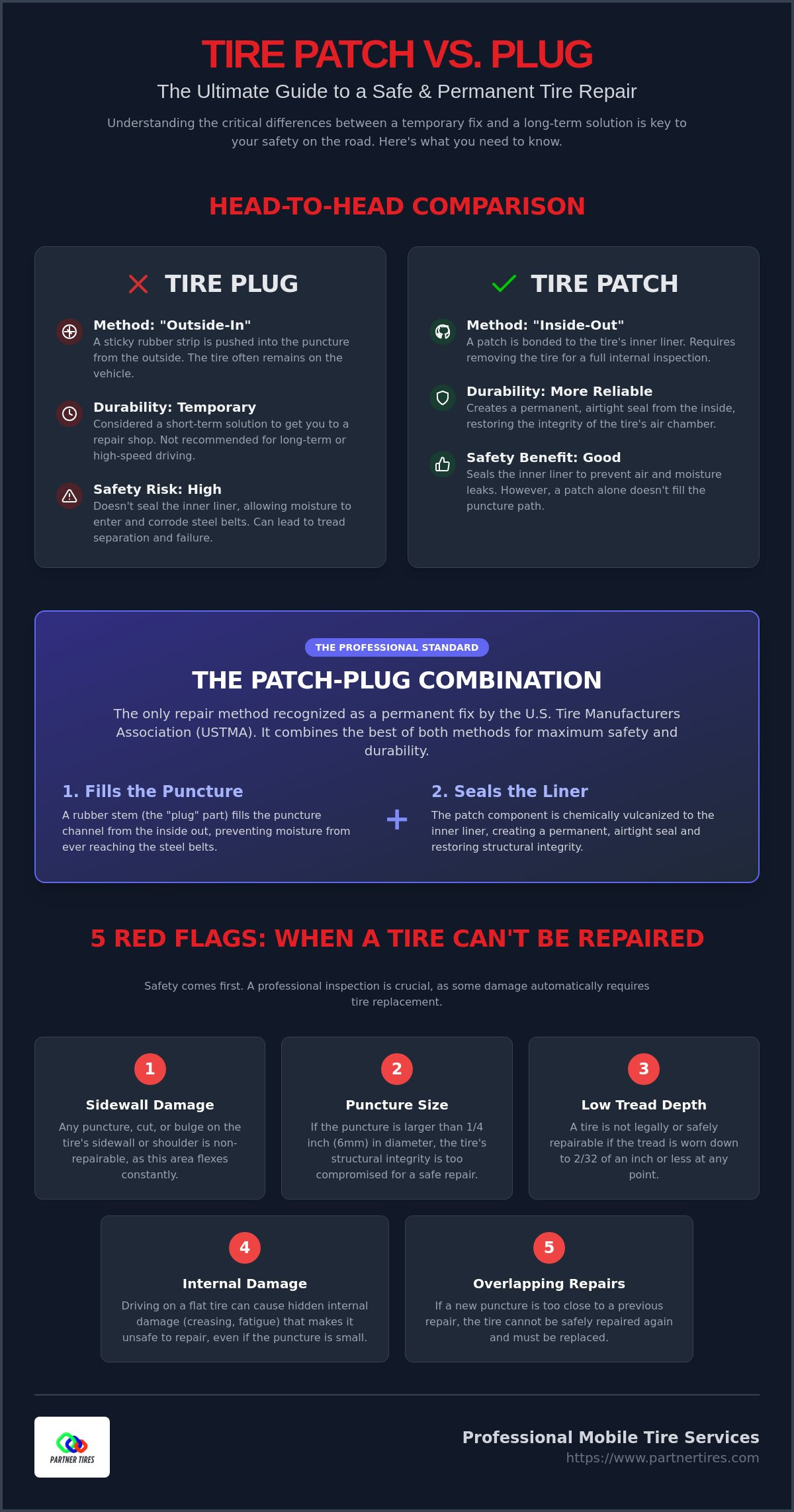
When Is a Tire Non-Repairable? 5 Red Flags
Not every tire is a candidate for service. Before debating a tire patch vs plug which is better, you must determine if the tire remains structurally sound. Industry standards identify specific "red flags" that mandate replacement over repair. These rules protect your safety and your fleet's operational efficiency. Ignoring these markers often leads to catastrophic failure on high-speed Alabama highways. We prioritize a thorough inspection to ensure your vehicle stays on the road without incident.
Identify these five critical indicators that a tire is past its service life:
- Punctures located in the shoulder or sidewall area.
- Tread depth measured at or below 2/32 of an inch.
- Multiple punctures positioned less than 16 inches apart.
- Visible internal scuffing or "heat ring" marks on the inner liner.
- Punctures with a diameter exceeding 1/4 inch.
The Sidewall Danger Zone
The sidewall is the most active component of a tire. It flexes constantly to absorb road shock and manage cornering loads. This continuous movement prevents any adhesive or plug from maintaining a consistent seal. Think of the tire face like a clock. Professional repairs are only permitted between the 10 and 2 positions on the tread surface. Anything outside this crown area is a liability. Partner Tires prioritizes your safety by recommending replacement over a dangerous repair in these high-flex zones. A compromised sidewall is a gamble we won't take with your vehicle.
Tread Depth and Age
Worn tires lack the rubber thickness required to hold a patch or plug securely. If your tread is at 2/32" or less, the tire is legally bald and unsafe to repair. You can use the "Penny Test" to verify this. Insert a penny into the tread with Lincoln’s head upside down. If you can see the top of his head, the tread is too thin for a safe fix. Additionally, the 6-year rule applies. Most manufacturers recommend replacing tires after six years, regardless of tread depth. Rubber degrades over time, especially in the intense Birmingham heat. If your tire is too old or worn for a repair, explore our used tires birmingham al guide for cost-effective replacement options.
When considering a tire patch vs plug which is better, remember that a repair on a compromised tire is a wasted investment. Internal scuffing is a major indicator of run-flat damage. If you see a dark ring or "rubber dust" inside the casing, the internal structure has shredded. This occurs when the vehicle is driven while the tire is under-inflated. No amount of patching can restore that strength. Protect your operations by choosing a service provider that follows strict safety protocols. If you're unsure if your tire is safe to drive, contact the team at Partner Tires for a professional diagnostic scan and inspection today.
Partner Tires: Professional Tire Repair That Comes to You
Solving the dilemma of tire patch vs plug which is better shouldn't require a wasted afternoon in a waiting room. We provide a logistical solution that brings the tire shop directly to your driveway or job site. Our mobile service model eliminates the inconvenience of towing your vehicle or driving on a dangerous spare. Whether you need a flat tire repair or a full at home tire installation, we deliver professional results without the typical downtime. This approach ensures your personal or commercial operations continue with minimal interruption.
Mobile service does not mean a compromise in quality. Our specialized units carry the exact same heavy-duty equipment found in traditional brick-and-mortar shops. We utilize commercial-grade tire changers and precision tools to perform every repair to the highest standards. When we address the question of tire patch vs plug which is better, our answer is always the "Plug-Patch" combination. We refuse to use simple string plugs as a permanent fix. By sealing the puncture channel and the inner liner simultaneously, we restore the tire's structural integrity and protect your long-term financial health.
Just as car tires need structural integrity, high-performance bicycles require expert handling to stay safe on the road; for those interested in premium cycling gear and maintenance, visit Bikeline to explore their professional offerings.
Mobile Tire Repair in Birmingham
Our fleet serves Birmingham, Hoover, and the surrounding communities with grit and local expertise. We understand that a flat tire at the office can derail your entire schedule. Our mobile vans handle flat tires on-site, allowing you to stay productive while we work. Every repair includes computerized wheel balancing on-site. This critical step ensures your repaired tire won't vibrate at highway speeds, preventing uneven tread wear and suspension fatigue. We maintain professional standards in every environment, from suburban driveways to active construction sites. You get the speed of a mobile unit with the technical precision of a high-end service center.
The Partner Tires Reliability Guarantee
Reliability is the backbone of our operation. We treat every vehicle repair as if it were for our own family members. This commitment to safety drives our refusal to perform "quick-fix" repairs that ignore industry standards. We prioritize fast turnaround times for Birmingham commuters because we know your time represents real value. Our technicians arrive on time, equipped with the knowledge to diagnose whether a tire is safely repairable or requires replacement. We don't just fix tires; we provide a dependable foundation for your daily travels. Don't risk your safety on a temporary rubber string when a professional solution is just a phone call away. Schedule your professional tire repair or mobile installation today!
Secure Your Road Safety with Professional Standards
Safety on the road starts with the integrity of your tires. We've explored the critical differences between temporary fixes and permanent solutions. A simple rubber plug works for emergencies, but it doesn't meet the rigorous standards required for long-term highway driving. When deciding on a tire patch vs plug which is better for your vehicle, the data consistently favors the internal patch-plug combination. This method seals the puncture channel and the inner liner simultaneously. This prevents moisture from rotting the internal steel belts and protects the tire's structural life.
Partner Tires provides a logistical advantage by bringing shop-grade equipment directly to you. Our mobile units serve Hoover, Vestavia, and the greater Birmingham area with unwavering reliability. Every repair we perform follows USTMA-compliant standards and includes computerized wheel balancing to ensure a smooth, vibration-free ride. You don't have to sacrifice your schedule for a safe repair. We act as the engine for your daily success, keeping your fleet moving and your family protected. Get Professional Mobile Tire Repair in Birmingham Now and drive with total confidence.
Frequently Asked Questions
Is a tire patch better than a plug for highway driving?
Yes, a professional patch is significantly better for highway speeds. High-speed travel generates intense heat that causes tires to expand and contract. A simple plug can work loose under these conditions, leading to sudden air loss. A patch bonds chemically to the inner liner, creating a permanent seal that maintains the tire's structural integrity. When considering tire patch vs plug which is better for interstate travel, the patch is the only choice that ensures long-term safety.
How long does a tire patch last compared to a plug?
A professional patch-plug combination is designed to last for the remaining life of the tire's tread. It creates a permanent, airtight seal that prevents moisture from reaching the internal steel belts. In contrast, a standard rubber plug is a temporary emergency fix. Plugs often begin to leak within a few months as the rubber strip dries out or shifts. Investing in a professional repair prevents the need for repetitive fixes and protects your vehicle's uptime.
Can I drive on a plugged tire indefinitely?
No, driving on a plugged tire indefinitely is a safety risk. Industry standards classify external plugs as temporary solutions intended to get you to a service center. Over time, a plug allows pressurized air to seep into the tire's carcass, which often leads to tread separation. A plug also fails to prevent water from entering the puncture channel. This moisture causes the internal metal structure to rust, eventually compromising the tire's ability to hold the vehicle's weight.
Will a tire plug void my tire manufacturer warranty?
Yes, a simple string plug often voids your tire's road hazard and manufacturer warranties. Most major tire brands require repairs to follow strict USTMA guidelines, which mandate an internal patch and a plug to fill the puncture. If a tire fails and an unapproved repair is found, the manufacturer will likely deny your claim. Choosing a professional repair protects your financial investment and ensures you remain eligible for warranty support if other issues arise with the tire.
What is the cost difference between a tire patch and a plug in Birmingham?
A professional patch-plug repair involves a higher labor investment than a simple plug. This is because a technician must unmount the tire from the rim to perform a full internal inspection and apply the vulcanized patch. The process also includes computerized wheel balancing to ensure a smooth ride. While a DIY plug kit is inexpensive, it lacks the professional equipment and expertise required to guarantee a permanent fix. The slight increase in upfront cost for a patch prevents the expense of a premature tire replacement.
Can you patch a tire that has already been plugged?
Yes, a technician can often replace a temporary plug with a permanent patch. The professional will remove the old rubber strip and inspect the puncture to ensure the hole hasn't been expanded beyond the 1/4 inch safety limit. If the internal structure is still sound, they will apply a proper patch-plug combination. This is a common procedure for drivers who used an emergency kit to reach our mobile service unit. We prioritize restoring your tire to a road-legal, safe condition.
Is it safe to repair a puncture in the tire sidewall?
No, it is never safe to repair a puncture in the sidewall or the shoulder of a tire. These areas experience the highest levels of flex and stress during every rotation and turn. No adhesive or rubber plug can maintain a reliable bond in these high-flex zones. Attempting a sidewall repair is a major liability that leads to a high risk of a blowout. When evaluating tire patch vs plug which is better for sidewall damage, the only safe answer is a full tire replacement.
How many times can a single tire be patched safely?
Most manufacturers allow a single tire to be repaired up to two or three times. However, these repairs must be located in the central tread area and must be at least 16 inches apart. If punctures are too close together, the internal structure becomes too weak to support the vehicle safely. We never overlap patches or repair a tire that has already sustained significant internal damage. Following these strict limits ensures your tire remains a dependable foundation for your operations.


