
It is 7:30 AM on I-65, and that yellow horseshoe light just flashed on your dashboard for the third time this week. You checked your pressure yesterday, but the warning won't clear. You are likely feeling the frustration of a system that refuses to cooperate. It's common to feel anxious when you cannot tell if you are facing a flat tire or a failing electronic component. We understand that your schedule depends on a vehicle that works without guesswork.
This article shows you exactly how a professional TPMS sensor service protects your safety and extends the life of your tires on Alabama roads. You will learn the difference between a simple system reset and a full sensor replacement so you can make informed decisions at the shop. According to NHTSA data from 2023, properly inflated tires can save you about 3% in fuel efficiency, which adds up quickly during a Birmingham commute. We are here to help you move from confusion to confidence. Our goal is to provide the local expertise you need to keep your car safe and your drive stress-free. At Partner Tires, we are driven by service and committed to keeping Birmingham drivers moving with wholesale power and a local touch.
Key Takeaways
- Identify why your Tire Pressure Monitoring System is a mandatory safety feature essential for navigating Alabama roads securely.
- Differentiate between direct and indirect monitoring hardware to understand how your vehicle tracks real-time air pressure.
- Recognize how Birmingham’s unique driving challenges, from "Magic City" potholes to high-speed commutes, impact sensor longevity.
- Master the professional TPMS sensor service process, including diagnostic scanning and the vital role of specialized service kits.
- Leverage the convenience of mobile service to eliminate the hazards of driving on potentially flat or damaged tires.
What is a TPMS Sensor Service and Why Does Your Car Need It?
TPMS stands for Tire Pressure Monitoring System. It has been a mandatory safety feature for all light motor vehicles sold in the United States since 2008. This system acts as the primary electronic guardian of your vehicle's contact with the road. A professional Tire-pressure monitoring system service ensures these critical sensors function correctly. This maintenance process involves diagnosing sensor health, resetting the system after tire rotations, or replacing sensors when their internal batteries fail. At Partner Tires, we believe precision drives performance on every Birmingham road.
To better understand how these sensors are serviced and replaced, watch this helpful video:
Ignoring your TPMS light compromises your safety and your bottom line. Under-inflated tires increase rolling resistance, which wastes fuel and generates excess heat. According to industry safety data, that heat is a leading cause of catastrophic blowouts. A routine TPMS sensor service keeps your vehicle efficient and stable. We focus on reliability because your safety is our priority. Driven by Service, we ensure every sensor communicates accurately with your dashboard. This directness ensures your vehicle remains a dependable foundation for your daily commute or business operations.
The Difference Between a Low Pressure Light and a System Error
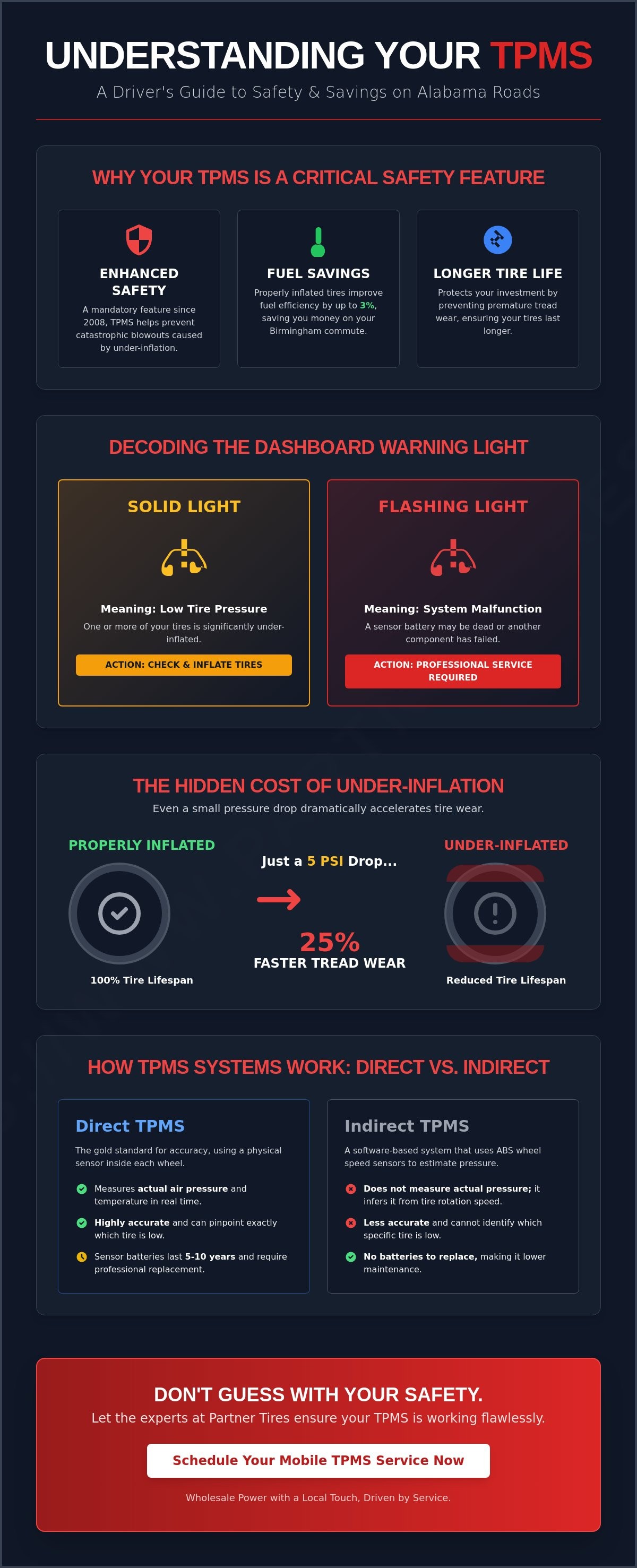
The "horseshoe with an exclamation point" icon is your first warning. A solid light usually means one or more tires have dropped below the safe pressure threshold. However, a flashing light indicates a system malfunction. This often means a sensor battery has died or a component has failed after years of use. A flashing light requires immediate professional TPMS sensor service to restore your safety net. Don't guess with your safety; a malfunctioning system leaves you driving blind to tire health.
TPMS and Your Tire Investment
Proper inflation protects your new tires in Birmingham, AL from premature wear. Even a 5 PSI drop can accelerate tread wear by 25 percent. This reduces the lifespan of your investment significantly and forces you back into the shop sooner than necessary. At Partner Tires, we provide wholesale power with a local touch to keep your vehicle moving. Maintaining your TPMS ensures your tires wear evenly and handle predictably during heavy Alabama rainstorms. It's the most effective way to drive your tire profitability and longevity forward.
How TPMS Systems Work: Direct vs. Indirect Monitoring
Tire pressure monitoring became a standard safety feature following the TREAD Act of 2000. This federal legislation mandated that all light vehicles manufactured after September 1, 2007, must include a system to alert drivers of under-inflation. These systems prevent accidents and reduce tread wear. You can review the official NHTSA tire safety information to understand the regulatory framework behind these safety standards. While the dashboard light looks the same in every car, the technology behind it varies. This difference changes how a technician approaches a TPMS sensor service.
The system relies on a specific chain of communication. It involves a sensor, a radio transmitter, and the vehicle’s Electronic Control Unit (ECU). When the ECU detects a pressure drop of 25 percent or more below the manufacturer’s recommended cold inflation pressure, it illuminates the warning icon. Understanding whether your car uses physical sensors or software calculations is vital for maintaining vehicle uptime and safety on the road.
Direct TPMS: The Gold Standard for Accuracy
Direct systems use a physical sensor mounted inside each wheel, usually attached to the valve stem. These sensors measure actual air pressure and temperature in real time. They transmit this data directly to the ECU via radio frequency. This method is highly accurate and can pinpoint exactly which tire is low. These sensors operate on internal batteries with a lifespan of 5 to 10 years. Once a battery fails, the entire sensor usually needs replacement. For shops in Birmingham, having a reliable inventory partner ensures these critical components are always in stock for quick customer turnaround.
Indirect TPMS: Using ABS Data
Indirect TPMS does not use pressure sensors inside the tires. It utilizes the existing wheel speed sensors from the Anti-lock Braking System (ABS). The ECU compares the rotational speed of each wheel. A tire with lower pressure has a smaller diameter and spins faster than a fully inflated one. While this system is durable, it has limitations. It cannot provide real-time pressure numbers and may fail to detect air loss if all four tires deflate at the same rate. This system requires a manual reset or "relearn" procedure after every tire rotation or pressure adjustment to calibrate the software to the new tire diameters.
Identifying your system type is the first step in any TPMS sensor service. Direct systems require hardware maintenance and battery checks, while indirect systems focus on software calibration. Driven by service, our goal is to keep your shop equipped for either scenario with the right parts and technical knowledge.
Common Causes of TPMS Failure in Birmingham and Central Alabama
Drivers often assume TPMS sensors are permanent fixtures. They expect these components to last the life of the car. In reality, a sensor is a delicate electronic device. It lives in one of the harshest environments on your vehicle. It faces constant vibration, extreme centrifugal force, and fluctuating temperatures. Understanding how TPMS works helps clarify why these units eventually fail. A sensor must accurately measure pressure and transmit data wirelessly while spinning at 800 RPM on I-459. This mechanical stress eventually takes a toll on the internal seals and sensitive circuitry.
Birmingham’s infrastructure adds another layer of difficulty. The Magic City is famous for its road challenges. Deep potholes on 20/59 or uneven surfaces in downtown Birmingham create violent shocks. These impacts can physically crack the sensor body or snap the valve stem. When these components break, a standard patch won't fix the issue. You need a professional TPMS sensor service to restore the system’s integrity and ensure your dashboard stays clear of warning lights. Our local knowledge helps us understand that Alabama drivers put their equipment through more stress than the average commuter.
The Impact of Alabama Heat on Sensor Batteries
TPMS sensors rely on internal lithium-ion batteries. These batteries generally have a lifespan of 5 to 10 years. However, Central Alabama’s climate is aggressive. Birmingham frequently sees over 50 days a year with temperatures above 90 degrees. This intense heat causes battery voltage to drop prematurely. If your vehicle was manufactured before 2018, your batteries are likely entering the failure zone. We recommend checking sensor health whenever you are buying used tires in Birmingham. Proactive replacement during a tire change saves you from paying for labor costs twice.
Corrosion and Road Debris
Corrosion is a silent killer for TPMS hardware. While Alabama doesn't use road salt as often as northern states, our high humidity levels accelerate metal oxidation. This often results in a seized valve cap or a brittle stem that snaps during routine air pressure checks. Debris is another factor. Road grime and moisture can penetrate the sensor’s internal seal, leading to an electronic short. You should also avoid using pressurized "Fix-a-Flat" sealants. These chemicals are notorious for clogging the sensor’s pressure port. Once the port is blocked, the sensor is ruined. A TPMS sensor service is the only way to fix a system compromised by these emergency sealants. Partner Tires is driven by service, ensuring your shop has the parts needed to handle these common local failures efficiently.
What to Expect During a Professional TPMS Sensor Service
A professional TPMS sensor service involves more than just clearing a dashboard light. It is a technical process that ensures your vehicle's safety systems communicate accurately with its computer. Efficiency matters here. Technicians follow a rigorous protocol to identify whether a sensor requires a simple component refresh or a full unit replacement. This precision drives reliability for drivers across Birmingham. It's about maintaining the logic of the safety system to prevent future failures.
Step-by-Step Diagnostic Flow
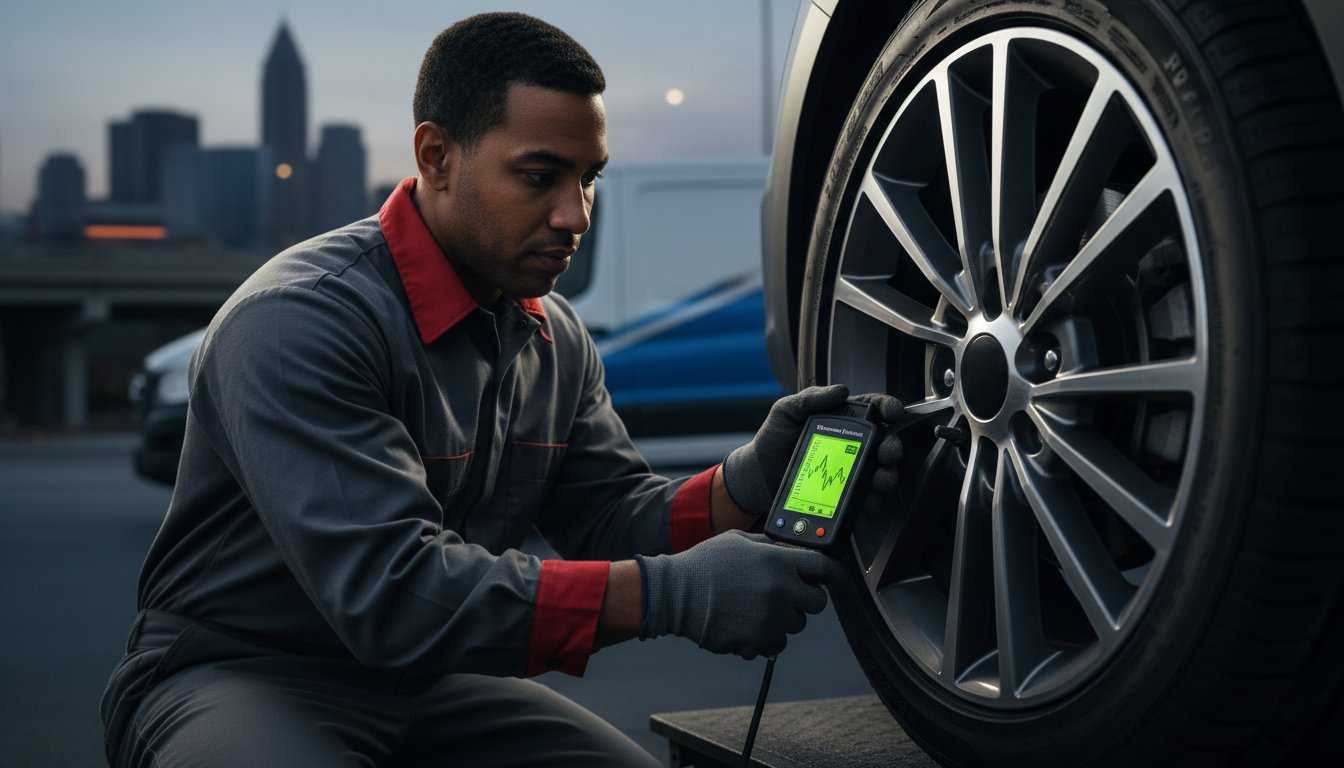
The process begins with a specialized electronic scanning tool. This device triggers each sensor individually to capture data without removing the tire. Technicians check the battery health of each unit. Most TPMS batteries last between 5 and 10 years, so age is a critical factor in every assessment. The diagnostic also verifies the actual tire pressure against what the sensor reports. A discrepancy of more than 2 PSI often indicates a calibration issue or a failing internal component. Finally, the technician inspects the valve stem for physical damage, corrosion, or slow leaks that digital tools might miss.
The "Relearn" Process Explained
Installing a new sensor is only half the job. Your car must be taught to recognize the new hardware. Every sensor has a unique 10-digit ID code. The vehicle's Engine Control Unit (ECU) needs this specific code assigned to the correct wheel position. While some older models use a simple dashboard reset button, 90% of modern vehicles require a professional OBD-II tool to write these IDs into the system memory. This technical step is a standard part of any professional tire installation. It ensures your safety systems don't throw false alarms during your morning commute.
It's vital to distinguish between a service kit and a full replacement. A service kit includes the rubber grommet, sealing nut, and valve core. These components should be replaced every time a tire is dismounted to prevent oxidation and leaks. However, if the internal battery fails or the sensor body breaks, a full replacement is the only solution. This proactive maintenance protects your tire investment and keeps your business or personal vehicle moving safely. Partnering with a reliable provider ensures you always have the right parts on hand to minimize downtime and maximize road time.
Keep your fleet or personal vehicle road-ready with the right inventory and expert support. Connect with Partner Tires to drive your business forward.
Mobile TPMS Service: Convenience for Birmingham Drivers
Partner Tires redefines the traditional repair model by bringing the full shop experience directly to your location. Driving to a service center with a flashing TPMS light is a gamble you don't need to take. If your sensor indicates low pressure, operating the vehicle can damage the rim or lead to a dangerous blowout. Our mobile TPMS sensor service eliminates these hazards by arriving at your exact coordinates. We prioritize your safety by keeping your vehicle stationary until the system is fully functional.
Our logistical reach covers the entire Birmingham corridor. Technicians travel from Hoover to Cullman and every community in between to deliver rapid assistance. This mobile approach serves as the ultimate time-saver for busy professionals who cannot afford to lose hours in a waiting room. We respect your schedule. We keep your fleet or personal vehicle moving without the typical downtime associated with tire maintenance.
- Eliminate the risk of driving on underinflated tires.
- Save 2 or more hours of travel and waiting time.
- Receive professional service at your preferred location.
TPMS Service at Your Home or Office
Your driveway or office parking lot becomes our professional service bay. Partner Tires mobile units carry the latest diagnostic and programming equipment to handle any sensor reset or replacement on-site. We identify the specific failing unit within minutes using high-precision tools. This efficiency reflects our "Driven by Service" philosophy in every local interaction. You continue your workday while we secure your vehicle. We handle the technical logistics so you can stay focused on your own priorities.
Why Choose Partner Tires for Your TPMS Needs?
We combine wholesale power with a local touch to provide a superior service experience. This model ensures you receive professional-grade TPMS sensor service and expert calibration at a competitive price point. Our team possesses deep expertise in both new and used tire systems, ensuring your vehicle's onboard computer communicates perfectly with every wheel. We act as a dependable foundation for your road safety, providing the grit and local knowledge Birmingham drivers expect.
Don't ignore a dashboard warning light that compromises your safety. Reach out to Partner Tires today to schedule your mobile visit. We deliver the expertise you need, exactly where you need it, to keep your vehicle "Driven by Service."
Drive With Confidence Across Central Alabama
Maintaining your vehicle's safety shouldn't be a hassle. Your tires rely on functional sensors to monitor pressure levels accurately, but Birmingham's high temperatures and road debris often lead to system failures. A professional TPMS sensor service ensures your direct or indirect monitoring system communicates correctly with your dashboard. We bring the shop directly to your location, eliminating the need for a time-consuming trip to a traditional service center. Partner Tires has been Driven by Service since day one, providing the technical expertise needed to keep your vehicle on the road without delay.
We deploy certified mobile technicians to 15+ Birmingham-area cities to deliver rapid, on-site solutions that fit your busy schedule. Whether you're dealing with a dead sensor battery or a damaged valve stem, we focus on efficiency and precision. You get the benefit of wholesale power combined with a local touch that prioritizes your uptime. Don't let a dashboard warning light compromise your safety or your fuel economy. We are ready to handle the logistics of your tire maintenance so you can focus on the road ahead.
Schedule Your Mobile TPMS Service in Birmingham Today
We look forward to keeping you moving safely through the Magic City.
Frequently Asked Questions
Can I reset my TPMS light myself?
You can often reset your TPMS light using your vehicle's dashboard menu or a dedicated reset button located under the steering wheel. Most manufacturers include specific instructions in the owner's manual for this 2 minute process. If the light persists after you adjust the tire pressure to the levels listed on your door placard, the system likely requires a professional TPMS sensor service to recalibrate the hardware.
How much does a TPMS sensor service cost in Birmingham?
National industry data suggests that a single TPMS sensor replacement typically ranges from $50 to $150 depending on the vehicle make and model. This price includes the part and the labor for programming. Local Birmingham service centers follow these standard market rates to ensure your vehicle remains compliant with safety regulations. We focus on providing the inventory that keeps these costs manageable for local shops.
Is it safe to drive with the TPMS light on?
Driving with a TPMS light on isn't safe because it indicates your tires are under-inflated by 25 percent or more. Low pressure increases heat buildup and can lead to a tire blowout at highway speeds. According to the National Highway Traffic Safety Administration (NHTSA), maintaining proper tire pressure could prevent 11,000 crashes annually. Address the warning immediately to ensure your safety on Alabama roads.
How long do TPMS sensors usually last?
TPMS sensors usually last between 5 and 10 years before the internal lithium-ion battery fails. Since these batteries are sealed inside the sensor, you must replace the entire unit once the power runs out. High-mileage drivers in Birmingham might see failures sooner due to the constant transmission of data. We empower dealers with the inventory needed to replace these aged components quickly and reliably.
Why does my TPMS light come on in the morning but go off later?
Your TPMS light activates in the morning because tire pressure drops approximately 1 PSI for every 10 degree decrease in temperature. As you drive, friction heats the air inside the tire, increasing the pressure and turning the light off. This fluctuation is common during Birmingham winters. A professional TPMS sensor service can verify if your sensors are functioning correctly or if they're simply reacting to these thermal changes.
Do I need to replace all four sensors if only one is bad?
You don't have to replace all four sensors at once, but it's often more efficient to do so. If one sensor battery fails after 7 years, the others are likely close to the end of their life cycles. Replacing them as a set during a single service visit saves time and prevents multiple trips to the shop. This proactive approach drives long-term reliability for your vehicle's safety systems.
Can cold weather in Alabama trigger the tire pressure light?
Cold weather in Alabama frequently triggers the tire pressure light during the transition from fall to winter. When temperatures drop overnight, the air density inside your tires changes, causing the pressure to fall below the manufacturer's threshold. Checking your levels when the tires are cold ensures accuracy. Our Wholesale Power, Local Touch approach helps Birmingham shops stay stocked for these seasonal surges in service requests.
Does a TPMS sensor need to be replaced every time I get new tires?
You don't need to replace the entire sensor every time you get new tires, but you should replace the TPMS service kit. This kit includes the rubber grommet, washer, nut, and valve core to prevent leaks. Industry standards recommend this maintenance every time a tire is dismounted. This simple step protects your investment and ensures your TPMS sensor service remains effective for the life of the new tires. Driven by Service, we ensure shops have these kits ready for every tire change.


