
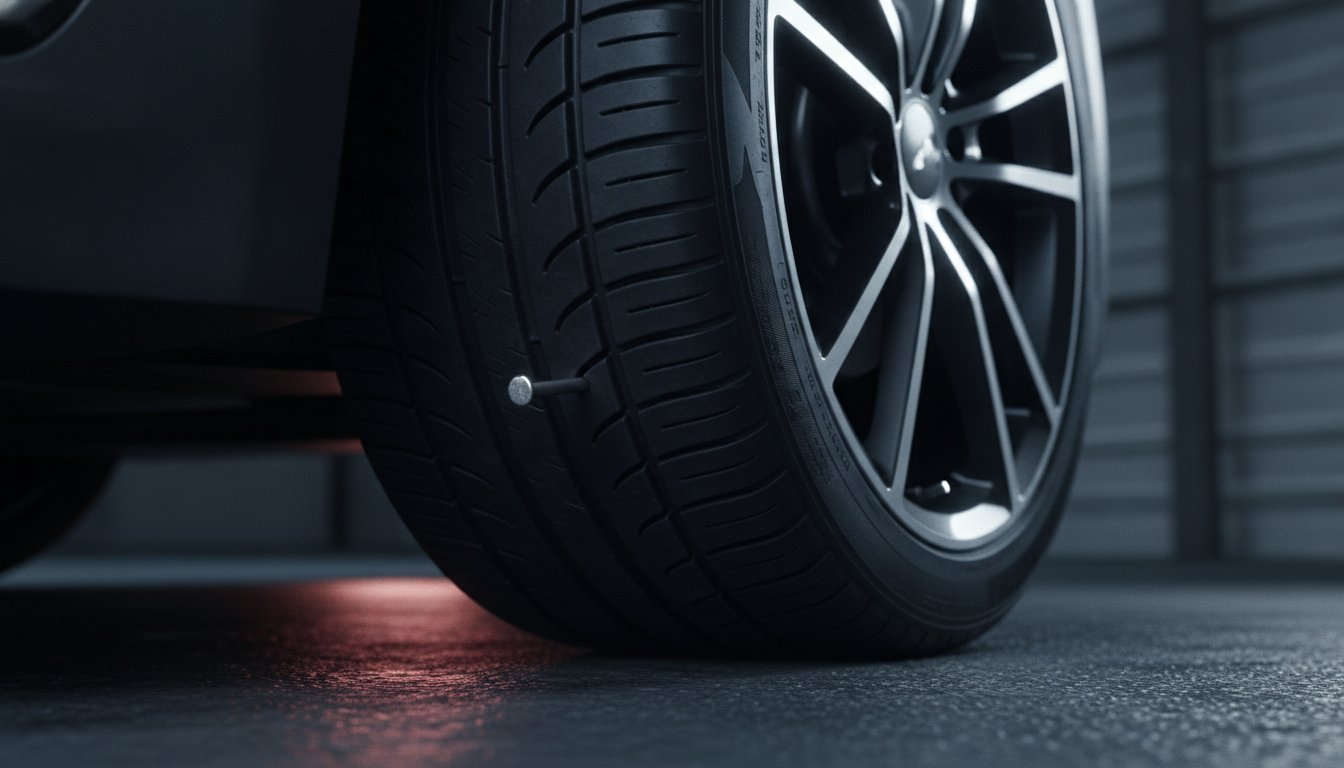
That low tire pressure light isn't just a morning nuisance; it's a structural warning that demands your attention before you merge onto I-65. You're likely tired of stopping at the gas station every week to add air. You need to know: can a tire with a slow leak be repaired or are you facing an unexpected replacement? We understand the anxiety that comes with an unreliable vehicle, especially when you have a full schedule and miles of Alabama highway ahead of you.
This guide provides the exact criteria for a safe, permanent repair. Professional intervention is the only way to ensure your safety and keep your workday moving without disruption. We will preview the industry standards for puncture location, explain why DIY sealants are often a mistake, and highlight the 2026 safety standards you need to know. You'll gain a clear understanding of when a patch is a smart investment and when a new tire is the only logical choice for your financial health and operational safety.
Key Takeaways
- Identify the specific USTMA standards and 2026 federal safety provisions that define when a puncture is safe for a permanent fix.
- Review the specific damage criteria to answer the essential question: can a tire with a slow leak be repaired?
- Understand how underinflation leads to internal heat buildup and increases the risk of a high-speed blowout on Birmingham interstates.
- Discover why the professional plug and patch method is the only reliable way to seal a leak and protect your vehicle's financial health.
- Save time by utilizing mobile tire repair services that arrive at your location in Hoover or Vestavia to handle repairs on-site.
Understanding When a Slow Tire Leak Can Be Safely Repaired
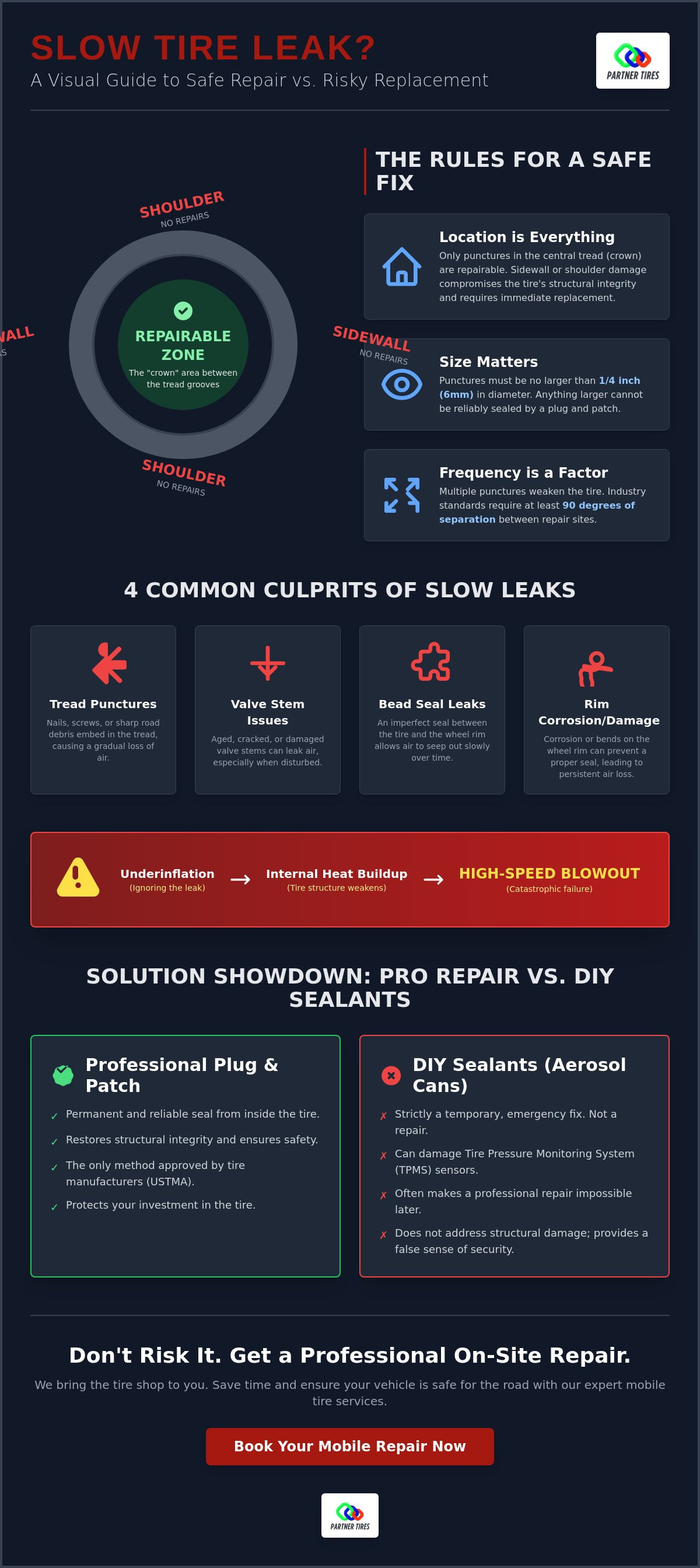
The U.S. Tire Manufacturers Association (USTMA) sets the benchmark for road safety. These standards aren't suggestions; they are the rules that keep your vehicle stable at highway speeds. Determining if can a tire with a slow leak be repaired depends entirely on the location and size of the damage. Proper Tire maintenance starts with a visual inspection of the tread. If a nail or screw enters the "crown" or central area of the tire, a professional fix is often possible. However, damage near the edges requires a different approach to maintain structural integrity. This central zone is the only area where the internal structure can support a permanent seal.
To better understand this concept, watch this helpful video:
The repairable zone is strictly defined as the area between the two outer grooves of the tread. If you find yourself asking if can a tire with a slow leak be repaired after hitting debris on the road, the answer depends on where the object landed. Punctures outside this crown area compromise the tire's ability to hold its shape under load. We prioritize these safety boundaries to ensure your vehicle remains a dependable asset for your business or family.
The Tread Zone vs. The Sidewall
Sidewall damage is a non-negotiable replacement scenario. This part of the tire handles the most flexing and heat during transit. A patch here will fail because the rubber constantly moves and stretches. The "shoulder" is the transition area between the tread and the sidewall. It's also considered a no-go zone for repairs. Professional shops look for the internal steel belts during an inspection. These belts provide the foundation for a patch to bond correctly. If the puncture is outside these belts, the tire's structure is gone. You can't risk a blowout on the I-65 by ignoring these structural limits.
Size and Frequency Limitations
Size matters for tire safety. Punctures larger than 1/4 inch, or 6mm, are generally not repairable. The hole is simply too large for a plug and patch to seal reliably against high pressure. Frequency is also a factor. Multiple punctures in the same area make a tire unsafe for the road. Industry standards require at least 90 degrees of separation between repair sites. If two leaks are too close together, the internal structure becomes too weak to support the vehicle's weight. A safe tire repair is limited to the crown area of the tread for punctures no larger than 1/4 inch in diameter. We follow these strict protocols to protect your safety and your bottom line.
The 4 Most Common Culprits Behind Your Tire's Slow Pressure Loss
A slow leak is a persistent drain on your operational efficiency. It forces you to waste time at air pumps and creates unnecessary risk for your daily commute. Pinpointing the source is the first step in determining if can a tire with a slow leak be repaired or if the unit is compromised beyond recovery. Most drivers assume a nail is the only cause, but several mechanical failures can trigger that stubborn TPMS light.
Hidden punctures remain the most frequent issue. Nails or screws from Birmingham construction sites often lodge themselves deep in the tread. These objects act as a temporary plug, allowing air to escape only as the tire rotates and the rubber flexes. While you might not hear a hiss, the pressure drop is real. Road gators, those shredded tire remnants common on the I-20, also present a major threat. Striking these at high speed can cause micro-tears that don't immediately flatten the tire but lead to a steady loss of pressure.
Identifying these leaks requires more than just a quick glance. The "hiss test" rarely works for slow leaks because the volume of escaping air is too low. Instead, a soap and water solution applied to the tread will reveal bubbles where air is escaping. This diagnostic step is a core part of industry-recommended repair procedures. If you can't find the leak yourself, professional roadside assistance can help you identify the culprit before it leads to a blowout.
Valve Stems and TPMS Sensors
Your valve stem is a critical component that often gets overlooked. These rubber tubes degrade over time due to UV exposure and road salt. A loose valve core or a cracked stem allows air to bleed out slowly. Modern vehicles also face issues with Tire Pressure Monitoring System (TPMS) sensors. If the seal or gasket on the sensor fails, it creates a physical leak at the base of the stem. You can learn more about how we handle these delicate components in our guide to Expert Tire Repair in Birmingham.
Wheel rim issues and temperature fluctuations round out the list. Corrosion on the metal rim, often accelerated by Alabama's high humidity, prevents the tire bead from sealing correctly. This "bead leak" is common on older wheels. Additionally, the extreme heat on Birmingham asphalt expands the air inside your tires. If a micro-leak already exists, this increased pressure can force air out faster, making a small problem much worse during a summer workday. Knowing these causes is the best way to answer if can a tire with a slow leak be repaired based on your specific situation.
The Real Risks of Ignoring a Slow Leak on Birmingham Roads
Driving through Birmingham with a low tire is a calculated risk that rarely pays off. A slow leak isn't just a maintenance nuisance; it's a precursor to catastrophic failure. When you ignore that low-pressure warning, you're gambling with your vehicle's safety and your operational schedule. The primary concern is the "Heat Factor." Underinflated tires have a larger footprint, which creates excessive friction against the asphalt. On high-speed routes like I-20 or I-65, this friction generates intense heat that the tire's structure cannot dissipate. This cycle leads to rapid rubber degradation and remains a leading cause of high-speed blowouts.
Procrastination also destroys the tire from the inside out. When a tire runs low on air, the sidewalls flex beyond their design limits. This action "chews up" the inner liner, creating a fine rubber dust inside the tire cavity. Once this internal damage occurs, the answer to can a tire with a slow leak be repaired becomes a definitive no. Even if the original puncture is small, the compromised structural integrity makes the tire a liability. If you suspect internal damage, our team provides professional Flat Tire Repair services to evaluate your vehicle's safety.
Potholes and Alabama Infrastructure
Alabama's infrastructure presents unique challenges for underinflated tires. Birmingham's summer heat softens the asphalt, but our potholes remain sharp and unforgiving. A properly inflated tire acts as a cushion for your wheel rim. An underinflated tire lacks this pressure, allowing the road to "pinch" the rubber between the pothole edge and the metal rim. This often results in a "pinch shock" that causes immediate sidewall bubbles or even cracks the wheel itself. Ignoring a slow leak during a heatwave accelerates these risks, as the rubber is already under extreme thermal stress.
The Financial Cost of Procrastination
Ignoring a leak is a poor financial strategy. A simple professional patch is a minor maintenance expense that preserves your tire's lifespan. In contrast, driving on low pressure causes uneven tread wear, which can ruin a full set of tires in a matter of weeks. You'll also see a direct hit to your fuel economy. Soft tires increase rolling resistance, forcing your engine to work harder and burn more gas for every mile traveled. Beyond the pump, underinflation negatively impacts your vehicle's handling and increases braking distances. Addressing the question of can a tire with a slow leak be repaired early is the only way to protect your safety and your bottom line.
Professional Tire Repair vs. DIY Sealants: What Actually Works
Professional tire repair is about structural restoration, not just stopping a leak. Many drivers reach for a can of aerosol sealant when they notice a drop in pressure. This is a mistake. DIY sealants are designed for temporary emergency use to get you to a service center. They are not a permanent fix. When determining if can a tire with a slow leak be repaired, the method of repair is just as important as the location of the damage. A reliable fix requires a chemical bond that becomes part of the tire itself.
The "plug and patch" method is the industry gold standard for safety. A simple string plug inserted from the outside is insufficient. These plugs often fail to seal the inner liner and allow moisture to reach the internal steel belts. This leads to hidden corrosion and eventual tire failure. True professional repair involves a specialized plug-patch combo that seals the puncture path and reinforces the inner liner. This process uses vulcanization to create a permanent, airtight bond with the tire rubber. If you need a solution that lasts, our Flat Tire Repair service ensures your vehicle remains roadworthy and safe.
The Professional Repair Process
A professional repair starts with removing the tire from the rim. You cannot see internal sidewall damage or liner degradation from the outside. Once the tire is off, a technician inspects the interior for the "rubber dust" that indicates a tire was driven while underinflated. The technician then cleans and buffs the inner liner around the puncture. This creates a textured surface for the vulcanizing compound to grip. Finally, the plug-patch is pulled through the hole and pressed into the liner. This multi-step approach is the only way to answer if can a tire with a slow leak be repaired with 100% confidence.
Why Tire Shops Hate 'Fix-a-Flat'
Liquid sealants create a significant chemical mess inside your wheel assembly. This sticky residue makes it nearly impossible for a technician to buff the liner for a proper patch later. These sealants also pool at the bottom of the tire when the vehicle is parked. This creates a heavy spot that throws off wheel balance and causes noticeable vibrations at highway speeds. Perhaps most importantly, the chemicals in these cans can corrode or clog expensive TPMS sensors. Replacing a ruined sensor is far more expensive than a standard repair. We prioritize your vehicle's long-term financial health by recommending professional mechanical fixes over chemical shortcuts.
Mobile Tire Repair in Birmingham: Professional Solutions at Your Door
Traditional tire shops force you to sacrifice your time. You don't have to wait in a crowded lobby for a simple fix. We bring the service directly to your driveway or office parking lot. When you ask if can a tire with a slow leak be repaired, you need an answer that doesn't disrupt your work day. Partner Tires bridges the gap between professional expertise and modern convenience. Our mobile units serve Hoover and Vestavia with the same precision you'd expect from a brick-and-mortar location.
Our trucks carry more than just jacks and wrenches. We utilize computerized wheel balancing and professional-grade vulcanizing tools on-site. This ensures your repair is permanent and your ride remains smooth. Sometimes, the damage exceeds safety standards. If the puncture is in the sidewall or exceeds 1/4 inch, we provide high quality used tires or new replacements immediately. We solve the problem where it happens, saving you the cost and hassle of a tow truck.
The logistical strength of our mobile service is built on speed and accuracy. We understand that a vehicle off the road is a liability for any professional. By bringing the shop to you, we eliminate the downtime associated with traditional service models. Our technicians are regional experts who understand the specific demands of Alabama heat and infrastructure. We provide the stability your business needs to thrive. Every repair we perform follows the strict safety protocols discussed earlier. This ensures that the question of if can a tire with a slow leak be repaired is answered with technical accuracy and professional care.
Service Area and Convenience
We provide coverage across Birmingham, Mountain Brook, and Trussville. Scheduling is straightforward. You can request a visit while you manage your business or relax at home. If your tire requires a full replacement rather than a patch, refer to our guide on Professional At Home Tire Installation. We handle the heavy lifting so you can stay focused on your own priorities. This service-oriented mission keeps your schedule organized and your vehicle safe.
The Partner Tires Reliability Standard
Our team delivers honest, no-nonsense assessments. We prioritize your financial health by repairing a tire whenever it is safely possible. We don't push unnecessary replacements. We act as your hardworking ally in vehicle maintenance. Reliability is our foundation. This direct approach ensures you receive the right product at the right time. Don't ignore that warning light and risk a blowout on the highway. Contact Partner Tires for mobile repair in Birmingham today. We keep your operation moving forward with efficiency and grit.
Secure Your Road Safety with Expert Tire Care
A slow leak is more than a minor inconvenience; it's a structural liability that demands a professional response. Determining if can a tire with a slow leak be repaired depends entirely on the puncture's location and size. Adhering to USTMA standards ensures your vehicle remains stable on Alabama interstates. DIY shortcuts like aerosol sealants often lead to sensor damage and unbalanced wheels. A permanent fix requires a specialized plug-and-patch combination performed after a thorough internal inspection. Choosing a mechanical solution over a chemical one protects both your safety and your long-term financial health.
Partner Tires is your hardworking ally for all automotive needs in Birmingham. We are locally owned and operated, bringing a full-service mobile tire shop directly to your location. Whether you need a precise repair or a replacement from our stock of new and high-quality used tires, we handle the logistics so you can stay focused on your day. Don't let a small leak turn into a dangerous blowout on the I-65. Schedule Your Mobile Tire Repair with Partner Tires today and drive with confidence knowing your vehicle is in capable hands. We are ready to get you back on the road safely.
Frequently Asked Questions
How long can I drive on a tire with a slow leak?
You should address a slow leak immediately to prevent permanent structural damage. Driving for more than a few miles on an underinflated tire creates excessive internal heat. This thermal stress eventually destroys the inner liner and compromises the steel belts. Once this structural degradation occurs, the tire is a total loss. Prompt action saves you money and keeps your vehicle operational for the long haul.
Is it safe to use Fix-a-Flat for a slow leak?
Fix-a-Flat is strictly an emergency measure and not a permanent fix for your vehicle. The liquid sealant inside the tire creates a chemical mess that interferes with the vulcanization process required for a real repair. It can also clog the delicate port of your TPMS sensor, leading to expensive electronic failures. We recommend professional mechanical repairs over chemical shortcuts to ensure your safety on the road.
Can a tire leak from the rim be fixed?
Rim leaks are a common issue that a technician can fix by cleaning the wheel's mounting surface. Over time, road salt and moisture cause oxidation on alloy wheels, which breaks the airtight seal at the bead. A professional service involves dismounting the tire, buffing away the corrosion, and applying a specialized bead sealant. This process restores the integrity of the wheel-to-tire connection and stops the pressure loss.
Will a slow leak eventually cause a blowout?
A slow leak is a warning sign that often precedes a catastrophic blowout. Low pressure causes the sidewalls to flex excessively, generating heat that the rubber isn't designed to handle. This heat weakens the bond between the tire's internal layers and steel belts. Eventually, the structure fails suddenly, which is especially dangerous when you are traveling at high speeds on Alabama interstates like I-65.
How much does it cost to fix a slow leak in Birmingham?
Repair costs in Birmingham vary based on whether you visit a shop or use a mobile service. Mobile tire repair includes the convenience of a technician traveling to your home or office, which typically involves a service fee. Traditional shops have different pricing models for walk-in customers. You should request a quote from a local provider to understand your specific financial commitment for a professional patch.
Can a slow leak be caused by a faulty TPMS sensor?
Faulty TPMS sensors or degraded valve stem gaskets are frequent culprits behind mysterious pressure loss. The sensor's mounting hardware can vibrate loose, or the rubber seal can crack due to age and extreme heat. This creates a mechanical leak that has nothing to do with a physical puncture in the tread. A technician can often solve this problem by installing a new TPMS service kit or tightening the core.
What happens if the puncture is on the edge of the tire?
Punctures located on the shoulder or sidewall are unrepairable according to industry safety standards. These zones experience the highest levels of stress and movement while the vehicle is in motion. A patch cannot maintain a secure bond in these areas, and the risk of a sudden failure is too high. In these cases, a new or high-quality used tire is the only safe and logical replacement option.
How do I find a slow leak in my tire at home?
Finding a leak at home is easiest with a simple soap and water solution. Spray the mixture over the tire's tread, the rim edge, and the valve stem. Growing bubbles will pinpoint exactly where air is escaping from the rubber. This diagnostic step is the first part of determining if can a tire with a slow leak be repaired or if you need to invest in a replacement tire.


